Segregated In Kyselivka: Freed From the Russians But Not From Their War
By: Giorgio Provinciali
Live from Ukraine
All you read on this page was experienced.
All the footage was recorded with a smartphone.
No troupes, just brave hands holding it.
Kyselivka — Just before this article was sent to the editorial team, a farmer blew himself up after stepping on a mine. Although these areas were liberated from Russian control in 2022, incidents like this are happening more often, as clearing the land is made even harder by enemy FPV drones that drop dozens of leaf-shaped bombs every day.
So much so that even rescuers have difficulty reaching victims like that civilian, as they are also targeted by loitering munitions that mercilessly destroy ambulances and medical vehicles.
We ourselves experienced particularly critical moments while recording the latest clip we made available to this “La Ragione’s” YouTube channel.
While traveling through these lands — among the most prosperous and productive in the world — now reduced to ghostly wastelands, we had to stop recording several times, unable to find shelter as very few buildings in Kyselivka still have roofs.
First, traditional artillery rounds, and then selective, remotely controlled ones, have eroded all the buildings. Some only have their footprints left on the ground. Those few remaining inhabited are no longer connected to the power grid, as Russian drones have even targeted the pylons to completely isolate the area.
Survivors have improvised insulation and shielding both to prevent the digital eye of those death vectors from spotting human prey and to keep the cold out, completing the process of segregation and preventing even sunlight from reaching their homes.
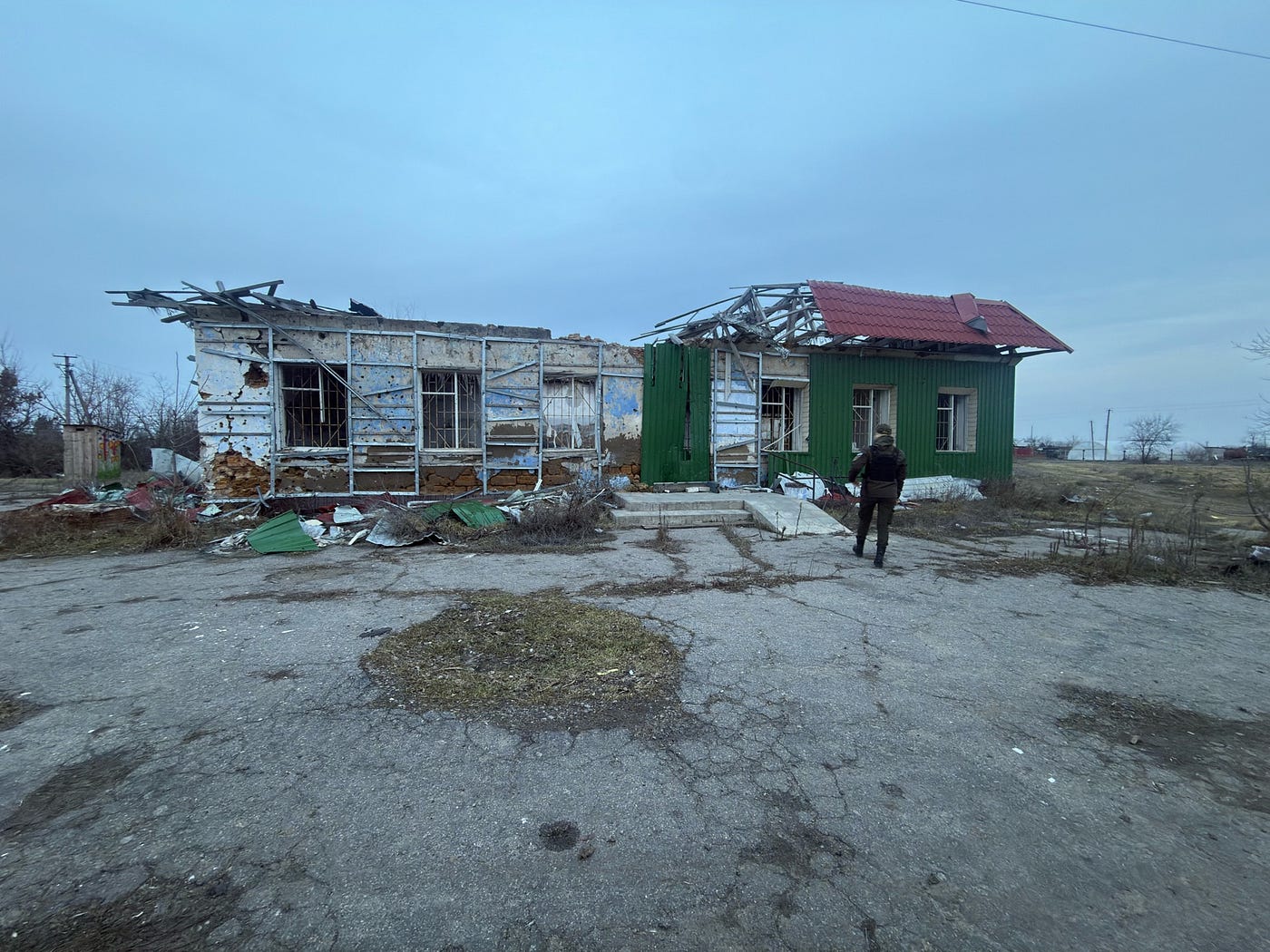
And yet, a couple we’ve known for years braves death to deliver food to the survivors of Kyselivka at least once a week. The fish they bring here comes from Ukrainian Bessarabia, where they travel periodically to stock up because fishing in the Black Sea has become nearly impossible due to other mines, the sea ones. However, procuring water from river ports like Reni and Izmail is no less risky, as the Maiaky Bridge — the essential route to reach them from Odesa — has been targeted 17 times by the Russians in recent months.
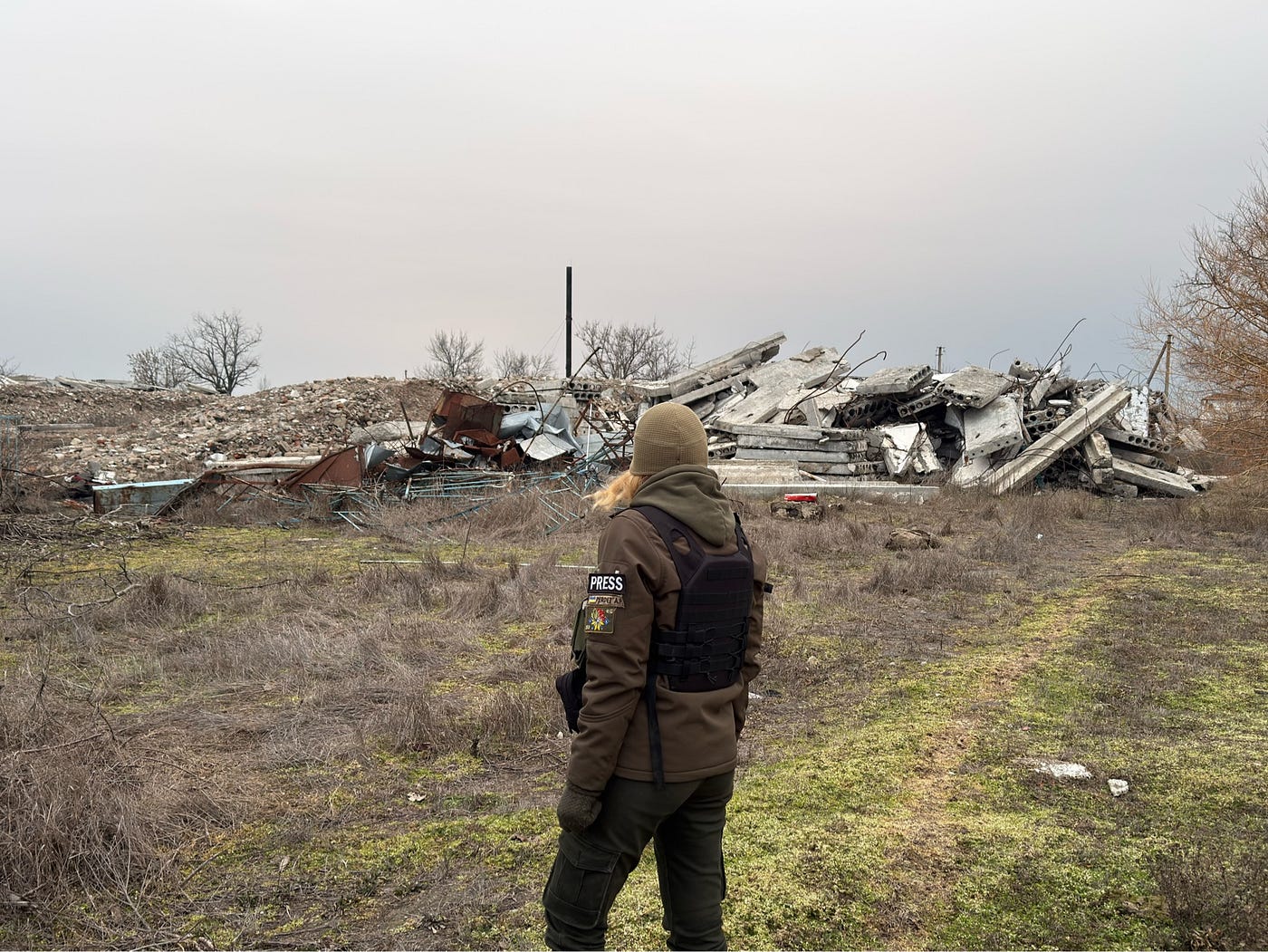
The presence of our valued friends in these locations is not just occasional but holds deep significance: it reflects the persistence of life — and war — in a space that has been officially liberated.
Kyselivka has not been occupied by the Russians since 2022, yet it continues to be influenced by their effects. This is a key point because it challenges the common notion of war as a simple binary between occupied and free areas. As we have documented living for extended times inside kill zones like this one, there are regions that, even though not formally occupied, remain under the shadow of the Russian threat. That is, rendered uninhabitable, unproductive, logistically disrupted, and psychologically sequestered.
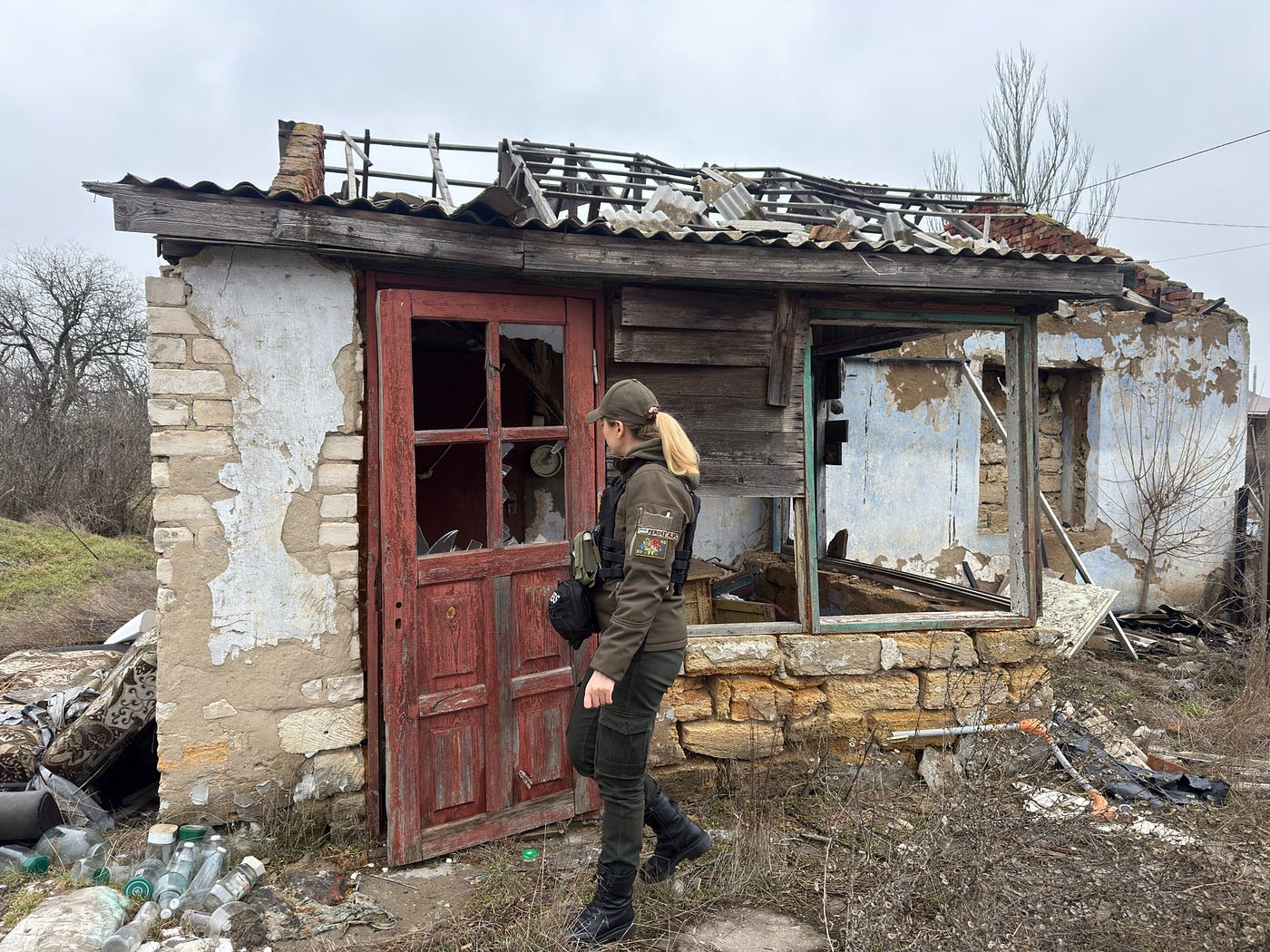
Comparing our daily dispatches with those from a few years ago, it’s easy to see that destruction used to be widespread, random, and mechanical. Now, it’s continuous, selective, and persistent.
This transforms the territory itself into a living trap.
The danger shifts constantly and demands quick adaptation to a changing situation. Today, it’s no longer enough to survive a bombing or avoid sniper fire: you must also evade an armed observer who watches, chooses, and strikes.
Kyselivka touches a deep nerve in the Russian invasion of Ukraine, marking the transition from a symmetrical war of positions to a persistent state of asymmetric saturation.
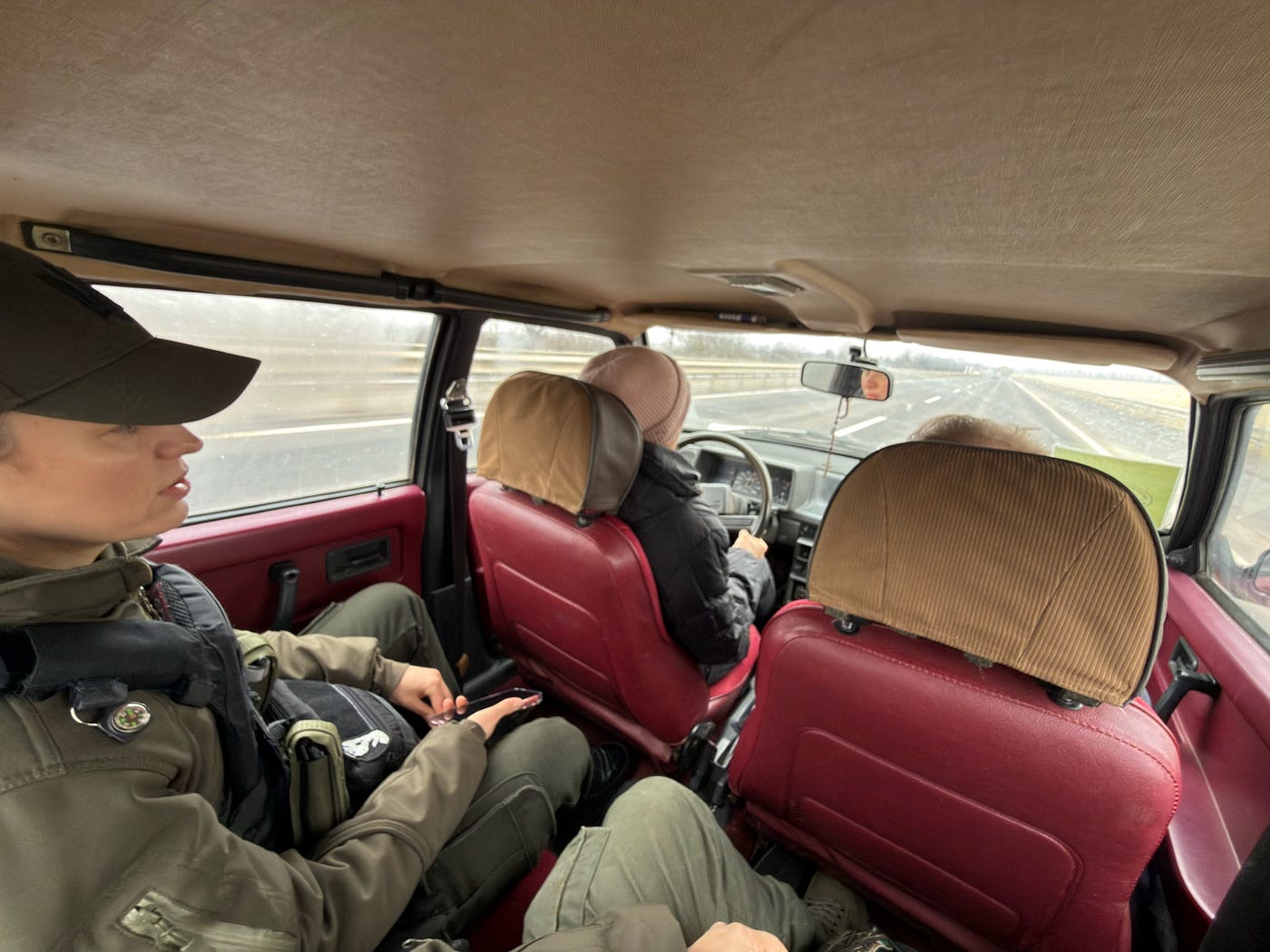
The mine that killed the farmer did more than harm a man; it attacked the very act of farming—fundamentally disrupting the relationship between humans and the soil.
The subsequent attack on the rescuers confirms Russia’s intent to break the basic chain of Ukrainian civilization. In a functioning society, the wounded call for help, and assistance arrives. In a kill zone like this one where we write from, even this basic mechanism is shattered. Not just as an act of cruelty, but as part of a deliberate strategy of area sealing.
For the remote killers hired by the Russian regime, the target isn’t just a person or a vehicle but the entire ecosystem that sustains human life: electricity, light, communication, access, shelter.
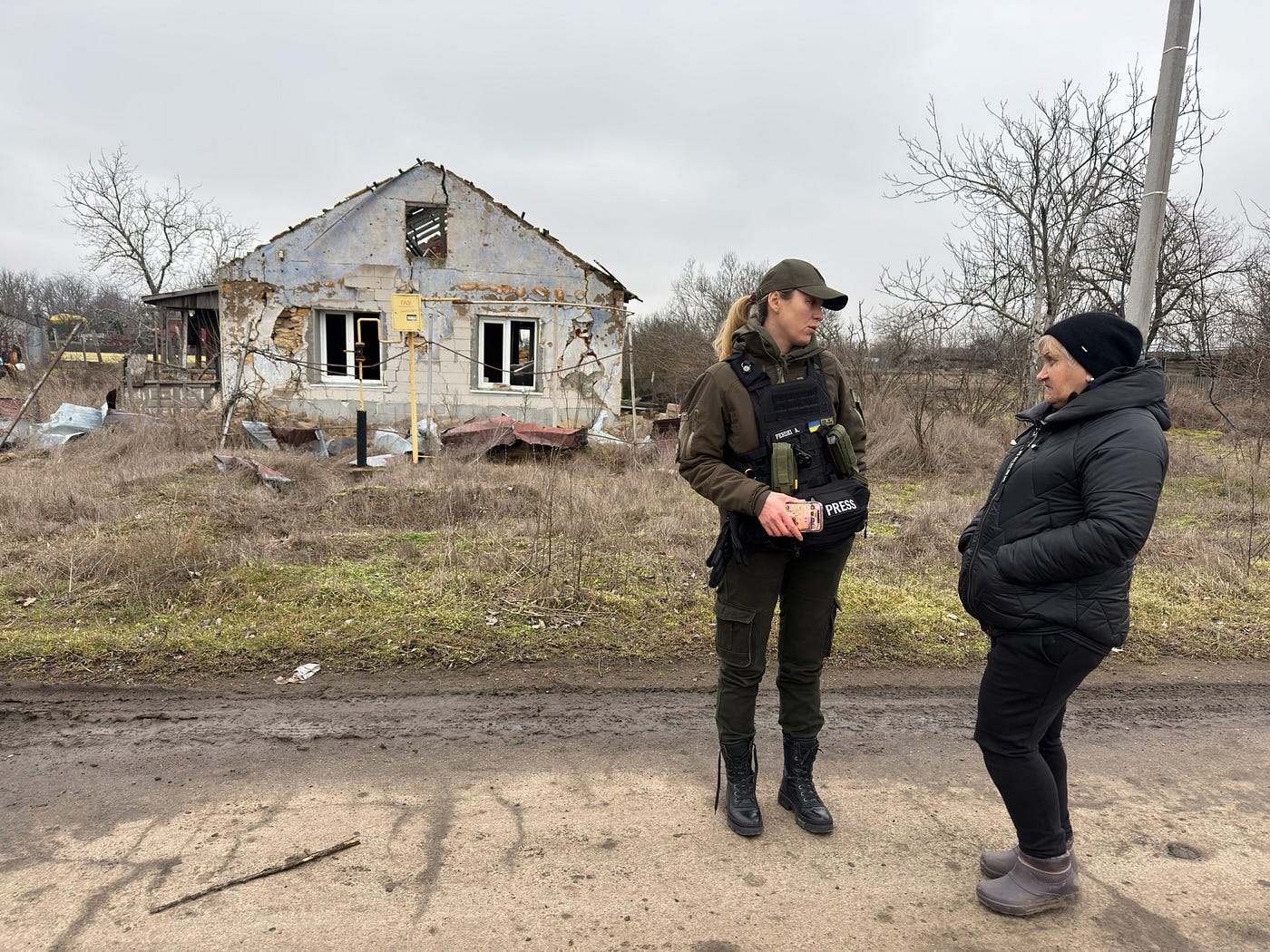
This form of modern warfare aims not only to destroy but also to make the continuation of life impossible.
That is why we describe our situation with the term segregation: there’s no direct military occupation, but de facto confinement.
Electronic warfare countermeasures help us neutralize some threats, but it is the people who maintain a small sense of community. Courageous and selfless, like the couple of friends of ours who keep delivering food.
Modern warfare isn't measured by a single crater but by the journey those people undertake to ensure civilians' survival.
The Russians are targeting that entire logistics chain—from their van here to the essential routes it follows: the bridge, refueling stations, and the river port.
This clearly shows how the depth of the war today far exceeds the perimeter of what we called the “line of contact” four years ago.
Since then, liberated towns like the one where we write have experienced the evolution of technological warfare.
All this can never be explained from afar.
To accomplish this, you need to (sur)vive here.
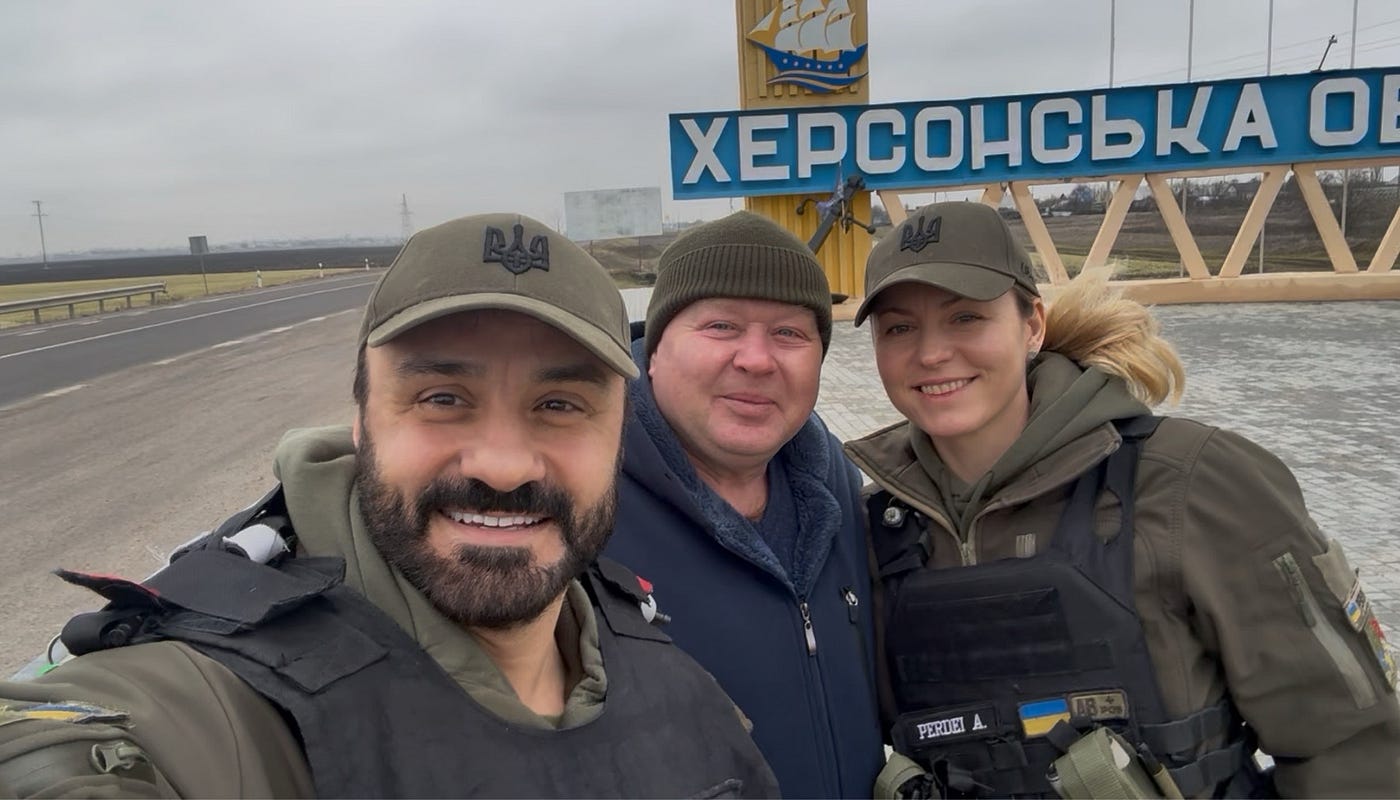
In 1.500 days of war, we recorded over 250 videos from ground zero and wrote more than 1,500 articles.
We are doing our best to provide genuine, first-hand reports from zones where almost no press dares to go. This means living in a kill zone constantly. We take the risk, but without your invaluable support, our voices would remain unheard and silent. Without brave people sharing our articles from afar, they would remain unread. Our reports would go unseen, and our efforts would be lost. There’s still a lot of work to do here, as the people around us are also in no better situation.
We’re renewing our fundraising campaign and thanking everyone who joins us in helping to restore what Russia is destroying. Moving forward with only a small reimbursement for each article from a brave newspaper that believes in us is extremely challenging. That’s why we are grateful to all the kind people who support us and trust in our mission.
Even a small donation helps.
We’ll keep you updated on developments.
Thank you all, dear friends
被隔离在基谢利夫卡:摆脱了俄军,却摆脱不了他们的战争
作者:Giorgio Provinciali
翻译:旺财球球
乌克兰前线报道
本文所列,皆为亲身经历。
所有影像均以智能手机拍摄。
没有摄制队,只有勇敢之手在记录。
基谢利夫卡 — 在这篇报道发给编辑部之前,一名农民踩上地雷被炸身亡。尽管这些地区在2022年已从俄方控制下解放,但此类事故愈发频繁,清理土地的难度因敌方的FPV无人机大幅增加——这些无人机每天投下数十枚叶形炸弹。
以至于连救援人员也难以抵达像那位平民这样的遇难者,因为他们同样成为了滞留弹药的攻击目标,救护车与医疗车被无情摧毁。
在为“La Ragione”的YouTube 频道录制最新一段视频时,我们自身也经历了极其危险的时刻。
(图:我们在乌克兰基谢利夫卡拍摄了这些影像——版权所有,Giorgio Provinciali)
穿行于这些土地上,这里曾是世界上最富饶、最有生产力的地区之一,如今却沦为鬼城荒原,我们不得不多次停止拍摄,却找不到遮蔽之处,因为基谢利夫卡几乎没有建筑还留存屋顶。
先是传统炮弹,随后是可遥控选择性投放的弹药,已经将所有建筑侵蚀殆尽。有些地方只剩下房屋的地基。仅存的少数有人居住的房屋也早已断电,俄方无人机甚至攻击了电线杆,意图彻底孤立这片地区。
幸存者自己动手制作了隔热与屏蔽措施,既为防止这些“死亡载体”的电子眼发现人类猎物,也为抵御严寒,在完全被隔离的状态下,甚至连阳光都无法照进他们的家中。
(图:Alla 与我一同在乌克兰基谢利夫卡被俄军摧毁的众多民用设施中报道——版权所有,Giorgio Provinciali)
然而,一对我们认识多年的夫妇冒生命危险每周至少一次来为基谢利夫卡的幸存者送食物。他们带来的鱼来自乌克兰的贝萨拉比亚,他们定期前往补给,因为在黑海布满了海上地雷,捕鱼几乎变得不可能。不过,从里尼和伊兹梅尔等河港取水同样危险,从敖德萨通往那里的重要通道,马亚基桥在近几个月已遭到俄方17次攻击。
(图:Alla与我在乌克兰基谢利夫卡附近报道——版权所有,Giorgio Provinciali)
我们这些朋友的出现并非偶然,而具有深远意义:代表着生命,以及战争,在名义上已被解放的这片土地上仍在顽强存在。
基谢利夫卡自2022年以来不再被俄军占领,但仍受其影响。这一点至关重要,因为它挑战了常见的战争二元观念:简单分为“被占领”与“自由”地区。正如我们在这样的“杀戮区”长期驻守所记录的,有些区域即便未被正式占领,也仍笼罩在俄军威胁的阴影之下:不可居住、无法生产、物流瘫痪、心理上被禁锢。
(图:Alla 与我在赫尔松周边的“杀戮区”报道——版权所有,Giorgio Provinciali)
回顾我们几年前的每日前线报道,很容易看出过去的破坏多为广泛、随意且机械式的。现在则是持续、选择性且高密度的。
这使得领土本身变成了一座活的陷阱。
危险不断变化,要求人们快速适应局势。如今,单纯躲过轰炸或避开狙击手已不够:你还得躲避那个武装观察者:他盯着、选中、并攻击你。
基谢利夫卡触及了俄入侵乌克兰的深层痛点,标志着从对称性的阵地战,转化为持续性的非对称饱和式打击。
(图:Alla 与我在朋友的老拉达车内,加速穿过危机四伏的乌克兰赫尔松的道路——版权所有,Giorgio Provinciali)
那枚炸死农民的地雷,不仅是夺走了一条生命;它摧毁了耕作这一行为——从根本上破坏了人类与土地的关系。
随后对救援者的袭击则证明了俄罗斯的目的是破坏乌克兰文明的基本链条。在正常社会中,受伤者呼救,会有人前来救助。但在我们此刻写稿的的这个“杀戮区”,连这一基本机制都已被粉碎。这不仅是残忍行为,更是精心设计的“区域封锁战略”的一部分。
对俄政权雇佣的远程杀手而言,目标不仅仅是一个人或一辆车,而是支撑人类生存的整个生态系统:电力、照明、通讯、通行、避难所。
(图:Alla 与一位幸存者交谈——版权所有,Giorgio Provinciali)
这种形式的现代战争不仅旨在摧毁,还旨在使生命无法继续。
因此我们以“隔离”一词来描述这里的情形:没有直接的军事占领,但事实上已被封禁。
电子战反制手段能帮助我们消除部分威胁,但维系一丝社区感的是人本身。正如那对勇敢无私、坚持每周来送食物的朋友夫妇。
现代战争的衡量标准不再是一个弹坑,而在于这些人为保障平民生存而经历的旅程。
俄方的攻击目标是整条后勤链条,从厢型车,到必经的桥梁、加油站与河港。
这清楚表明,当今战争的深度远远超出四年前我们所称的“接触线”范围。
自那以后,像我们写作所在的这些已被解放到城镇,经历了技术化战争的演进。
所有这一切无法在远处解释清楚。
要做到这一点,你需要在这里(生存并)亲身经历。
(图:本文真正的英雄,与 Alla 和我在一起——版权所有,Giorgio Provinciali)
***
在1500天的战争中,我们从前线录制了250多段视频,并撰写了1500多篇文章。
我们尽最大努力从几乎没有媒体敢进入的地带进行真实的一手报道,这意味着我们长期生活在“杀伤区”。我们承担风险,但若没有你们宝贵的支持,我们的声音将无从传出。若没有远方的勇敢的人们转发分享我们的文章,它们将无人问津。我们的报道会被忽视,我们的努力将付诸流水。这里还有大量工作要做,周围的人们境况同样艰难。
我们正在更新筹款活动,感谢每一位加入我们、帮助修复俄罗斯破坏的人们。仅靠一家勇敢的报纸为我们每篇文章支付微薄稿酬以维持前线报道极为困难。因此,我们感激所有支持并信任我们使命的善良人们。
哪怕是小小的捐助也有助益。
我们会持续为你们更新事态进展。
谢谢大家,亲爱的朋友们
如果你认可我们的工作,请支持我们
在过去三年里,自乌克兰大规模战争爆发以来,作为自由撰稿人,我们一直在乌克兰战争的所有前线进行报道…
Paypal捐款链接:https://www.paypal.com/pools/c/9nxoMcbYLF
