
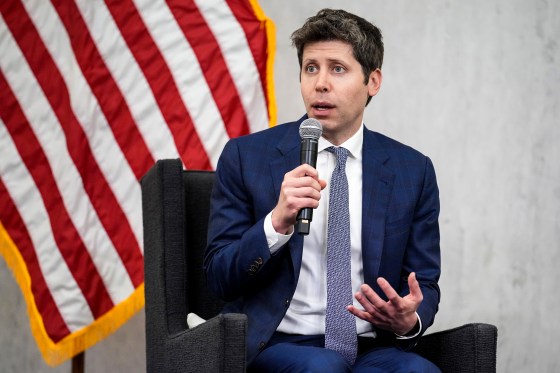
OpenAI CEO Sam Altman says the company has no plans to seek a government backstop for its $1 trillion worth of data center investments, further walking back comments made by the company’s chief financial officer this week that some interpreted as indicating the company would seek one.
In an X post Thursday, Altman said the ChatGPT maker neither has nor wants guarantees for its data centers.
“We believe that governments should not pick winners or losers, and that taxpayers should not bail out companies that make bad business decisions or otherwise lose in the market,” he wrote. “If one company fails, other companies will do good work.”
The post comes amid increasing concerns around the amount of investment going toward artificial intelligence and data centers, a trend some see as stretching stock market valuations to their limit while putting downward pressure on an already shaky labor market.
“The Magnificent 7 comprise over 30% of the S&P 500 — a level of concentration exceeding even that of the dot-com bubble,” analysts at LSEG wrote in a note on Monday. The seven companies include Apple, Meta, Alphabet, Amazon, Microsoft, Tesla and Nvidia.
These anxieties have led to significant selling in shares of Nvidia, Palantir and other AI-related stocks this week. The Nasdaq 100, a basket of the 100 largest nonfinancial companies that have their shares listed on the Nasdaq exchange, is currently on pace for its worst week since April. This week alone, Nvidia has fallen more than 7%, wiping out more than $400 billion in market value. Microsoft has also slumped 4% and Palantir has plunged 13%.
Late Wednesday on LinkedIn, OpenAI CFO Sarah Friar clarified comments she made earlier that day during a panel hosted by The Wall Street Journal in which she said she hoped the federal government would play a role in supporting investments in AI. The Journal and subsequently other media outlets seized on the remarks as suggesting the company was seeking a federal guarantee.
“OpenAI is not seeking a government backstop for our infrastructure commitments,” she wrote. “I used the word ‘backstop’ and it muddied the point. As the full clip of my answer shows, I was making the point that American strength in technology will come from building real industrial capacity which requires the private sector and government playing their part.”
Looming behind the reassurance is the question of how OpenAI plans to make good on the $1.4 trillion in commitments it has made to build out AI infrastructure. In September, Friar told CNBC that OpenAI expected to generate approximately $13 billion in revenue this year, raising concerns about its financial trajectory.
On a tech podcast released last weekend, Altman appeared to grow agitated when host Brad Gerstner asked how OpenAI would fund the commitments given current revenues.


