
Into The Kill Zone That Speaks Of A Past War
原文链接:https://medium.com/@giorgioprovinciali/into-the-kill-zone-that-speaks-of-a-past-war-0c9d69cdf5ba?sk=9c765fabfe6006ae5db5a2c1c298f6c8
Into The Kill Zone That Speaks Of A Past War
By: Giorgio Provinciali
Live from Ukraine
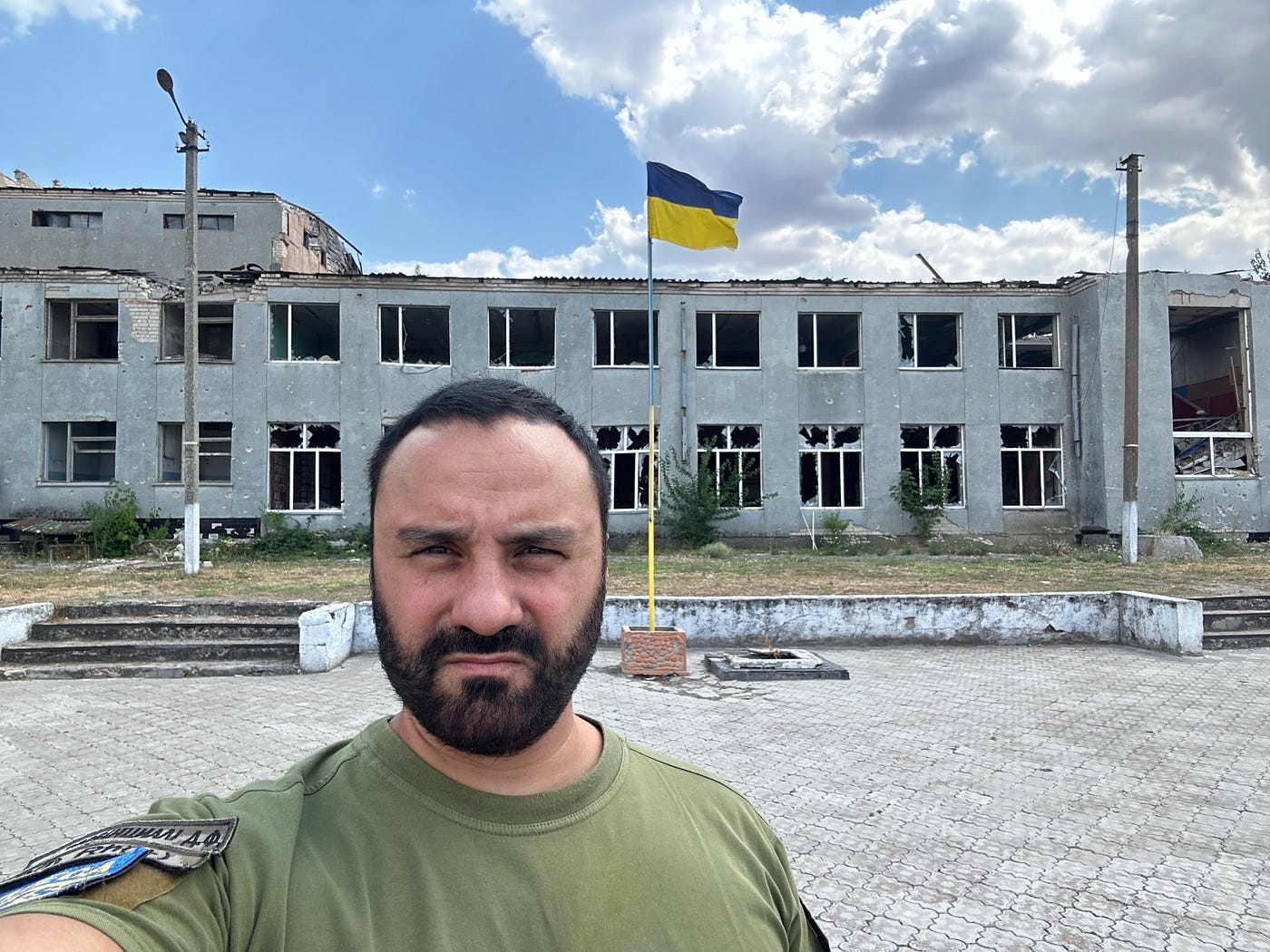
Posad-Pokrovske – When the settlements in Kherson Oblast’ occupied by the Russians on the right bank of the Dnipro were liberated, we recorded a videofrom the main square of this city. Using continuous, fast-moving footage, we showed how not a single house remained intact. As far as the eye could see, the 360-degree horizon visible from Posad-Pokrovske revealed only piles of rubble, spent shell casings and fragments of artillery shells, and the burned-out wreckage of cars in which Ukrainian civilians had died while trying to escape the Russian occupiers.
Starting with the destroyed town hall – no longer standing – very little remains in that square. In place of the ruins, one can now see the foundations that Posad-Pokrovske laid for its future and Ukraine’s. Although just twenty kilometers away, the Russian occupiers continue targeting settlements like this one from the opposite bank of the Dnipro.
The “We Build Ukraine” reconstruction project – already visible on signs at the first excavation sites – is progressing rapidly. So much so that next to the remains of houses destroyed by artillery, new ones built to modern safety and design standards are already visible.
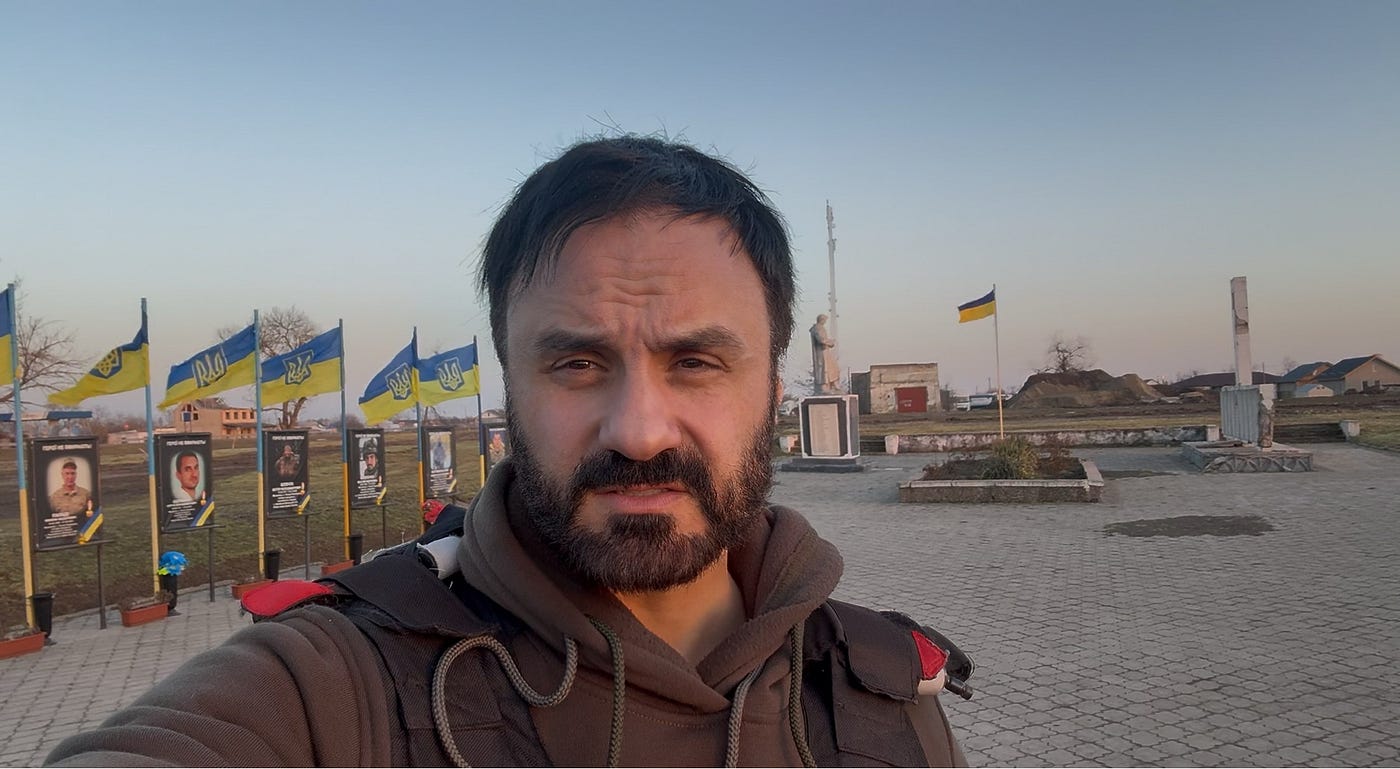
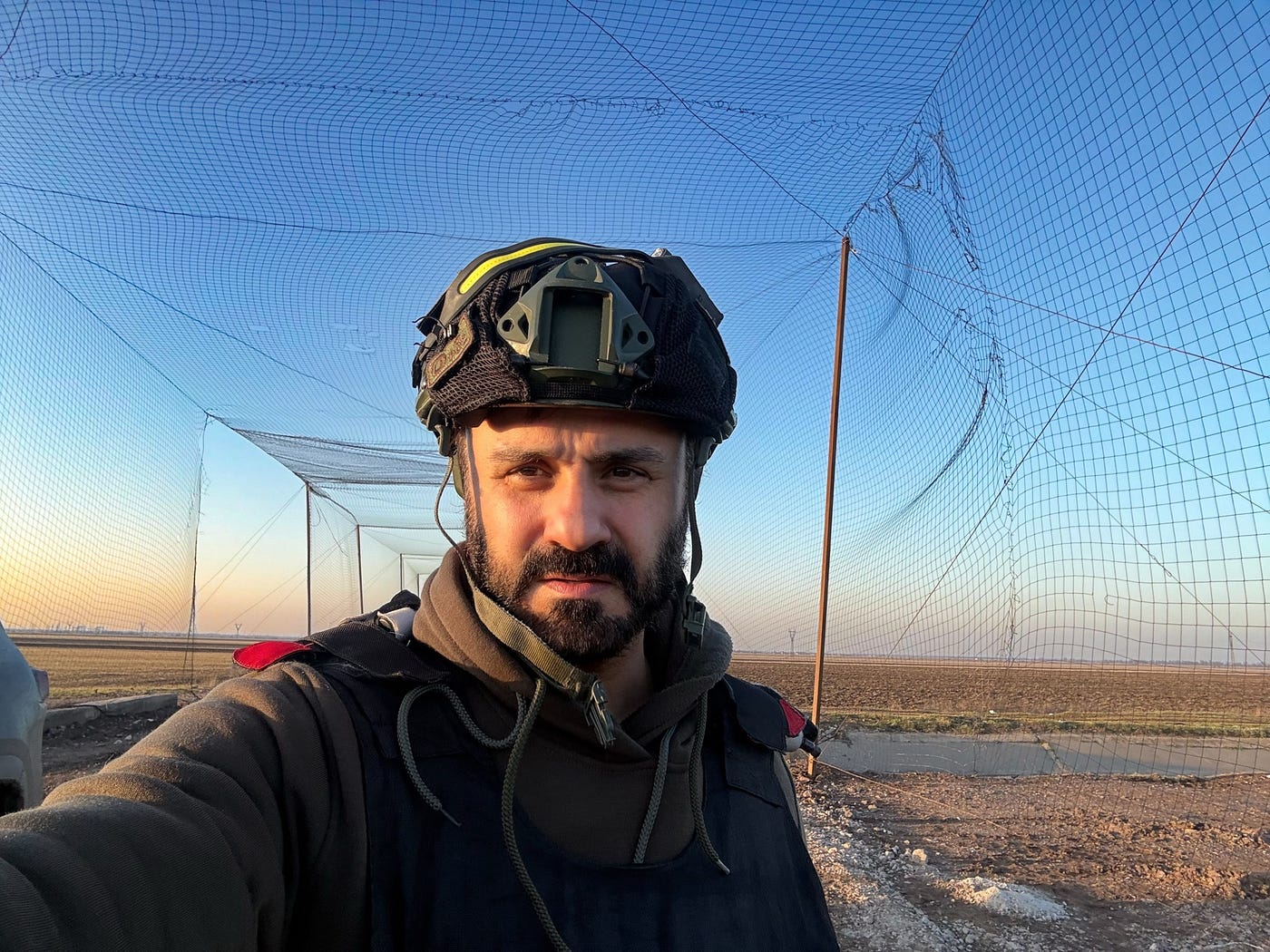
As we highlighted in the video linked in this page, anti-drone nets start right at the very end of the main road in Posad-Pokrovske.
FPV drones fly overhead, and thunderous glide bombs rattle the air, but the will to survive is so strong that people of all ages defy their fate, hurriedly moving bricks, furniture, and suitcases into their new homes through those corridors.
When asked, one civilian started by saying, «When there was war» – as if it’s a bad memory already forgotten. Still, even the gunfire is so loud it makes your chest tremble, reminding us how close the front lines are.
For those who have endured the horrors inflicted by the Russians during occupation, what might cause any reckless visitor to run for cover, or keep far from here, today is just a trivial matter.
Just yesterday, in the minefields on the outskirts of Posad-Pokrovske, we recorded another clip, two Russian FPV drones were shot down while searching for human prey.
The danger here looms.
The chance of a new Russian invasion is high enough to see chevaux de frise at checkpoints and warnings of mines along the roadsides. However, in these areas, war is already spoken of in the past tense.
Faithfully describing what we are experiencing in Posad-Pokrovske short-circuits grammatical and historical tenses. Those who speak of it in the past tense have shifted the concept of war from a kinetic to an existential event. For the local population, war is occupation, the absence of freedom, systematic terror. Russian fire is perceived as a threat but not as an erasure of identity.
This is a fundamental shift in the psychology of liberated territories that we have already observed elsewhere.
Building houses 20 kilometers from the line of contact, under the threat of FPV drones and on the edge of minefields, means denying the Russian strategy of the permanent gray zone. It means transforming the contested space into a consolidated one, sending a clear message: we will not retreat.
It is the civilian response to what we have often described militarily as the shift from gray zone to shade of gray: not total control, but control sufficient to survive.
This non-physical border represents the entire current conflict, which is no longer characterized by massive territorial advances but by the expansion of the depth of engagement.
Russia did not conquer Posad-Pokrovske. It occupied it and was driven out. It struck it. It made it costly. It tried to turn it into a non-place. The Ukrainian response has been to rebuild, inhabit, and name the future. The buzzing of drones, the whizzing of bullets, and the thunder of bombs are details that one gets used to, and which do nothing to dampen the desire to speak of the ‘russian world’ at the past tense.
The ongoing blackouts severely damaged our house’s heating system in Western Ukraine while we were in the Donbas.
Without electricity, the pump couldn’t circulate the liquid while the fire was lit. As a result, the system caught fire, and the whole house was at risk of burning. Fortunately, it did not, but the whole system needs to be changed, and the house needs to be restored. Tubes are all bent, walls are blackened by haze, and the heating system doesn’t work, requiring an entirely new system.
We are doing our best since Alla’s parents live there, but there’s still a lot to work on here, too, as the people around us are in no better situation.
We’re renewing our fundraising campaign and thanking everyone who joins us in helping us restore what Russia is destroying. Even a small donation helps. We’ll keep you updated on developments.
Thank you all, dear friends
进入诉说往昔战争的杀伤区
作者:Giorgio Provinciali
翻译:旺财球球
乌克兰前线报道
波萨德-波克罗夫斯克——当第聂伯河右岸、赫尔松州那些被俄罗斯占领的定居点获解放时,我们在该市的主广场录制了一段视频。通过连续、快速移动的镜头,我们展示了没有一栋房屋完好无损的景象。目之所及,360度视野里,波萨德-波克罗夫斯克可见的尽是瓦砾堆、用尽的弹壳和炮弹碎片,以及那些在试图逃离俄方占领者时被焚毁、车中有平民丧生的汽车残骸。
从被摧毁、已不复存在的市政厅开始,广场上所剩无几。废墟之处如今露出的是波萨德-波克罗夫斯克为自己和乌克兰未来打下的地基。尽管仅相距二十公里,俄军仍从第聂伯河对岸持续袭击像这样的定居点。
“我们重建乌克兰”项目的标牌已在首批开挖点出现,工程进展迅速。以至于在被炮火摧毁的房屋残骸旁,已可见按照现代安全与设计标准新建的房屋。
(图:这张照片是我在2022年波萨德-波克罗夫斯克获解放后所拍摄——版权所有,Giorgio Provinciali)
(图:这是我在同一广场上,2026年——版权所有,Giorgio Provinciali)
正如我们在本页链接视频中强调的,反无人机网从波萨德-波克罗夫斯克主干道的尽头就开始了。
FPV无人机盘旋头顶,轰鸣的滑翔炸弹震撼空中,但求生意志如此强烈,各年龄段的人们仍不惧命运,匆匆穿过这些通道将砖块、家具和行李搬入新居。
当被问及时,一位平民最先说的是“有战争那时候”——仿佛那是已被遗忘的痛苦记忆。然而,枪声如此震耳欲聋,令胸口发颤,提醒着我们前线如此接近。
对于那些在占领期间遭受俄方暴行的人来说,今日那些或能让任何鲁莽访客四散寻求掩护、或令人人远离此地的危险,如今对他们而言只是寻常之事。
就在昨天,在波萨德-波克罗夫斯克郊区的雷区里,我们录制了另一段画面,两架俄制FPV无人机在搜寻“人类目标”时被击落。
这里的危险仍然迫在眉睫。
俄罗斯再度入侵的可能性高到需要在检查站设置马刺路障,并在路旁设立雷区警示。然而,在这些区域,人们谈论战争时已多用过去时。
(图:我在从波萨德-波克罗夫斯克开始的反无人机通道。就在撰写本文前不久,一架FPV无人机在这里被击落——版权所有:Giorgio Provinciali)
如实描绘我们在波萨德-波克罗夫斯克所见,常使语法与历史时态发生短路。那些以过去时谈论它的人,已将“战争”这一概念从单纯的动能事件转变为一种存在性的事件。对当地人而言,战争是占领、是自由的缺失、是系统性的恐怖。俄方炮火被视为威胁,但并未抹杀他们的身份。
这是我们在其他获解放地区已观察到的一种根本性心理转变。
在接触线二十公里之外、在FPV无人机威胁与雷区边缘建房,意味着否认俄罗斯制造永久灰色地带的战略。它意味着将争议空间转化为巩固的领地,传递明确的信息:我们不会撤退。
这是平民对我们常以军事术语描述的“从灰色地带到灰色影域”转变的回应:不是完全控制,而是足以生存的控制。
这个非物理性的边界代表了当前冲突的整体特征:已不再以大规模的领土推进为主,而是以交战深度的扩展为特征。
俄罗斯并未征服波萨德-波克罗夫斯克。它占领了这里,后来被驱逐。它轰击这里,使之代价高昂,试图把它变成一处无地之地。乌克兰的回应是重建、居住并命名未来。无人机的嗡鸣、子弹的破空声与炸弹的隆响,终成人们习以为常的细节,但丝毫不能削弱人们以过去时谈论“俄罗斯世界”的愿望。
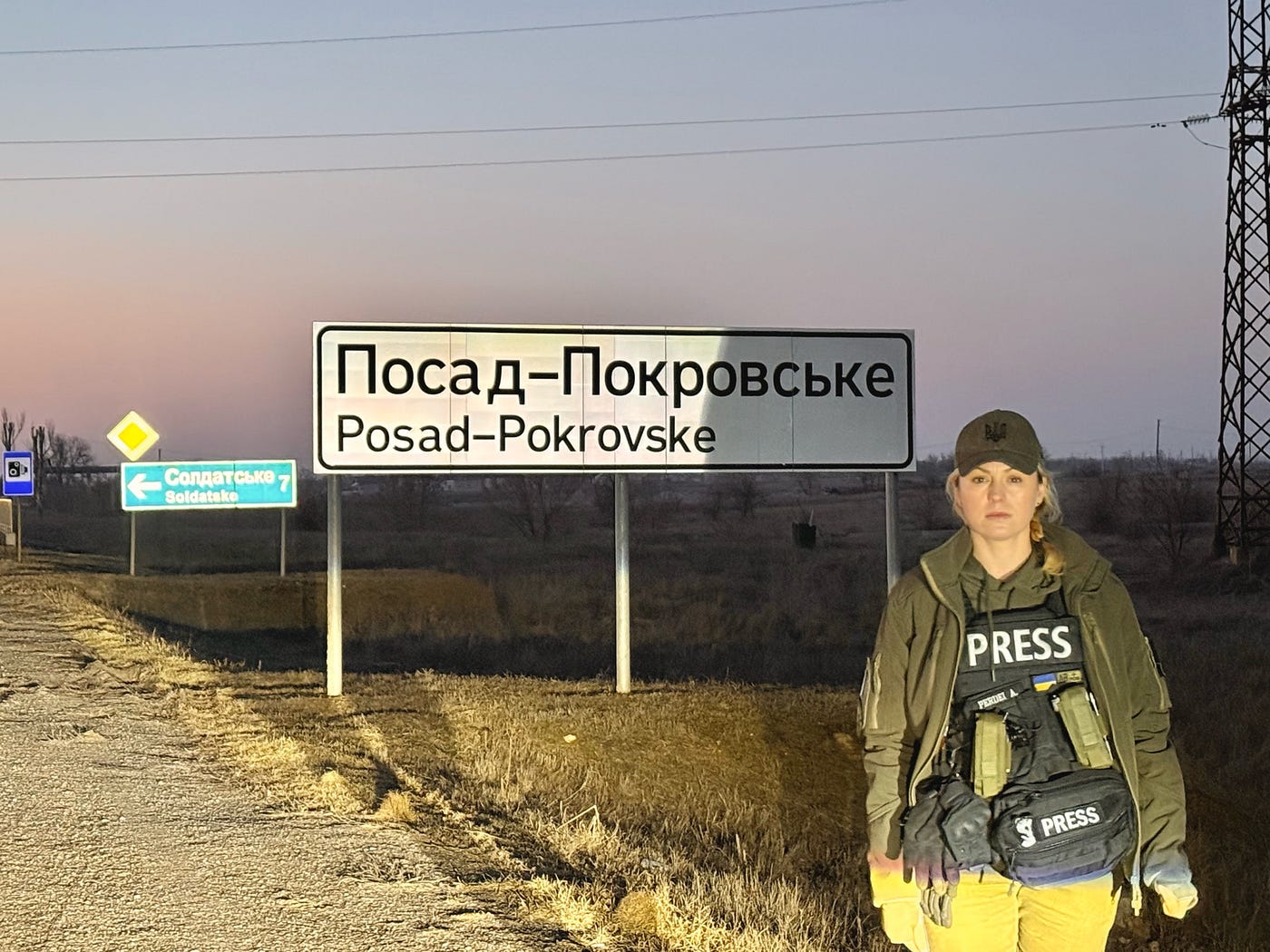
(图:Alla在乌克兰赫尔松波萨德-波克罗夫斯克为本文报道——版权所有,Giorgio Provinciali)
***
持续的停电严重损坏了我们在乌克兰西部的家中的供暖系统,而我们当时就在顿巴斯。
没有电,点着的炉火无法通过水泵循环热水。结果,系统起火,整个房子面临着烧毁的风险。幸而未被烧毁,但整个系统需要更换,房子也需要修复。管道都是歪的,墙壁被烟雾熏黑,供暖系统无法正常工作,需要彻底更换。
我们正在尽最大努力,因为Alla的父母住在那里,但这里还有许多工作要做,周围的人处境也好不到哪儿去。
我们正在重启筹款活动,感谢每一位支持我们修复被俄罗斯摧毁一切的朋友。即使是小额捐款也有帮助。我们会及时更新进展。
感谢大家,朋友们。
如果你相信我们的工作,请支持我们
在过去的三年里,我们一直在乌克兰战争的各个前线进行报道……
https://www.paypal.com/pools/c/9mFvpzKUrU
WENXUECITY.COM does not represent or guarantee the truthfulness, accuracy, or reliability of any of communications posted by other users.
Copyright ©1998-2026 wenxuecity.com All rights reserved. Privacy Statement & Terms of Use & User Privacy Protection Policy
