The Zone Is Burning: Russia’s Ecocide Reaches Chornobyl’, Spreading Radioactive Ashes
By: Giorgio Provinciali
Live from Ukraine
Chornobyl’ — Fire races through the trees of the Exclusion Zone as winds whip up ash, radioactive dust, and memories. According to Ukrainian authorities, by 5:00 PM on May 8, the fire had already affected approximately 1,200 hectares in the Chornobyl’ area, fueled by drought and strong gusts. In the neighboring Chernihiv Oblast’, however, flames have already devoured over 4,300 hectares of forest, nearly doubling in size in just one day.
These are not two uncontrolled forest fires but rather a Russian war that is once again transforming itself, turning the environment into a weapon.
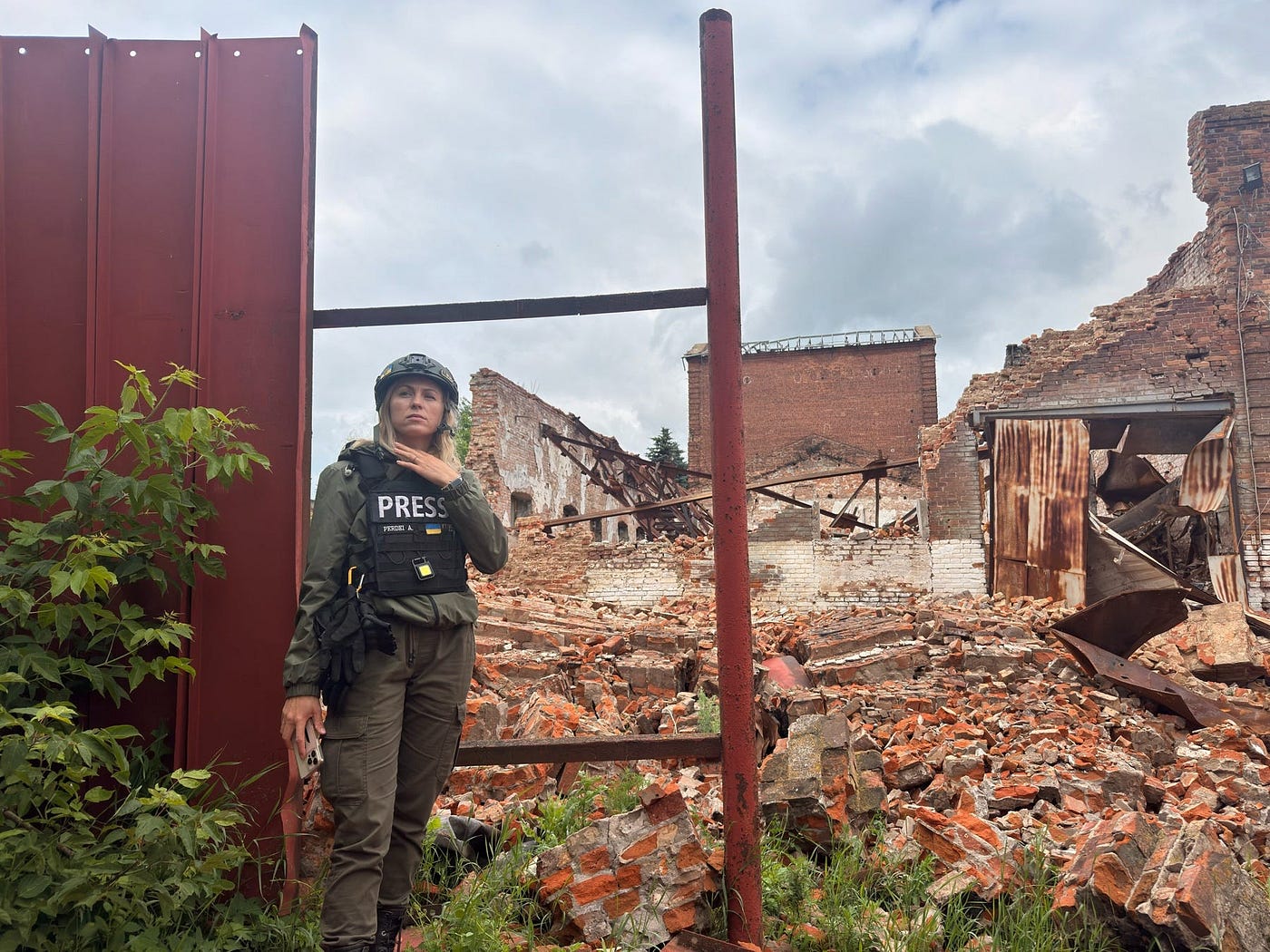
According to the state-owned enterprise “Forests of Ukraine”, the blaze in the Chernihiv border region apparently began after massive Russian bombing.
Putting out the flames is nearly impossible because drones arriving from Belarus and the Russian Federation target anything that moves, including firefighting vehicles and rescue workers.
This isn’t the first time Russia has used the Zone as a tool, nor is it the first time the Zone has responded. In the spring of 2022, Russian troops dugtrenches in the Red Forest, the most contaminated area. Those soldiers later fell ill. Three years later, on February 14, 2025, a Russian high-explosive drone struck the protective shell built by more than 40 countries to isolate the highly radioactive Corium, causing significant damage to the ventilation and filtration systems that maintain the negative pressure gradient inside the sarcophagus.
Today, the fire.
Moscow continues, and the world watches.

In this portion — silenced by the vast majority of Western media and absent from it — of a no longer linear front, everything becomes an operational volume: roads, power plants, water systems, relief networks, forests, evacuations, and environmental infrastructure. Even fires now mark the kill zone.
I have long described how this war is now being fought in «shades of gray», where operational depth is no longer measured in a few linear kilometers but in an ever-deeper volumetric space. In this context, forest fires and dam destruction become interdiction platforms.
The logic of Russian terror is simple: if drones prevent firefighters from approaching, fire continues to destroy in place of artillery.
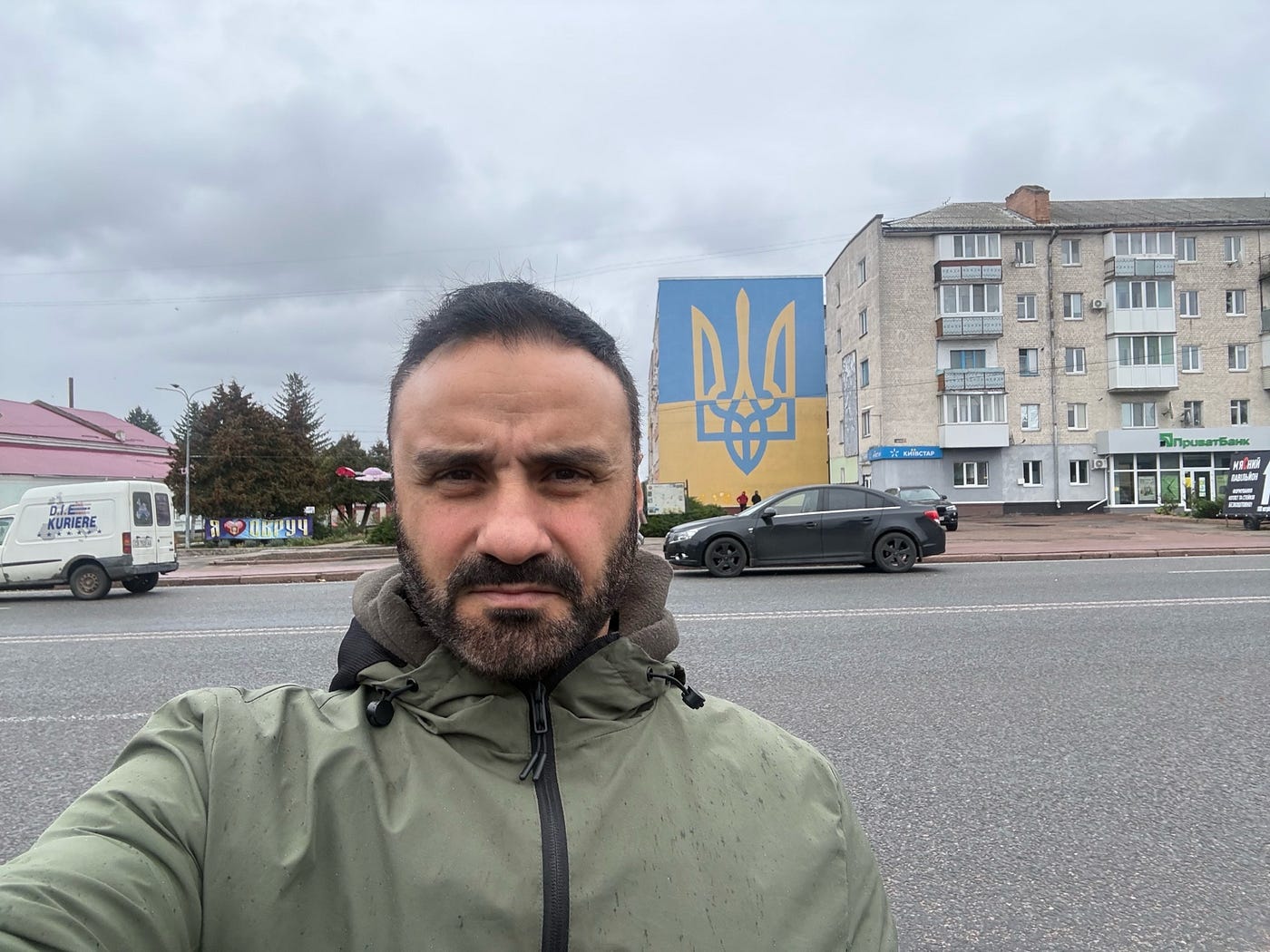
In the case of the Chornobyl’ Exclusion Zone, the situation also takes on an enormous psychological and symbolic dimension. The Ukrainian Interior Ministry has clarified that gamma radiation levels remain within normal limits and that monitoring of Cesium-137 has not revealed any critical anomalies.
However, it should be remembered that the combustion of contaminated biomass acts as an aerosol resuspension process. Even if external gamma radiation levels remain normal, the risk of internal absorption from inhaling alpha-emitting particles in the ash remains underestimated and is technically complex to monitor, because the biological toxicity of many inhaled radionuclides cannot be assessed solely from ambient gamma doses.
The problem is not merely radiological: Chornobyl’ carries with it a global imagery rooted in forty years of nuclear fear. Its mere name can transform a fire into an international psychological detonator.
Even without a significant radiological release, the Kremlin still achieves a destabilizing effect: the perception of permanent vulnerability.
This is the same mechanism observed in Russian attacks on energy infrastructure and water systems, such as the attack in Nova Kakhovka.
Beyond a few declarations of outrage and condemnation, no world leader has yet addressed the Moscow regime, which continues to strike only the bare minimum necessary to achieve maximum civilian, logistical, and media impact.
Yet, from a legal perspective, the issue is extremely serious. Article 35 of the First Additional Protocol to the Geneva Conventions prohibits means and methods of warfare capable of causing widespread, long-lasting, and serious damage to the natural environment. Article 55 also requires the protection of the natural environment against such damage.
While demonstrating direct intent at the international level may seem complex, we are faced here with a fire sparked by documented Russian bombings and by drones of the same nature that are deliberately preventing it from being extinguished.
We are entering the realm of what can be defined as environmental warfare.
A form of indirect warfare that exploits nature as a vector of strategic attrition — overloading the attacked country’s logistical, environmental, and psychological capabilities — in which any destruction is not a collateral effect but the systemic use of the environment as an instrument of military and civilian pressure.
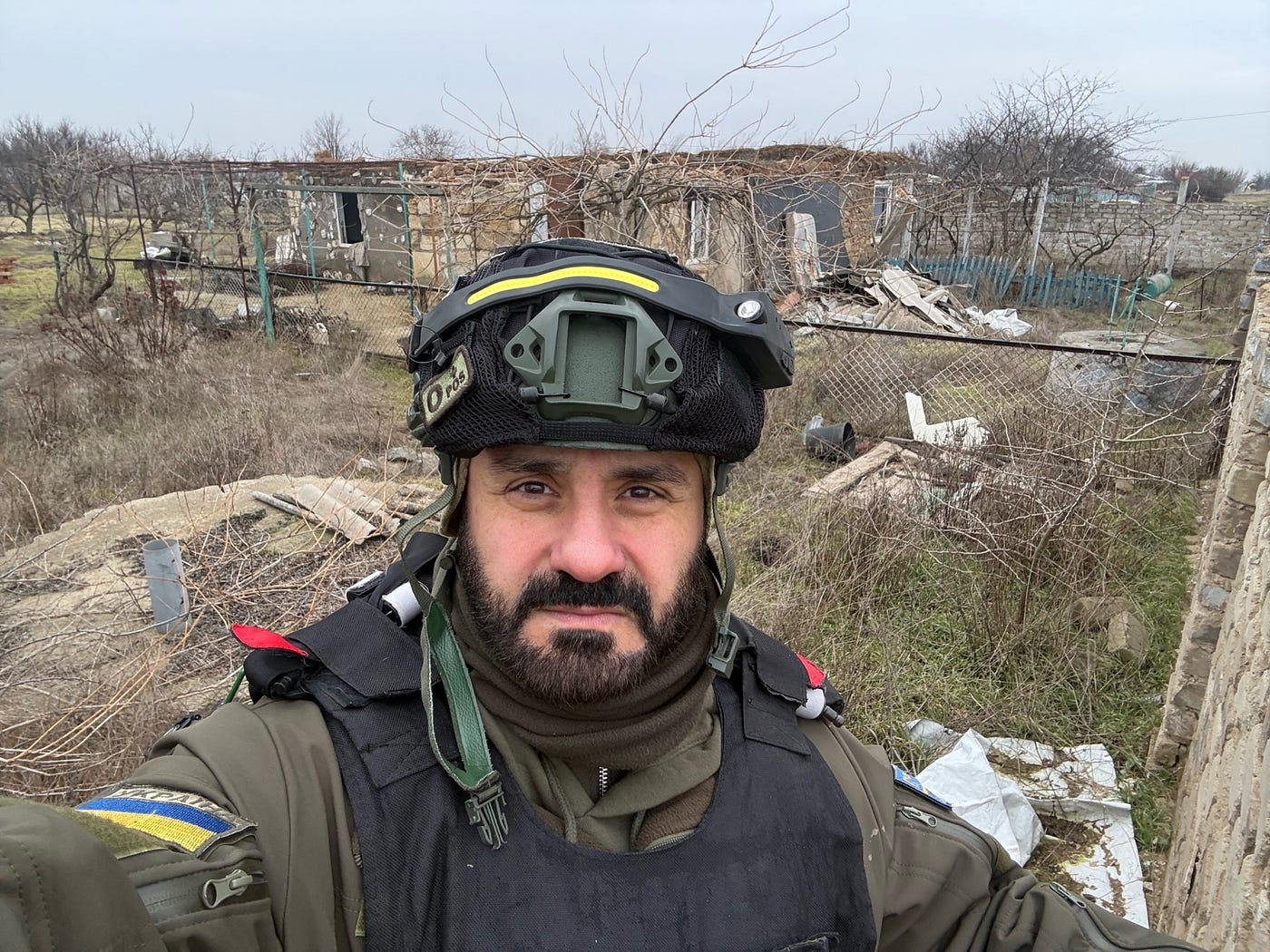
The Russian regime continues to demonstrate that the war it has unleashed is aimed not only at the territorial conquest of Ukraine but also at the disintegration of the very functionality of Ukrainian space.
For Moscow, it’s not enough to occupy; it must render uninhabitable, unmanageable, and exhausted what it cannot control. The combined use of flames and drones creates precisely this: a bubble of denial of access that serves not to conquer but to functionally sterilize a vast area.
The fire in the Exclusion Zone inevitably evokes what T. S. Eliot called «a heap of broken images» in “The Waste Land.”
That’s exactly what remains after the passage of the russkij mir through Ukraine: blackened forests, emptied villages, cities recognizable only by the imprints of their buildings left on the ground, anti-drone nets stretched across vast spaces, firefighters forced to operate under FPV threat, and territories where even nature becomes a battlefield.
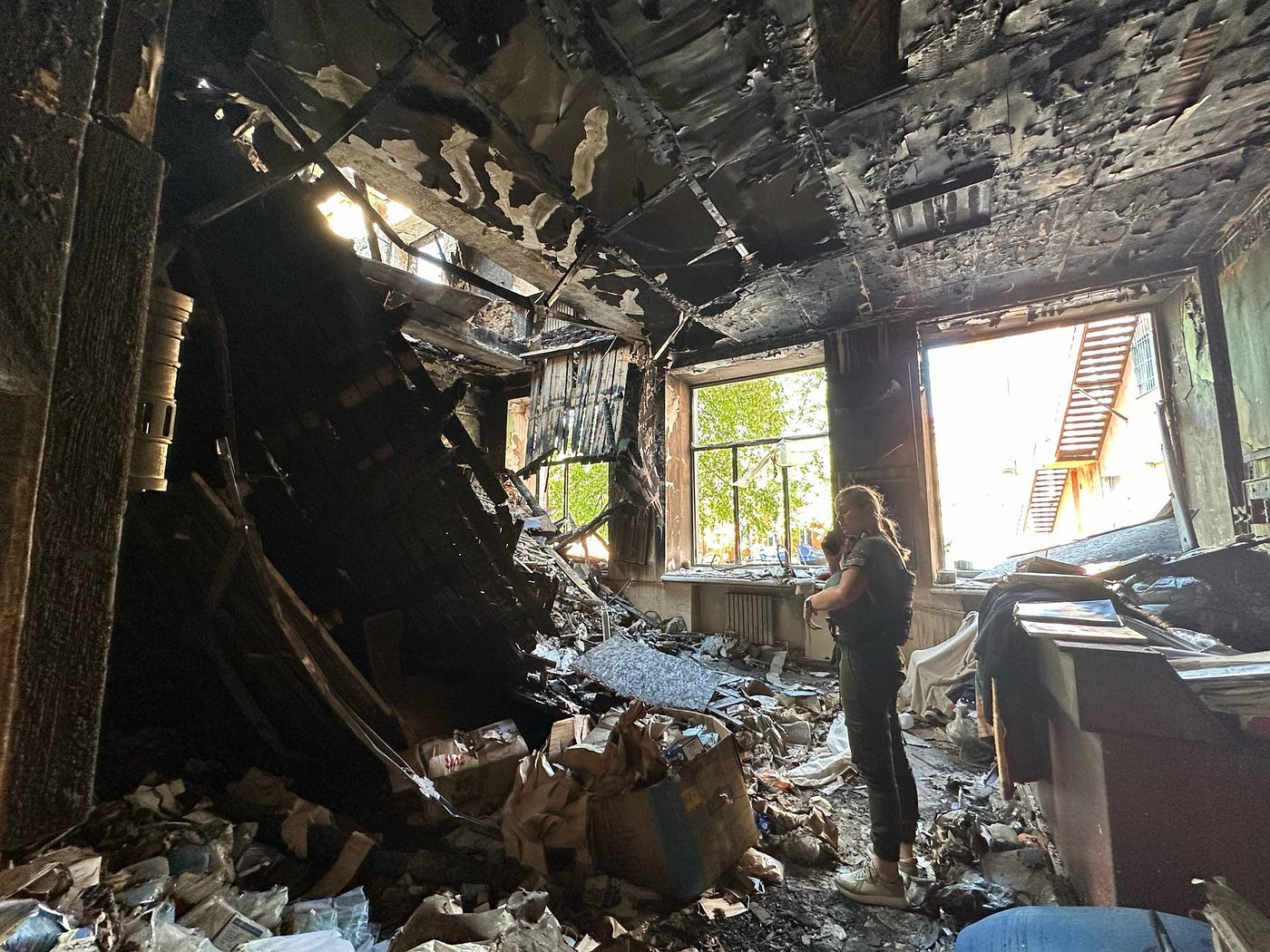
As the wind disperses radioactive ash from a world we wished to leave in history's darkest chapters, the Chornobyl’ Exclusion Zone — once a symbol of the Soviet disaster — is now becoming part of a new Russian imperial catastrophe.
A Dante’s Inferno that devours not only hopes but also the landscape itself, as the blaze is already spreading toward Russian-controlled territory.
As if the ecological war unleashed by Moscow has begun to engulf the very environment it sprang from.
In 1.539 days of war, we recorded over 250 videos from ground zero and wrote more than 1,500 articles.
We are doing our best to provide genuine, first-hand reports from zones where almost no press dares to go. This means living in a kill zone constantly. We take the risk, but without your invaluable support, our voices would remain unheard and silent. Without brave people sharing our articles from afar, they would remain unread. Our reports would go unseen, and our efforts would be lost. There’s still a lot of work to do here, as the people around us are also in no better situation.
We’re renewing our fundraising campaign and thanking everyone who joins us in helping to restore what Russia is destroying. Moving forward with only a small reimbursement for each article from a brave newspaper that believes in us is extremely challenging. That’s why we are grateful to all the kind people who support us and trust in our mission.
Even a small donation helps.
We’ll keep you updated on developments.
Thank you all, dear friends
燃烧的禁区:俄罗斯的生态灭绝蔓延至切尔诺贝利,放射性灰烬扩散
作者:Giorgio Provinciali
翻译:旺财球球
乌克兰前线报道
切尔诺贝利——火在禁区林间迅速蔓延,狂风将灰烬、放射性尘埃与记忆一起卷起。据乌克兰当局称,截至5月8日17:00,受干旱和强风助燃,切尔诺贝利地区的火情已波及约1200公顷。而在邻近的切尔尼戈夫州,火势已吞噬超4300公顷森林,面积在一天之内几乎翻倍。
这并非两起失控的森林火灾,而是一场再次演化的俄罗斯战争,把环境本身变成了武器。
(图:Alla与我在乌克兰苏梅比洛皮利亚杀伤区现场报道——版权所有,Giorgio Provinciali)
国有企业“乌克兰森林”表示,切尔尼戈夫边境地区的火情显然始于大规模的俄方轰炸。
扑灭火焰几乎不可能,因为从白俄罗斯和俄罗斯来的无人机瞄准一切移动目标,包括消防车和救援人员。
这并非俄罗斯首次把禁区当作工具,也并非禁区首次做出回应。2022年春,俄军在最受污染的红色森林挖掘战壕,随后那些士兵出现疾病。三年后,2025年2月14日,一架俄方高爆无人机击中了由40多个国家构筑、用以隔离高放射性熔融燃料(Corium)的防护壳,严重损坏了维持内部负压梯度的通风与过滤系统。
今天,是大火。
莫斯科继续其行动,世界在旁观望。
(图:我在乌克兰与白俄罗斯北部边境报道 ——版权所有,Giorgio Provinciali)
在这被大多数西方媒体沉默或忽视的区域、在已不再呈线性的前线上,一切都成为作战空间的一部分:公路、电厂、供水系统、救援网络、森林、疏散与环境基础设施。甚至连火灾也成为杀伤区的标志。
我早已描述过,这场战争如何以“灰色地带”的形式展开:作战深度不再以几公里线性距离衡量,而是在不断扩深的立体体积空间内推进。在此语境下,森林火灾与大坝破坏成为阻断和消耗的作战平台。
俄方恐怖逻辑很简单:如果无人机阻止消防人员靠近,火焰就代替炮火继续摧毁一切。
(图:我在乌克兰奥弗鲁奇、与白俄罗斯接壤处报道 ——版权所有,Giorgio Provinciali)
就切尔诺贝利禁区而言,事态还具有巨大的心理与象征意义。乌克兰内务部已澄清,伽马辐射水平仍在正常范围内,铯?137监测未发现重大异常。
但须记住,受污染生物质的燃烧会导致放射性物质以气溶胶形式重新悬浮。即便外部伽马辐射水平正常,吸入灰烬中放射性α粒子的内部吸收风险仍被低估且技术上难以监测,因为许多吸入放射性核素的生物毒性不能仅从环境伽马剂量判断。
问题并非仅限放射性:切尔诺贝利承载着根植于四十年核恐惧的全球意象。其名称本身足以把一场火灾转化为国际心理引爆点。
即便没有严重的放射性泄漏,克里姆林宫仍然实现了其破坏目标:制造了永久脆弱感的认知。
这与俄方对能源基础设施和供水系统的攻击,例如诺瓦·卡霍夫卡水坝的袭击,的机制如出一辙。
除了几句愤慨与谴责声明,尚无世界领导人对莫斯科政权做出实质性制止,而莫斯科持续攻击,仅以最小代价换取最大的平民、后勤与媒体影响。
(视频:Alla与我在乌克兰赫尔松录制的影像 ——版权所有,Giorgio Provinciali)
从法律角度看,事态极其严重。《日内瓦公约》第一附加议定书第35条禁止会对自然环境造成广泛、长期及严重损害的战争手段与作战方法。第55条亦要求保护自然环境免受此类破坏。
在国际层面上证明直接意图或许复杂,但当前情形非常明确:我们面对的是由有记录的俄方轰炸引发、并由同类无人机故意阻止灭火行动的火灾。
我们正进入可定义为环境战的领域。
这是一种间接战争,利用自然作为战略消耗的载体,压垮被攻击国的后勤、环境与心理承受力,在这种模式下,任何破坏不再是附带效应,而是将环境系统性地作为军事与民生压力工具。
(图:我与Alla在乌克兰赫尔松杀伤区报道 ——版权所有,Giorgio Provinciali)
俄方政权不断表明,其发动的战争不仅旨在占领乌克兰领土,还旨在瓦解乌克兰空间本身的功能性。
对莫斯科而言,仅仅占领不足以满足目的;它必须使无法控制之地变得无法居住、无法治理、并被耗尽。火焰与无人机的组合正创造出这种效果:一个拒绝进入的区域,其目的不是征服,而是功能上使大片区域失去效用。
禁区之火不可避免地让人联想到T·S·艾略特在《荒原》中所说的:“碎裂影像的堆积”。
这正是俄式世界席卷乌克兰后的景象:焦黑的森林、空无一人的村庄、仅以建筑遗迹来辨识的城市轮廓、横跨广阔空间的反无人机网、在无人机威胁下作业的消防员,以及连自然也被改造为战场的领土。
(图:Alla与我在乌克兰赫尔松,被俄方攻击引发的大火摧毁的海军学院现场报道 ——版权所有,Giorgio Provinciali)
当风将放射性灰烬从我们本希望永远封存于历史最黑暗篇章的世界中吹散时,切尔诺贝利禁区——曾是苏联灾难的象征——正在成为新的俄罗斯帝国灾难的一部分。
一部吞噬希望亦吞噬大地本身的但丁地狱,火势已向俄方控制区域蔓延。
仿佛莫斯科掀起的生态战争开始吞噬其自身赖以生发的环境。
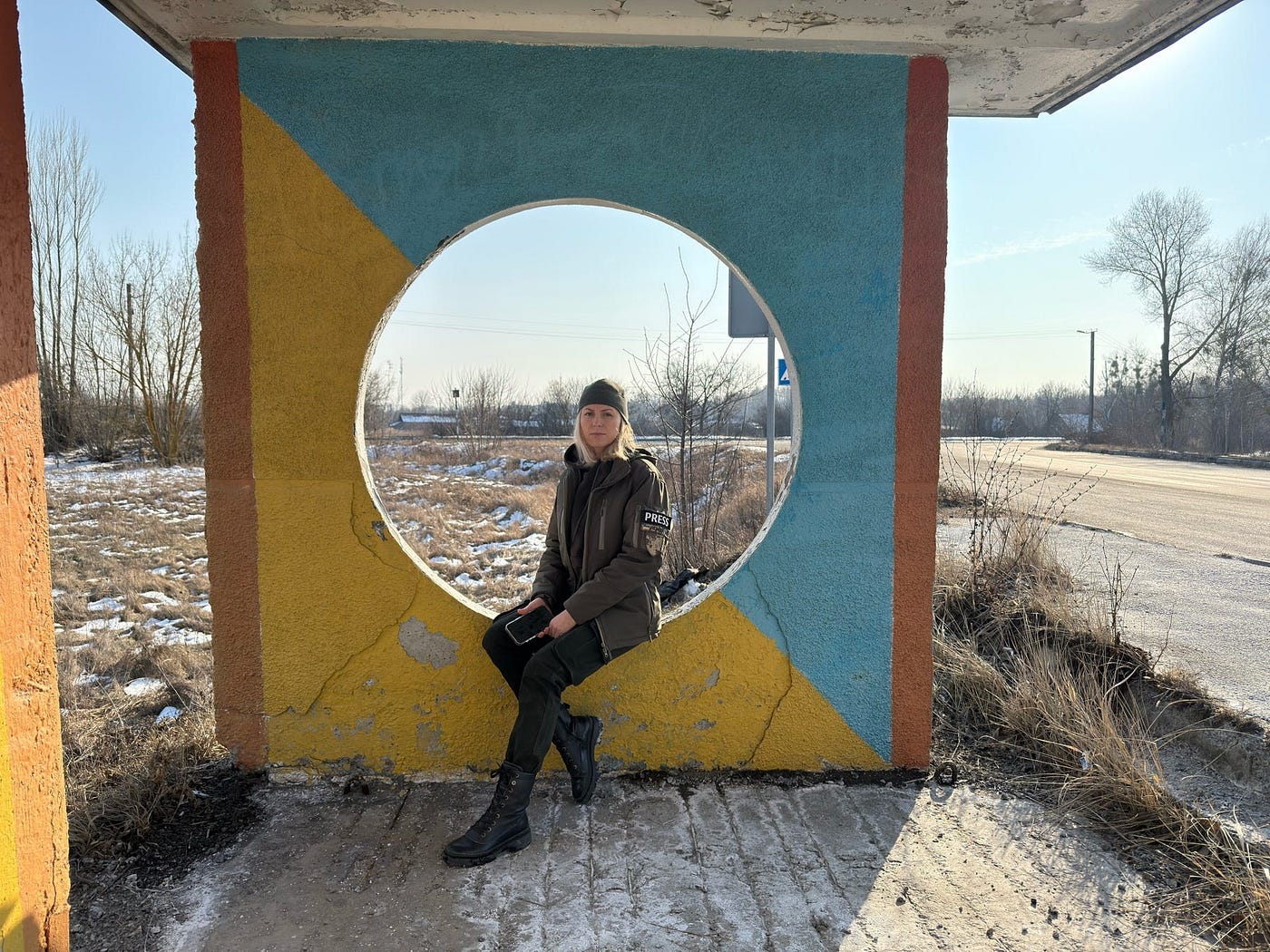
(图:Alla在前往乌克兰切尔诺贝利前在一处公交站短暂停留 ——版权所有,Giorgio Provinciali)
***
在1539天的战争中,我们从前线录制了250多段视频,并撰写了1500多篇文章。
我们尽最大努力从几乎没有媒体敢进入的地带进行真实的一手报道,这意味着我们长期生活在“杀伤区”。我们承担风险,但若没有你们宝贵的支持,我们的声音将无从传出。若没有远方的勇敢的人们转发分享我们的文章,它们将无人问津。我们的报道会被忽视,我们的努力将付诸流水。这里还有大量工作要做,周围的人们境况同样艰难。
我们正在更新筹款活动,感谢每一位加入我们、帮助修复俄罗斯破坏的人们。仅靠一家勇敢的报纸为我们每篇文章支付微薄稿酬以维持前线报道极为困难。因此,我们感激所有支持并信任我们使命的善良人们。
哪怕是小小的捐助也有助益。
我们会持续为你们更新事态进展。
谢谢大家,亲爱的朋友们
如果你认可我们的工作,请支持我们
在过去三年里,自乌克兰大规模战争爆发以来,作为自由撰稿人,我们一直在乌克兰战争的所有前线进行报道…
Paypal捐款链接:https://www.paypal.com/pools/c/9oqgW5u5oE
