原文链接:
The 150 km Kill Zone Was Already Here
By: Giorgio Provinciali
Live from Ukraine
Synelnykove – In an article published on March 14, “The Telegraph” presented as news the expansion of the Ukrainian kill zone to 150 km from the front and the related implications for Russian logistics.
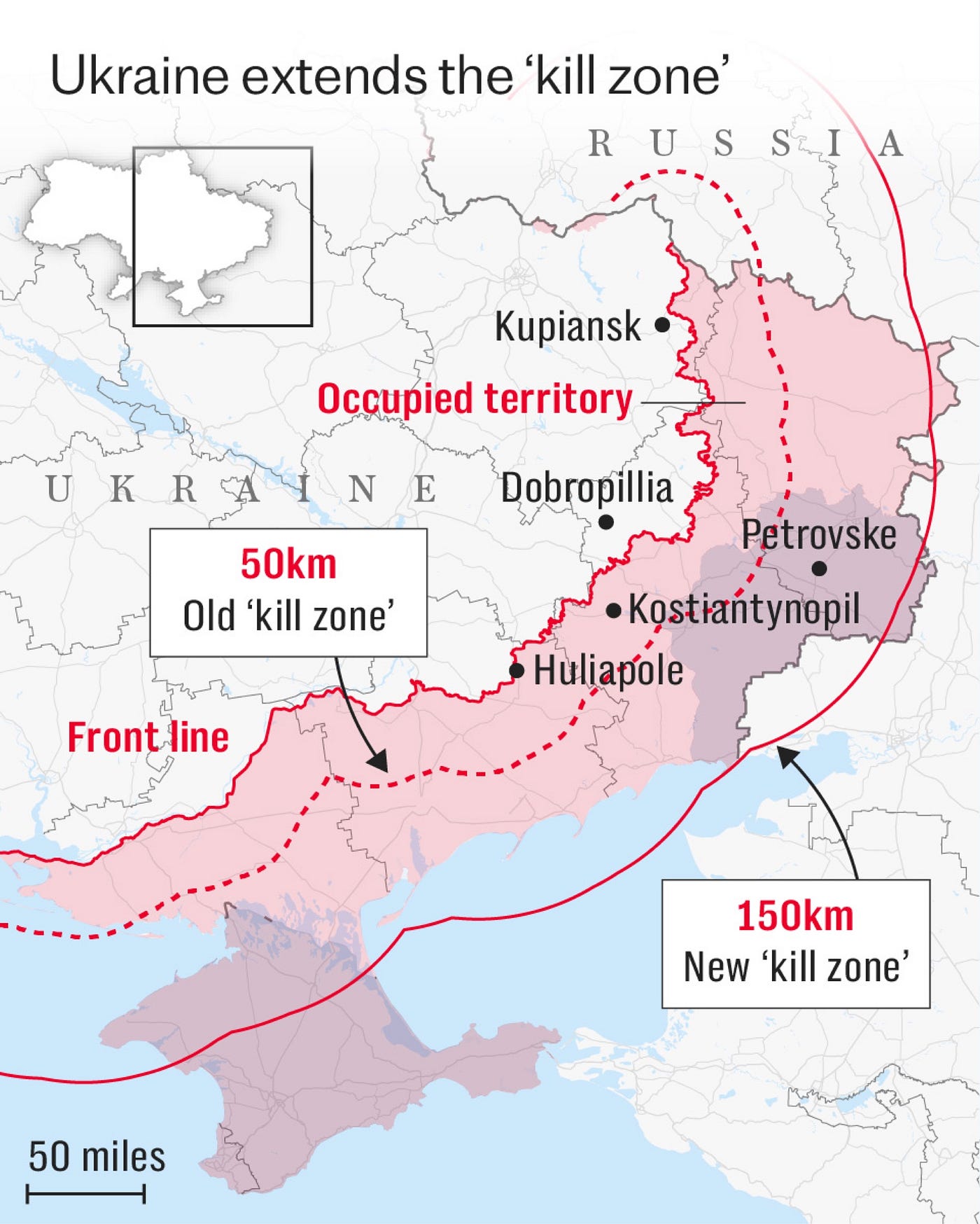
Many other media outlets have recently commented that article with all the excitement typically reserved for breaking news. This makes one wonder where they were in the past months, since we’ve been covering it – exactly in those terms – for at least a year.
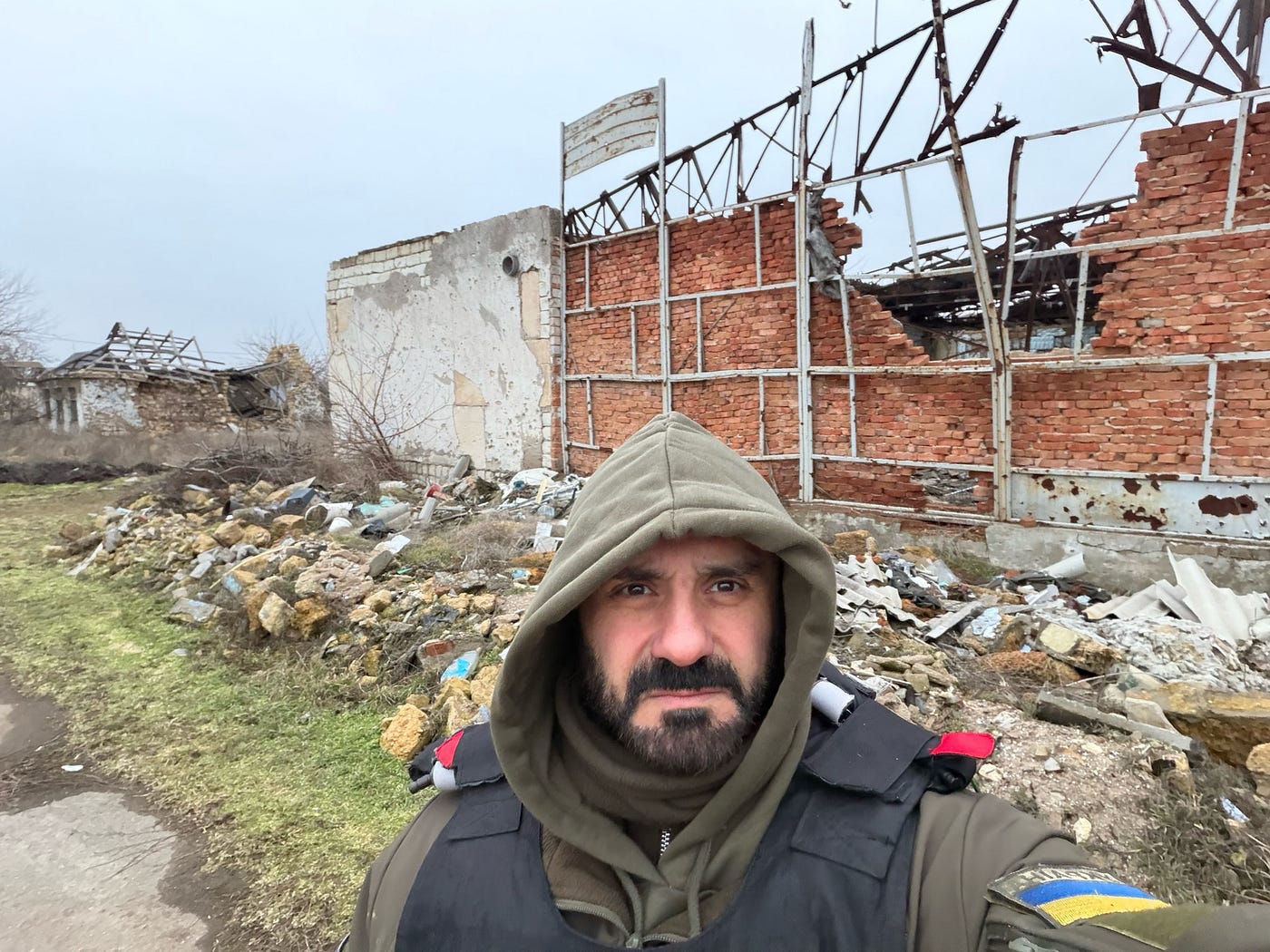
So much so that last November 11, we went so far as to explain in an articlewritten from this very city how the very concept of a front has now become completely irrelevant, given that, in addition to the mutual infiltration zones defined by the operational range of the most classic FPVs (20 km, eroded in part by territory controlled by the Russians and the Ukrainians), there are risk gradients determined by how densely both sides can project their technology.
Word for word, Commander-in-Chief of the Ukrainian Armed Forces, Oleksandr Syrsky, described four months later – and in precisely the same way – an «indefinable» front that now includes what we once would have called ‘rearways’.
While commendable, “The Telegraph’s” attempt to capture the situation – as presented – is incomplete and only half-confirms a picture that this type of journalism manages to describe structurally after the reality it claims to explain.
Settlements like Synelnykove, Pavlohrad, Balabyne, Posad-Pokrovske, Ukrainka, Novohryhorivka, Kyselivka, Oleksandrivka, and hundreds of others we have reported on in recent months show how technology has changed, with mutual adaptations on both sides. Not only on the Ukrainian side. With delays of four to six months compared to our reports, other media outlets have gradually started sharing descriptions – though approximate – that are fairly accurate.
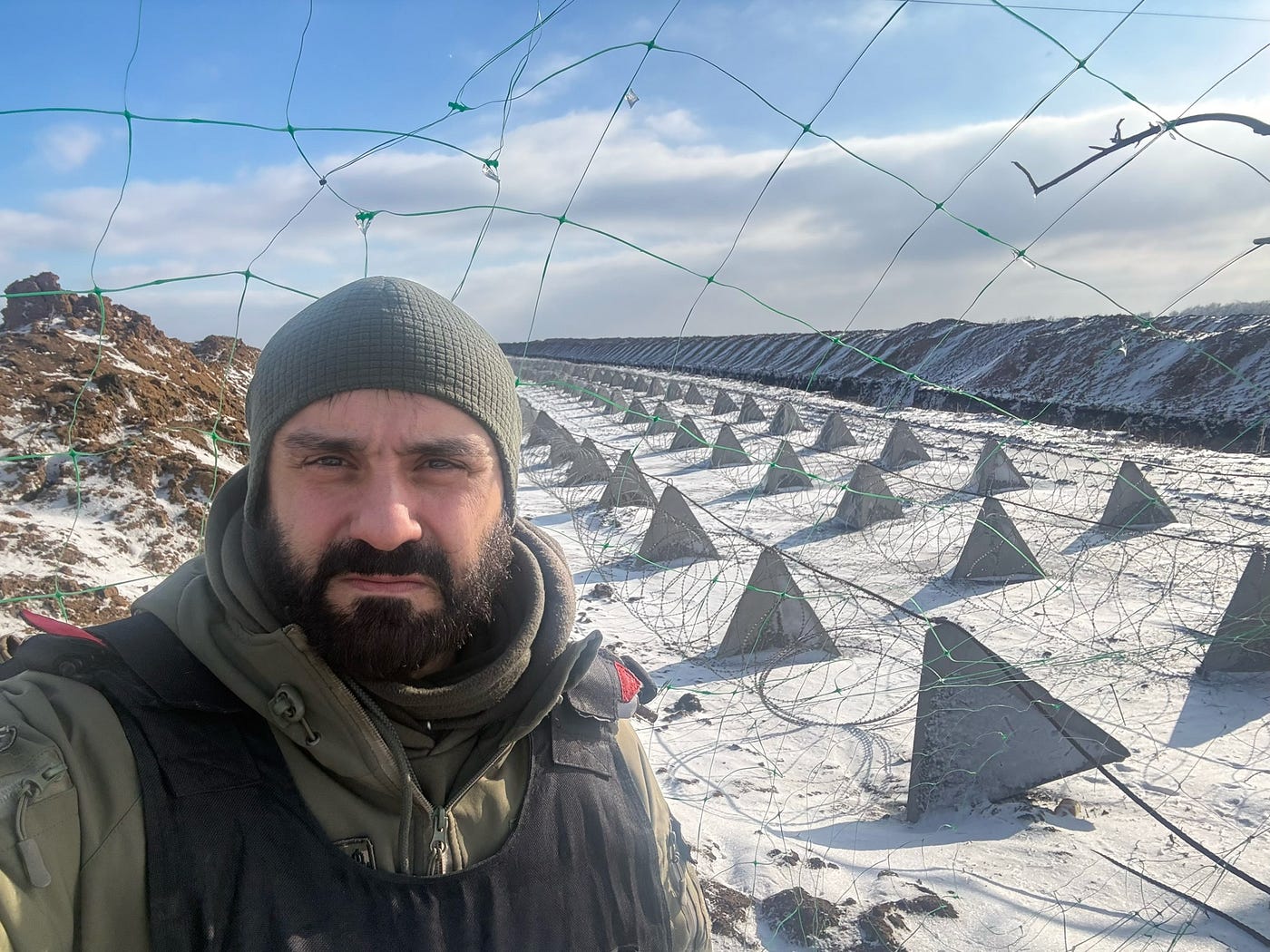
On February 24, “Reuters” described a battlefield dominated by drones that are extending the kill zone along the entire front, making any ground movement increasingly deadly. The next day, that same outlet reported that Ukrainian workers were installing anti-drone nets along 4,000 km of roads precisely because «Moscow is increasingly targeting supply routes and rear bases». On February 4, “Le Monde” documented how the Russians were striking more than 100 km from the contact line, adding that attacks up to 150 km were already possible even without Starlink.
This isn’t a dispute over journalistic primacy: scripta manent. It’s not about claiming a chronological precedent, but rather providing a correct interpretative model. It’s about shifting the issue from the level of media novelty to the structural level of war.
Beyond sensationalism, it’s necessary to explain that the operational space is no longer binary – safe or unsafe, front or rear – but continuous, layered, and probabilistic. In analytical terms, this offers a much more sophisticated description than the one presented by “The Telegraph”, which tends to treat the 150 km as an almost breathtaking threshold, that is, as something new in itself rather than a sign of systemic change already occurring.
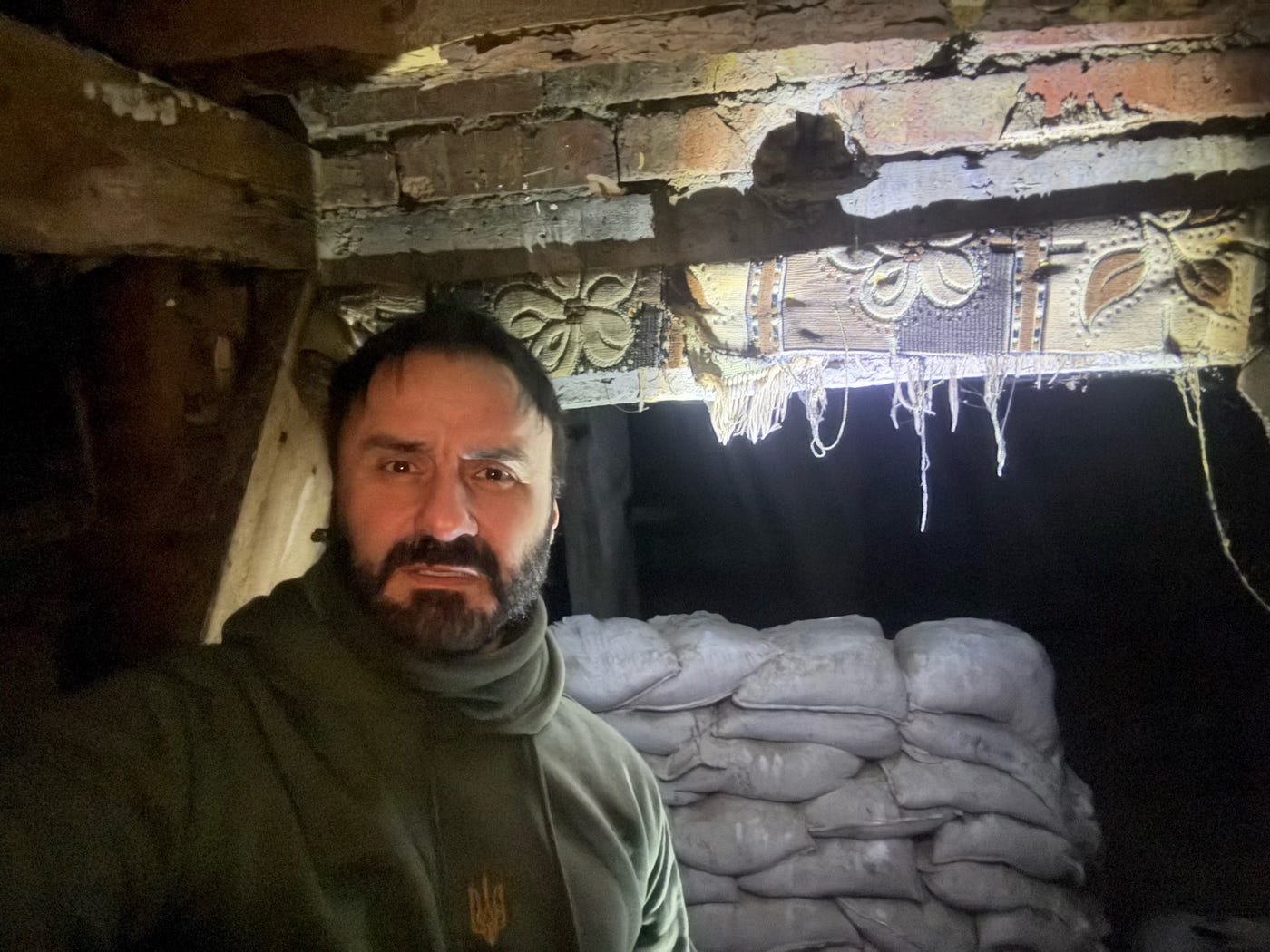
The transformation of the battlefield isn’t about merely extending the range, but about dissolving the traditional distinction between front and rear. The key today is the mutual adaptation between sides.
We’re not dismissing the effectiveness of Ukrainian technology, but it’s important to clarify that the entire war theater has been reshaped by both sides. The hundreds of city names we include in our daily reports are not just decorative; they serve as evidence from the field that supports a larger point. We must challenge a common misconception in many Western narratives, which tends to see innovation as solely a Ukrainian advantage, overlooking the real dynamic – a cycle of innovation and counter-innovation.
Four years ago, we read journalists writing – from a distance – that «the Russians are being thrown into the Ukrainian meat grinder with shovels».
From the front, we explained a very different reality.
Over the years, we have described the profound transformation of modern warfare.
It’s not enough to just be there and be the first. One needs to be present and observe carefully. Direct coverage isn’t only about witnessing firsthand, but about seeing differently.
Those who observe remotely tend to spot the conflict’s transformation when it results in a clear headline. On-the-ground observers understand its gradual changes, shifts, and ongoing nature. That’s why mainstream media often talk about ‘turning points’ when in reality it’s just the delayed emergence of a process. This is also why the convergence between Syrskyj’s statements and our texts is not only lexical but also conceptual.
The 150 km kill zone is not the main event today, but rather a sign of a deeper change. Ignoring that it involves both sides, or downplaying one, is fundamentally wrong.
There has been no ‘discovery’, but rather a delayed media acknowledgment. The war hasn’t suddenly changed, but – based on what we read – the language to describe it has come too late.
We are doing our best to provide genuine, first-hand reports from zones where almost no press dares to go. This means living constantly in a kill zone. We take the risk, but without your invaluable support, our voices would stay unheard and silent. Without brave people sharing our articles from afar, they would remain unread. Our reports would go unseen, and our efforts would be lost. There’s still a lot of work to do here, as the people around us are also in no better situation.
We’re renewing our fundraising campaign and thanking everyone who joins us in helping to restore what Russia is destroying. Moving forward with only a small reimbursement for each article from a brave newspaper that believes in us is extremely challenging. That’s why we are grateful to all the kind people who support us and trust in our mission.
Even a small donation helps.
We’ll keep you updated on developments.
Thank you all, dear friends
150 公里杀伤区早已存在
作者:Giorgio Provinciali
翻译:旺财球球
乌克兰前线报道
锡内尔尼科韦 —3 月 14 日,《每日电讯报》刊登的一篇文章中将乌克兰将“杀伤区”扩大至距离前线 150 公里及其对俄方后勤的相关影响作为新闻进行了报道。
(图:《每日电讯报》最近发布的一张迅速传播的地图,标示了所谓“新”的150 公里杀伤区 —— 图片来源:《每日电讯报》)
许多其他媒体最近也以通常用于突发新闻的兴奋语气对该文进行评论。这不禁让人怀疑过去几个月他们都在哪里,因为我们至少在过去一年里就以完全相同的措辞在持续报道这一情况。
(图:我与 Alla 一起在乌克兰赫尔松迈尔恩的瓦砾中进行报道——版权所有,Giorgio Provinciali)
事实上,早在去年11月11日,我们就在一篇从这座城市发出的文章中详细说明了 “前线”这一传统概念已变得完全失效。原因在于,除了由最典型 FPV无人机约 20 公里作战半径所定义的双向渗透区(该半径在一定程度上被俄乌双方控制的地域抵消),还存在由双方投射技术密度决定的风险梯度。
四个月后,乌克兰武装部队總司令奥列克桑德·西尔斯基在字面上以几乎完全相同的表述描述了一个“难以界定”的前线,该前线现在包括我们曾称之为“后方”的区域。
《电讯报》试图呈现这一状况,虽值得肯定,但其呈现不完整,仅部分证实了这种类型的新闻都在现实都已经明确形成之后,才试图结构性地加以解释。
像锡内尔尼科韦、帕夫洛赫拉德、巴拉比内、波萨德-波克罗夫斯克、乌克兰卡、诺沃赫里霍里夫卡、基谢利夫卡、奥列克桑德里夫卡以及我们近月报道的数百个其他城镇,展示了技术如何演进,并催生出双方的相互适应。不仅仅是乌克兰方面如此。与我们的报道相比,其他媒体在约四到六个月的滞后后,才逐步开始给出虽然粗略但相当贴切的描述。
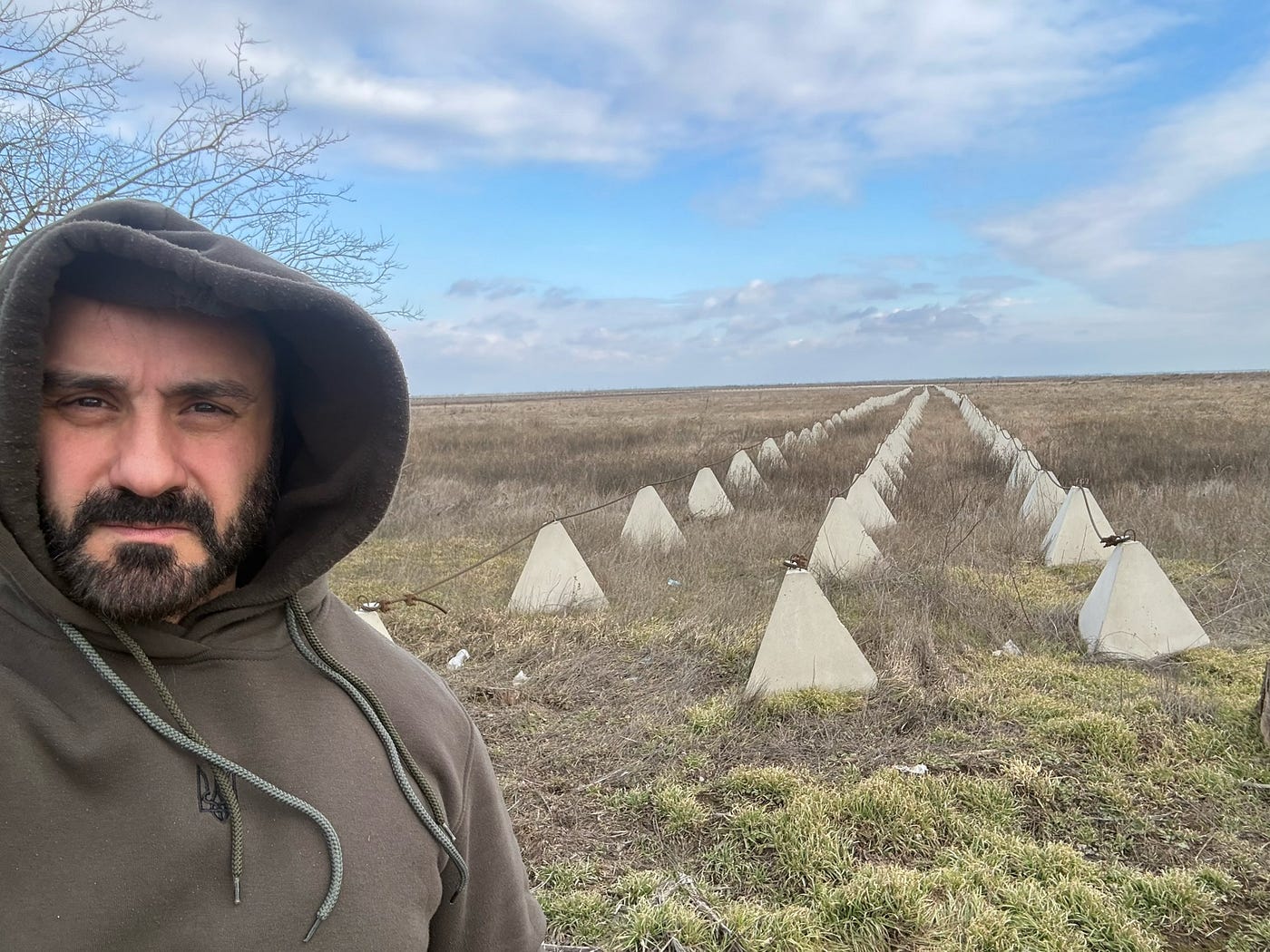
(图:我与 Alla 在顿巴斯防线进行报道时的照片。后方为防无人机网、龙齿及铁丝网。拍摄于乌克兰顿涅茨克州——版权所有,Giorgio Provinciali)
2 月 24 日,路透社描述了一个由无人机主导的战场,这些无人机正在沿整个前线延伸杀伤区,使任何地面机动都变得愈加致命。次日,该社再次报道乌克兰工人在 4,000 公里道路上安装防无人机网,正是因为“莫斯科对补给线路和后方基地的攻击日益增加”。2 月 4 日,《世界报》记录了俄军在接触线 100 多公里以外发动打击的情况,并补充称即使在没有 Starlink 的情况下,攻击达到150 公里也已成为可能。
这并非关于新闻首创权的争论:scripta manent(文稿长存)。问题不在于宣称时间上的优先,而在于提供一个正确的解释模型。要把焦点从媒体新颖性转移到到战争的结构性层面。
撇开哗众取宠叙事,我们必须清楚说明:作战空间不再是二元的——安全或不安全、前线或后方——而是连续的、分层的、概率性的。从分析角度看,这比《电讯报》所呈现的描述要复杂得多;该报倾向于将 150 公里视为几乎全新的、令人震惊的门槛,,而非已经形成的系统性变革的一个标志。
(图:我与 Alla 在乌克兰赫尔松最激烈的杀伤区内的乌克兰防御工事之中报道——版权所有,Giorgio Provinciali)
战场的转变不只是射程的延长,而是前线与后方传统界限的消解。如今的关键在于双方的相互适应。
我们并未否认乌克兰技术的有效性,但重要的是澄清:整个战区已被双方共同重塑。我们每日报道中列举的数百个城市名称并非装饰性细节;它们是来自前线的证据,支持更宏观的观点。我们必须挑战西方许多叙事中的常见误解:那就是把创新单方面视为乌克兰的优势,而忽视了真实的动态——创新与反创新的循环。
四年前,有些处于远程的记者写道:“俄罗斯人被铲子扔进乌克兰的绞肉机。”
但在前线,我们描述的是截然不同的现实。
这些年里,我们一直在记录现代战争的深刻变革。
仅仅在现场、和抢先报道是不够的。必须亲临现场并细致观察。直接报道不仅仅是亲眼目睹,更在于以不同的视角观察。
远距离观察者往往在事件形成头条时才察觉到冲突的转变。前线的观察者则明白,变化是渐进性、细微的与持续性。这也是为何主流媒体常在所谓“转折点”发生时才报道,而那实际上只是一个过程的晚期显现。这也解释了西尔斯基的表述与我们的文字不只是词汇上的一致,更是概念上的趋同。
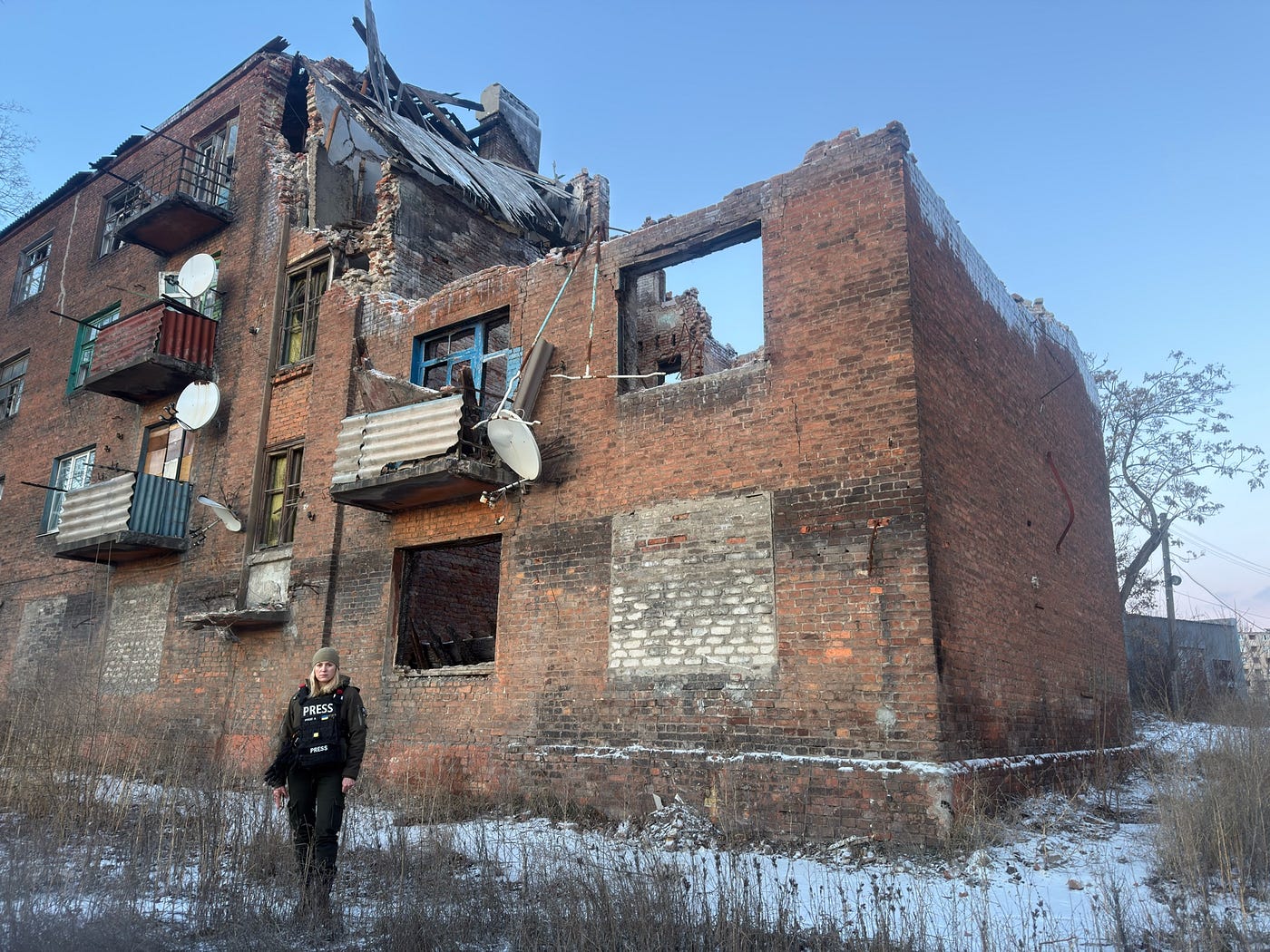
(图:我与 Alla 在乌克兰顿涅茨克的克拉马托尔斯克报道——版权所有,Giorgio Provinciali)
150 公里杀伤区本身并非当今的重点,而是更深层次变化的一个标志。忽视这一点涉及双方,或淡化其中一方的作用,都是根本性的错误。
这不是一次“发现”,而是媒体的延迟认知。战争本身并未突然改变,改变的是描述它的语言,且来的太迟了。
(图:我与 Alla 在乌克兰南部防线报道时、在撰写本文前的瞬间的照片——版权所有,Giorgio Provinciali)
***
持续的停电严重损坏了我们在乌克兰西部的家中的供暖系统,而我们当时就在顿巴斯。
没有电,点着的炉火无法通过水泵循环热水。结果,系统起火,整个房子面临着烧毁的风险。幸而未被烧毁,但整个系统需要更换,房子也需要修复。管道都是歪的,墙壁被烟雾熏黑,供暖系统无法正常工作,需要彻底更换。
我们正在尽最大努力,因为Alla的父母住在那里,但这里还有许多工作要做,周围的人处境也好不到哪儿去。
我们正在重启筹款活动,感谢每一位支持我们修复被俄罗斯摧毁一切的朋友。即使是小额捐款也有帮助。我们会及时更新进展。
感谢大家,朋友们。
如果你相信我们的工作,请支持我们
在过去的三年里,我们一直在乌克兰战争的各个前线进行报道……
https://www.paypal.com/pools/c/9nxoMcbYLF
