原文链接:https://medium.com/@giorgioprovinciali/in-the-cemetery-of-the-villages-of-kherson-45592f928ff2?sk=b751a2103ce900b52f5670862db54539
In the Cemetery of the Villages of Kherson
By: Giorgio Provinciali
Live from Ukraine
Kopani — Only the name remains of this small village in Kherson Oblast?. Everything else has been erased by Russian bombs. Tens of thousands of glide bombs, high-explosive drones, and thousands of other cruise and ballistic missiles launched against Ukraine over the past four years have wiped out inhabited settlements like this one, leaving piles of rubble where there were once homes, shops, and roads. As far as the eye can see, in the footage we recorded of Kopani, all that can be seen is destruction.
A ghostly, post-apocalyptic land, where killers in the pay of the Russian regime continue to expand by systematically persecuting Ukrainian civilians who escaped the bombings with FPV drones.
Larger mother drones release every day dozens of smaller FPV that chase down helpless human prey one by one, leaving them either dying, dismembered, or lifeless on the ground.
While recording in the ruins of Kopani, we met an elderly man rummaging for anything still usable. He explained that he had lived under Russian occupation and was one of only four survivors left after the oppression imposed by Putin’s troops on that small village. He said he had seen a soldier with a Z on his arm cold-bloodedly murder an elderly couple who had mercifully helped him when he was wounded, and that he had witnessed looting and humiliation of all kinds. So much so that he confessed to killing an occupier just as the latter was about to shoot him, after seeing him enter the hovel where he was taking refuge.
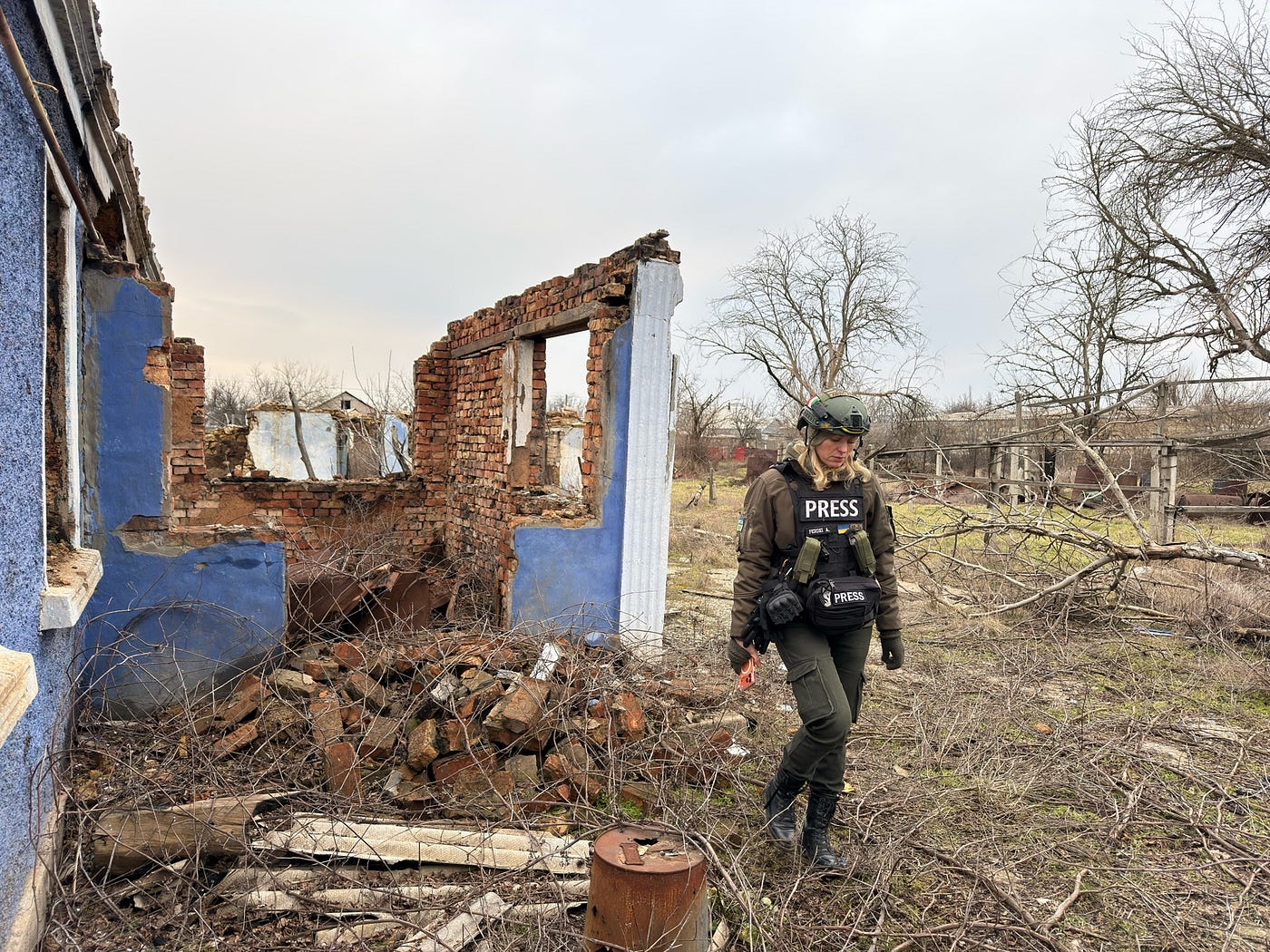
Of the other three survivors of the rashist massacre, only one elderly woman remains in Kopani today. Without going into too many details — we could perhaps explain in a book — here, Russian soldiers raped and beat defenseless Ukrainian civilians of all ages to death, for less than a cigarette.
Only one train a day now passes along the tracks that skirt the ruins of this village, heading to the capital city of Kherson. Russian drones target train workers and passengers, turning those carriages into ghost trains. Climbing the highest mound of rubble in Kopani, one can barely discern its topography, held in the soil by the imprint of the vanished buildings and their foundations. Next to those ruins, other debris from nearby settlements has been piled up. Piles of rubble that, from bombing raid to bombing, year after year, have earned this place the sad nickname “the cemetery of villages”.
Kopani is more than a destroyed settlement; it proves that Russian war goals include not only territorial gains but also erasing both Ukraine's land and its people.
The damage inflicted by the russkij mir here is not incidental or sporadic, but the foundation of a systematic extermination that has shifted from destroying property to persecuting people.
By demolishing villages and targeting survivors individually, the Russians are continuing the annihilation begun four years ago, stalking the few lives that remain.
Reminding Italians of this today is twice as important because it was precisely in March 2022 that two of the darkest chapters in war and journalism were written: the Bukha massacre and its denial.
While in that single suburb northwest of Kyiv, Russian and Chechen troops massacred 458 civilians (out of at least 1,300 documented across the entire region), several Italian journalists questioned whether the massacre was staged. People who had never been there claimed, from the comfort of television studios, that it was a fake story shot on those streets. Using the same arguments as the Russian Foreign Minister, two Italian journalists supported what would later become the Kremlin’s official version.
Therefore, the presence of a survivor in Kopani is not merely an emotional ornament to our continuous presence on the ground, but rather a piece of evidence linking occupation, looting, murder, revenge, survival, and memory throughout the war. It shows that Russian violence is simultaneously territorial, social, and anthropological.
From news reports to historical accounts, we continue to believe that the final conclusion should come not through imposition but through the accumulation of evidence.
Our constant presence here has thus far demonstrated that material ruin is inseparable from the destruction of the human fabric.
That is, there’s a method.
The persistent use of partial and ideological translations of our experiences in Italian public discourse shows that propagandistic crime is not just secondary to material crime but is actually its continuation.
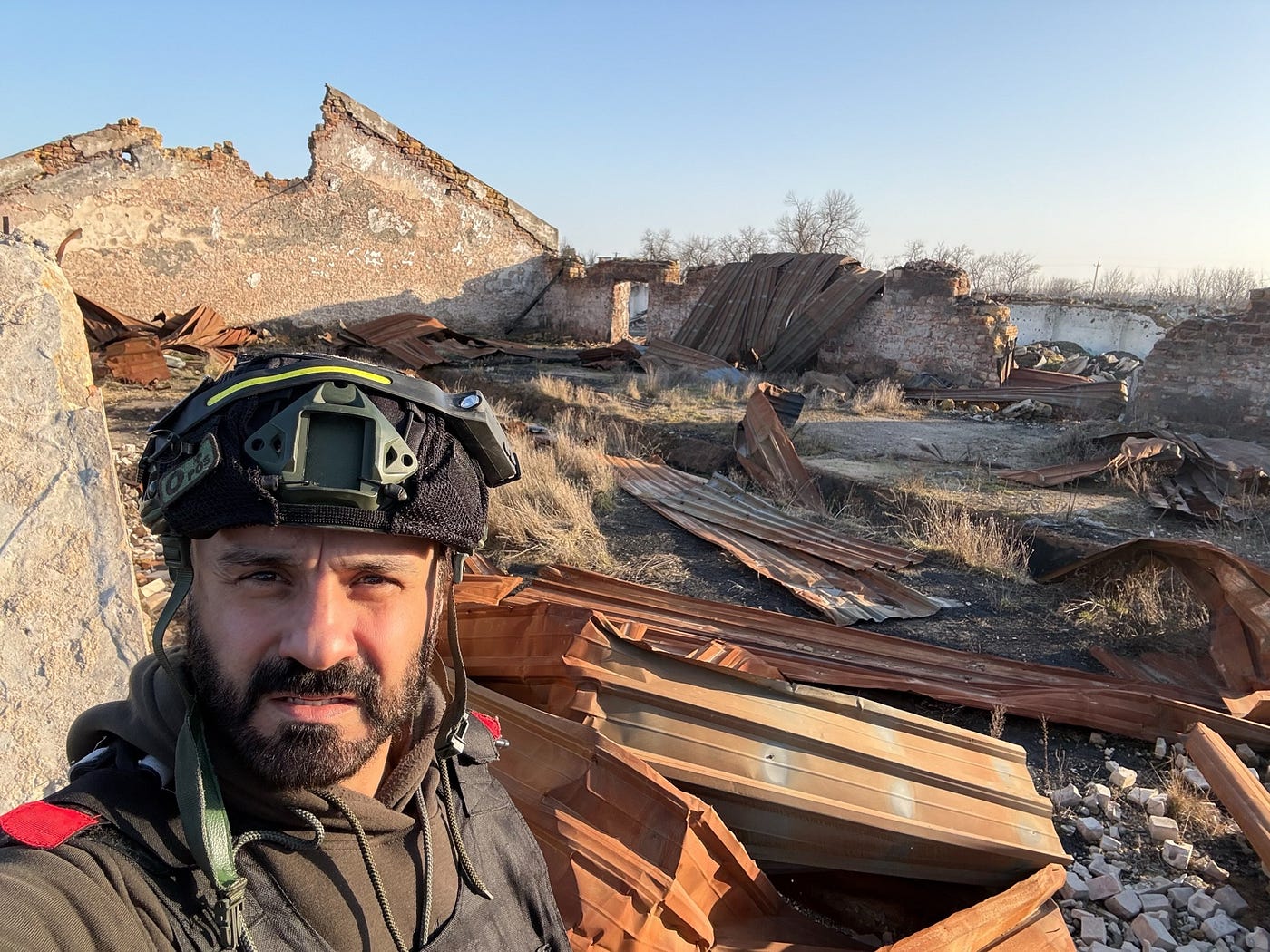
The ongoing blackouts severely damaged our house’s heating system in Western Ukraine while we were in the Donbas.
Without electricity, the pump couldn’t circulate the liquid while the fire was lit. As a result, the system caught fire, and the whole house was at risk of burning. Fortunately, it did not, but the whole system needs to be changed, and the house needs to be restored. Tubes are all bent, walls are blackened by haze, and the heating system doesn’t work, requiring an entirely new system.
We are doing our best since Alla’s parents live there, but there’s still a lot to work on here, too, as the people around us are in no better situation.
We’re renewing our fundraising campaign and thanking everyone who joins us in helping us restore what Russia is destroying. Even a small donation helps. We’ll keep you updated on developments.
Thank you all, dear friends
赫尔松村庄的墓地
作者:Giorgio Provinciali
翻译:旺财球球
乌克兰前线报道
科帕尼 — 这个位于赫尔松州的小村庄如今只剩下一个名字。其他一切都被俄罗斯的炸弹抹去了。过去四年里,成千上万枚滑翔炸弹、高爆无人机以及数以千计的巡航与弹道导弹袭击了乌克兰,将这样的定居点摧毁殆尽,曾经的房屋、商店与道路尽成瓦砾堆。在我们拍摄的科帕尼的镜头中,放眼所见尽是毁灭的景象。
一片如幽灵般的末世之地,受雇于俄方政权的杀手们继续扩张,用FPV无人机系统性地追杀那些逃离轰炸的乌克兰平民。
(图:我们在乌克兰赫尔松科帕尼拍摄了这段视频——版权所有,Giorgio Provinciali)
大型母机每天释放数十架小型FPV,逐一追击手无寸铁的人类猎物,使他们或奄奄一息、或四肢残缺、或当场死亡。
在科帕尼的废墟中拍摄时,我们遇到一位在翻找可用物品的老者。他说在俄军占领期间生活,是那个小村庄被普京部队施暴后仅存的四名幸存者之一。他讲述曾亲眼见到一名臂戴字母Z的士兵冷血杀死一对曾在其受伤时施以仁慈帮助的老夫妇,并目睹了各种掠夺与侮辱。以致他坦白曾有一名占领者闯入他躲藏的破屋、正欲开枪射杀自己之时,他将其杀死。
(图:科帕尼及周边村庄无一幸免。俄罗斯的炸弹、无人机和导弹摧毁了这里的一切。Alla与我从乌克兰赫尔松州杀伤区的废墟中进行报道——版权所有,Giorgio Provinciali)
在那场“拉希斯特”大屠杀的其他三名幸存者中,如今科帕尼仅剩一位年长的妇女。此处发生的暴行细节不便过多描写——或可另著书详述——但在这里,俄军仅为了一根香烟,强奸并殴打各年龄段手无寸铁的乌克兰平民致死。
如今每天只有一列火车沿着绕过村庄废墟的铁轨驶过,前往赫尔松首府城市。俄方无人机将轨道工人和乘客作为目标袭击,使那些车厢成了幽灵列车。登上科帕尼最高的瓦砾堆,几乎难以辨认地形,只能从消失建筑及其地基在土壤上的印记中隐约看出轮廓。毗邻这些废墟的,是来自周边定居点的更多碎片堆积。一次次轰炸过后,这些瓦砾堆年复一年地为此地换来了“村庄墓地”的凄凉别称。
科帕尼不仅仅是一个被摧毁的聚落;它证明了俄方的战争目标不仅包括领土扩张,还意图抹去乌克兰的土地与人民。
(图:我们在乌克兰赫尔松拍摄了这段视频——版权所有,Giorgio Provinciali)
这里“俄罗斯世界”造成的破坏并非偶发或零散的,而是系统性毁灭的基础:从摧毁财产转向迫害人群。
通过夷平村庄并逐一针对幸存者,俄方在延续四年前开始的毁灭,追杀那为数不多的幸存生命。
今天提醒意大利人这点尤为重要,因为正是在2022年3月,战事与新闻史上最黑暗的两章被写下:布查大屠杀及其被否认。
当时在基辅西北的那一郊区,俄军与车臣部队屠杀了458名平民(整个地区记录的受害人数至少1300人),却有几名意大利记者质疑屠杀是否为伪造。从未到过现场的人从舒适的电视演播室断言那是在街道上拍摄的假故事。使用与俄外长相同的论调,两个意大利记者支持了后来成为克里姆林宫官方版本的说法。
(来源示例与链接略)
因此,在科帕尼的一名幸存者并非只是我们持续现场报道的情感点缀,而是将占领、掠夺、谋杀、报复、生存与记忆贯穿整个战争过程的证据。它表明俄方的暴力同时具有领土性、社会性与人类学意义。
从新闻报道到历史考证,我们仍然坚信最终结论应由证据积累而非强加得出。
我们在此的持续存在迄今已证明,物质的毁灭与人类社会结构的破坏不可分割。
也就是说,这是有方法的。
在意大利公共话语中持续使用片面且意识形态化的翻译来解读我们的经历,表明宣传性犯罪并非物质犯罪的次要附属,而是其实质延续。
***
持续的停电严重损坏了我们在乌克兰西部的家中的供暖系统,而我们当时就在顿巴斯。
没有电,点着的炉火无法通过水泵循环热水。结果,系统起火,整个房子面临着烧毁的风险。幸而未被烧毁,但整个系统需要更换,房子也需要修复。管道都是歪的,墙壁被烟雾熏黑,供暖系统无法正常工作,需要彻底更换。
我们正在尽最大努力,因为Alla的父母住在那里,但这里还有许多工作要做,周围的人处境也好不到哪儿去。
我们正在重启筹款活动,感谢每一位支持我们修复被俄罗斯摧毁一切的朋友。即使是小额捐款也有帮助。我们会及时更新进展。
感谢大家,朋友们。
如果你相信我们的工作,请支持我们
在过去的三年里,我们一直在乌克兰战争的各个前线进行报道……
https://www.paypal.com/pools/c/9mFvpzKUrU
