Ukraine in a Great War with Russia: An Experience That Changes Europe’s Defense
By: Giorgio Provinciali
Live from Ukraine
Kherson – A couple of days ago, I took part in an international roundtable at the Ukrainian news agency Ukrinform on the topic «Ukraine in a Great War with Russia: An Experience That Changes Europe’s Defense». Representatives from Ukraine, Germany, Latvia, Lithuania, and Moldova also participated.
I was in the war zones of Kherson, but I had a nice time enjoying this useful meeting with other analysts from Ukraine and other countries.
Here’s the text of my speech, to share what I talked about for further information.

If this war has changed Ukraine, it has changed Europe even more. The question today is not only how to help Ukraine survive but whether Europe is ready to think and act as a geopolitical power.
1 – The first step toward strategic autonomy is clear:
Europe must stop financing Russian aggression through energy purchases.
Every euro spent on Russian gas is converted into missiles, glide bombs, drones, and propaganda.
Energy dependence is not an economic issue – it is a security vulnerability. Public data speak for themselves: the record increase in Russian liquefied natural gas (LNG) imports into the EU in January 2026 is real and documented. According to calculations based on data from the European think tank Bruegel, EU imports of Russian LNG in January 2026 reached approximately 2.276 billion cubic meters, a level higher than in December 2025 and significantly higher than in the same month of the previous year.
Over four years, Europe has transferred over €200 billion to Russia for energy, while providing roughly €150 billion to Ukraine. With payments to Moscow still ongoing each month, the imbalance is stark: As both Sweden’s Foreign Minister and Lithuania’s President have observed, Europe has rewarded the aggressor more than it has sustained the defender.
So, if Europe wants to free itself from structural dependence – including overreliance on external security guarantees – it must begin with energy sovereignty.

2 – The second step is industrial integration – not symbolic integration.
Ukraine should be integrated into Europe’s missile production chain immediately.
Consider the example of the SAMP/T, which uses the Aster 30 interceptor. Technically, SAMP/T is equivalent – and in some operational aspects superior – to the Patriot. The Aster 30 features active radar homing and a highly agile “PIF-PAF” control system that enhances terminal maneuverability against ballistic targets. It continuously scans the azimuth without the lengthy calibration process required by the Patriot, which is directional. This translates into shorter deployment times, making the SAMP/T operational in 30 – 45 minutes and the Patriot in 60 – 90.
From an industrial standpoint, European production chains offer flexibility.
MBDA has quintupled missile output since the full-scale invasion. Its multinational structure – France, Italy, and the UK – enables modular integration of suppliers. By contrast, although Raytheon and Lockheed Martin have reportedly tripled output on certain production lines, integrating PAC-3 interceptor manufacturing in Ukraine would be far more complex because of export controls, restrictions, and higher levels of technological compartmentalization. Moreover, export versions of PAC-3 interceptors often cost nearly double the domestic U.S. acquisition cost.
European systems offer not only strategic autonomy but also cost rationality and industrial sovereignty.
Ukraine’s Minister of Digital Transformation, Mykhailo Fedorov, has called for localized production of interceptors similar to PAC-3. However, from an engineering and legal perspective, Aster-family systems are structurally easier to integrate into a European-Ukrainian co-production model.
This is not charity.
It is rational defense economics.

3 – Russian propaganda insists that Ukraine’s main problem is a lack of manpower.
This framing serves two purposes:
1. To project inevitability – «Ukraine is exhausted».
2. To discourage Western support – «Weapons won’t change the outcome».
- 3. To send the ball back into Ukraine’s territory – «Zelensky should recruit men from the 18 – 24 age group, too».
But this is misleading.
For the past three months, Russia’s verified losses have exceeded its sustainable recruitment capacity. Its advances on the ground are limited and tactical, not operational breakthroughs.
The front does not move significantly.
What moves is technology.
We no longer see classic ‘gray zones’ in the traditional military sense but rather shades of gray that extend from the kill zone to hundreds of kilometers.
We see shifting technological gradients in drone-dominance sectors, EW-saturated corridors, and sensor-controlled kill grids.
Russia is not advancing territorially in decisive ways.
It is advancing in narrative space.
On the battlefield we see a relative stasis.
In the information space, Russia describes a constant offensive to please Trump and discourage assistance to Ukraine.
The war has become a technological duel. This is why industrial integration matters more than demographic rhetoric does.
4 – We all hope Ukraine has already started rebuilding its strategic arsenal.
Article 10 of the Non-Proliferation Treaty, signed by Ukraine, grants Ukraine the right to rebuild its nuclear arsenal if its sovereignty and territorial integrity are under threat, as a consequence of what was signed in Lisbon and Budapest.
This should be integrated into a European perspective, as we have already observed that Article 42.7 of the Lisbon Treaty – which says that EU member states are obligated to provide aid and assistance «by all the means in their power» if a member is attacked – is even more stringent than NATO’s Article 5, which is less determinate, allowing each state to take «such action as it deems necessary».
From a strictly legal perspective, Europe’s own treaty language contains a stronger textual obligation.
Integrating Ukraine’s armed forces into Europe’s defense architecture is therefore not an escalation – it is deterrence coherence.
It is in Europe’s interest.
It is in NATO’s interest.
Therefore, a technologically integrated Ukrainian army strengthens European defense.
What Europe lacks is not resources. It lacks synchronized urgency.
A stream of consciousness – a unified strategic reflex – is required.
- Energy independence.
- Industrial integration.
- Missile co-production.
- Information resilience.
Russia advances in propaganda precisely where Europe hesitates.
Ukraine has already shown that Russian strength was exaggerated.
Now Europe must demonstrate that its own strength is not.

The ongoing blackouts severely damaged our house’s heating system in Western Ukraine while we were in the Donbas.
Without electricity, the pump couldn’t circulate the liquid while the fire was lit. As a result, the system caught fire, and the whole house was at risk of burning. Fortunately, it did not, but the whole system needs to be changed, and the house needs to be restored. Tubes are all bent, walls are blackened by haze, and the heating system doesn’t work, requiring an entirely new system.
We are doing our best since Alla’s parents live there, but there’s still a lot to work on here, too, as the people around us are in no better situation.
We’re renewing our fundraising campaign and thanking everyone who joins us in helping us restore what Russia is destroying. Even a small donation helps. We’ll keep you updated on developments.
Thank you all, dear friends
乌克兰与俄罗斯的大规模战争:改变欧洲防务的经验
作者:Giorgio Provinciali
翻译:旺财球球
乌克兰前线报道
赫尔松 — 几天前,我在乌克兰通讯社Ukrinform参加了一场主题为«乌克兰与俄罗斯的大规模战争:改变欧洲防务的经验»的国际圆桌会议。来自乌克兰、德国、拉脱维亚、立陶宛和摩尔多瓦的代表也出席了会议。
我当时在赫尔松的战区,但在与乌克兰及其他国家的分析人士一起参加这场富有成效的会议时,我度过了愉快的时光。
以下是我在会上的发言稿,分享我所讨论的内容,供进一步参考。
(图:我赫尔松通过显示屏在乌克兰基辅Ukrinform会议上发言)
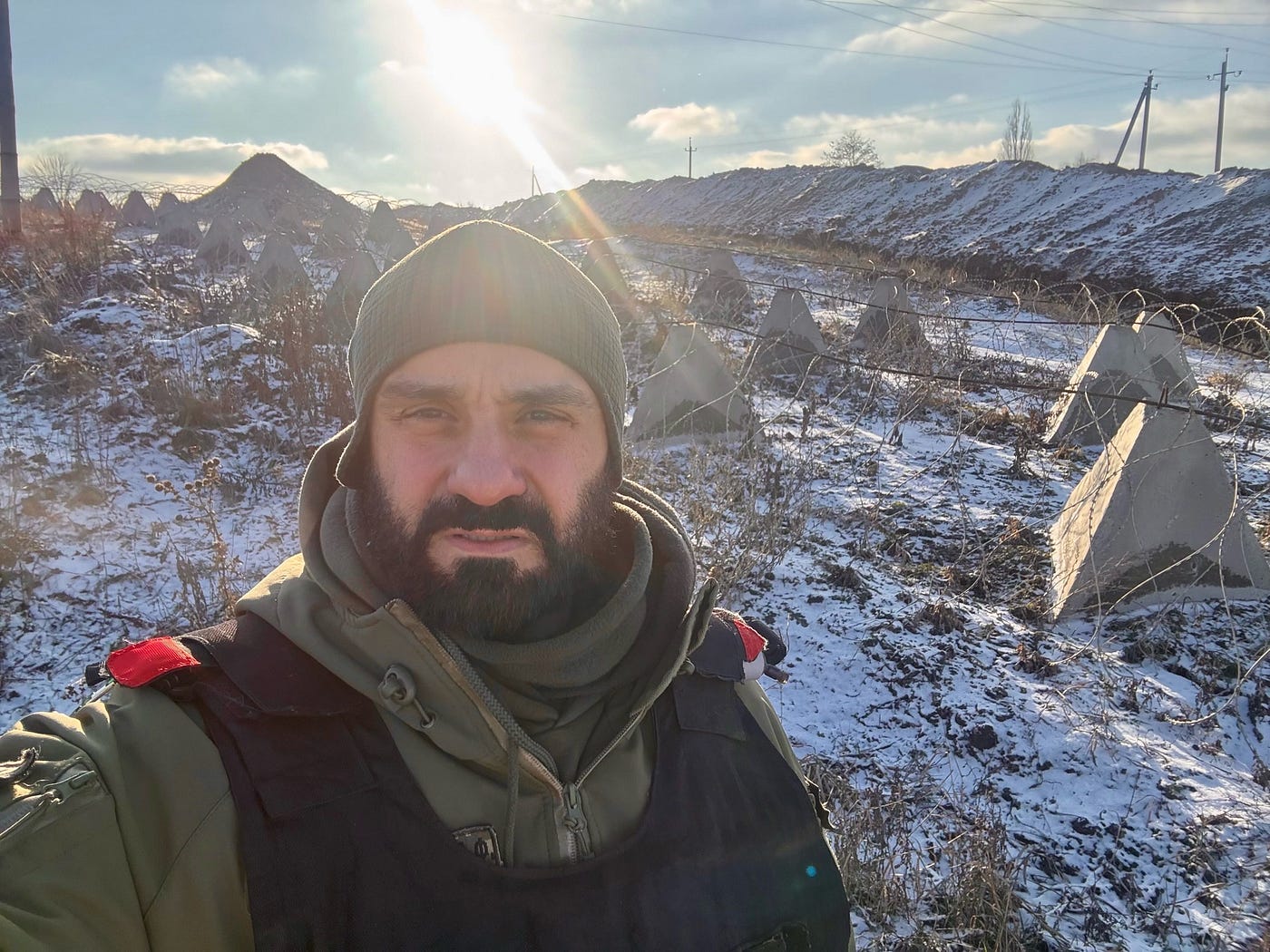
(图:我在顿巴斯乌克兰防线报道——版权所有,Giorgio Provinciali)
如果这场战争改变了乌克兰,那么它对欧洲的改变更为深远。今天的问题不仅是如何帮助乌克兰生存下去,而是欧洲是否准备好以地缘政治强国的姿态去思考和行动。
1 — 通往战略自主的第一步很清晰:
欧洲必须停止通过能源采购为俄罗斯的侵略买单。
花在俄罗斯天然气上的每一欧元都会被转化为导弹、滑翔炸弹、无人机和虚假宣传。
能源依赖不是单纯的经济问题——它是一个安全弱点。公共数据不言自明:2026年1月欧盟对俄罗斯液化天然气(LNG)进口创纪录的增长是真实且有据可查的。根据欧洲智库布鲁盖尔的数据估算,2026年1月欧盟从俄罗斯进口的LNG约为22.76亿立方米,高于2025年12月,并远高于去年同期。
四年间,欧洲为能源向俄罗斯转移了超过2000亿欧元,而对乌克兰的支持大约为1500亿欧元。考虑到每月仍在向莫斯科支付资金,这一不平衡十分明显:正如瑞典外长和立陶宛总统所指出的,欧洲对侵略者的“奖励”超过了对被侵略者的支持。
因此,如果欧洲想摆脱结构性依赖——包括对外部安全保障的过度依赖——就必须从能源主权开始。
(图:Alla在一条乌克兰战壕内作报道——版权所有,Giorgio Provinciali)
2 — 第二步是产业一体化——而不是象征性的融合。
乌克兰应立即融入欧洲的导弹生产链。
以使用Aster 30拦截导弹的SAMP/T为例。从技术上讲,SAMP/T相当于爱国者系统——在某些作战方面甚至更优。Aster 30采用主动雷达制导和高度机动的“PIF-PAF”控制系统,增强了对弹道目标的末段机动拦截能力。它可连续扫描方位,无需像方向性较强的爱国者那样进行冗长的校准过程。这意味着部署时间更短:SAMP/T可在30–45分钟内投入运作,而爱国者需60–90分钟。
从产业角度看,欧洲的生产链具有灵活性。
自全面入侵以来,MBDA的导弹产量已增长了五倍。其多国结构——法国、意大利和英国——使供应商能够模块化整合。相比之下,尽管据称雷神与洛克希德·马丁在某些生产线上的产量已增至三倍,但要在乌克兰整合PAC-3拦截弹的制造将复杂得多,因涉及出口管制、限制及更高程度的技术分隔。而且PAC-3拦截弹出口版的成本通常接近其美国国内采购成本的两倍。
欧洲体系不仅提供战略自主,还有成本合理性和产业主权。
乌克兰數字化轉型部長米哈伊洛·費多羅夫曾呼籲在本地化生产类似PAC-3的拦截弹。然而从工程与法律角度看,Aster家族系统在结构上更易于整合进欧乌共同生产模式。
这不是施舍。
这是理性的国防经济学。
(图:我们在乌克兰赫尔松报道时,Alla站在被俄罗斯联邦摧毁的民用基础设施废墟旁——版权所有,Giorgio Provinciali)
3 — 俄罗斯宣传坚持将乌克兰的主要问题描述为兵力不足。
这种话术有两个目的:
1. 传达不可避免性——“乌克兰已精疲力竭”;
2. 劝阻西方支持——“武器改变不了结果”;
3. 把责任推回乌克兰国内——“泽连斯基也应从18–24岁年龄段征募兵员”。
但这具有误导性。
在过去三个月中,俄罗斯的已核实伤亡已超过其可持续征兵能力。其地面推进是有限且属于战术层面的,而非作战性突破。
战线并未发生显著移动。
真正发生变化的是技术。
我们已不再看到传统军事意义上的经典“灰色地带”,而是从杀伤区延伸数百公里的灰色梯度。
我们看到在无人机主导的区域、电磁战(EW)密集的通道和由传感器控制的杀伤网格中存在不断变化的技术梯度。
俄罗斯在领土上并未取得决定性推进。
它在叙事领域取得了进展。
在战场上我们看到的是相对僵持。
在信息领域,俄罗斯描述持续进攻的图景,以取悦特朗普并劝阻对乌援助。
战争已成为一场技术对决。这正是为何产业一体化比人口论调更为重要。
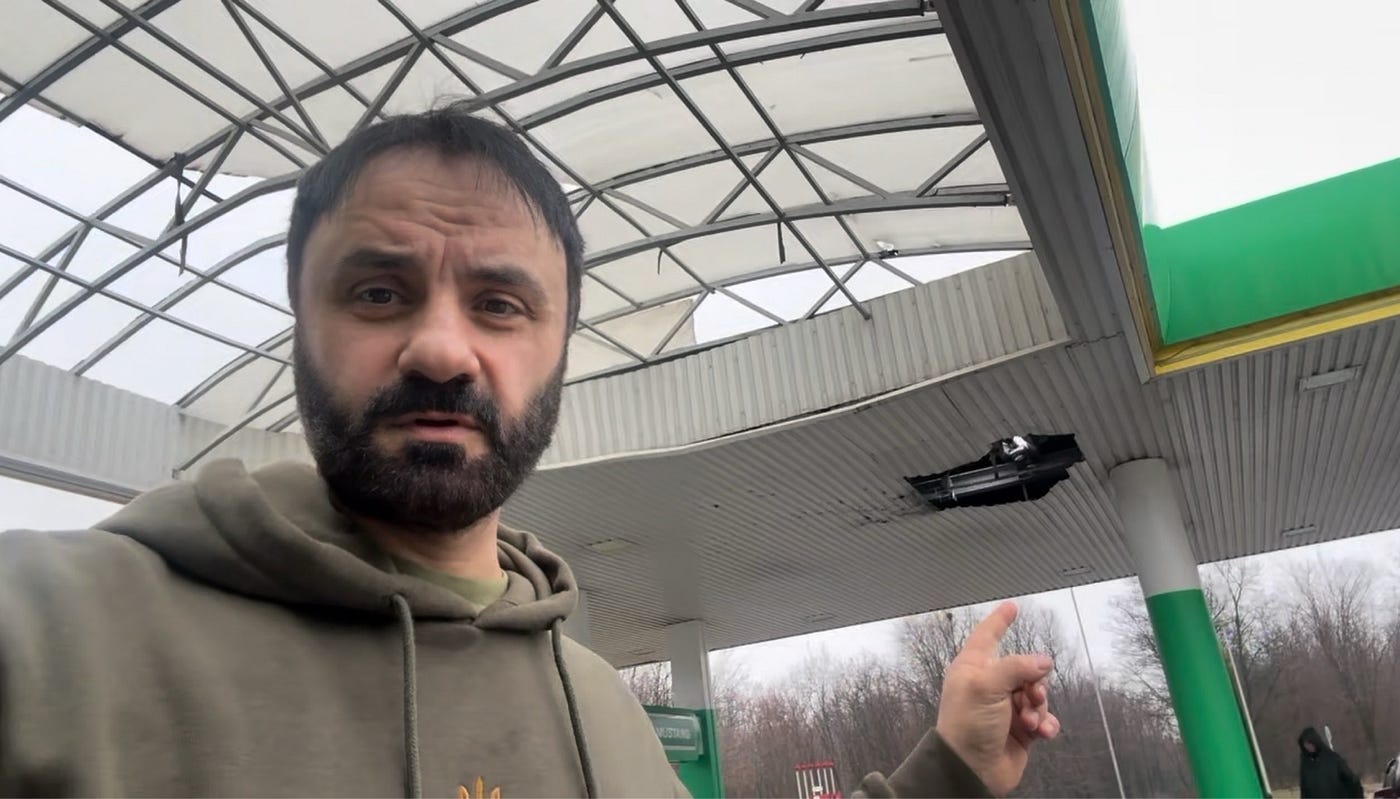
(图:我在接近战区的扎波罗热一处加油站屋顶上指着俄罗斯无人机留下的洞——版权所有,Giorgio Provinciali)
4 — 我们都希望乌克兰已经开始重建其战略武库。
乌克兰签署的《不扩散核武器条约》第10条,赋予乌克兰在主权和领土完整受到威胁时重建其核武库的权利,这是对里斯本与布达佩斯所签协议的延伸。
这一点应当被纳入欧洲视角。正如我们已观察到的,里斯本条约第42.7条——规定若欧盟成员国遭受攻击,其他成员国有义务“尽其所能提供援助和协助”——在措辞上甚至比北约第五条更为严格,后者措辞较为不确定,允许各国采取“其认为必要的行动”。
从严格的法律角度看,欧洲自身的条约文本包含更强的书面义务。
因此,将乌克兰武装力量融入欧洲防务架构并非升级,而是威慑的一致性。
这符合欧洲的利益。
这也符合北约的利益。
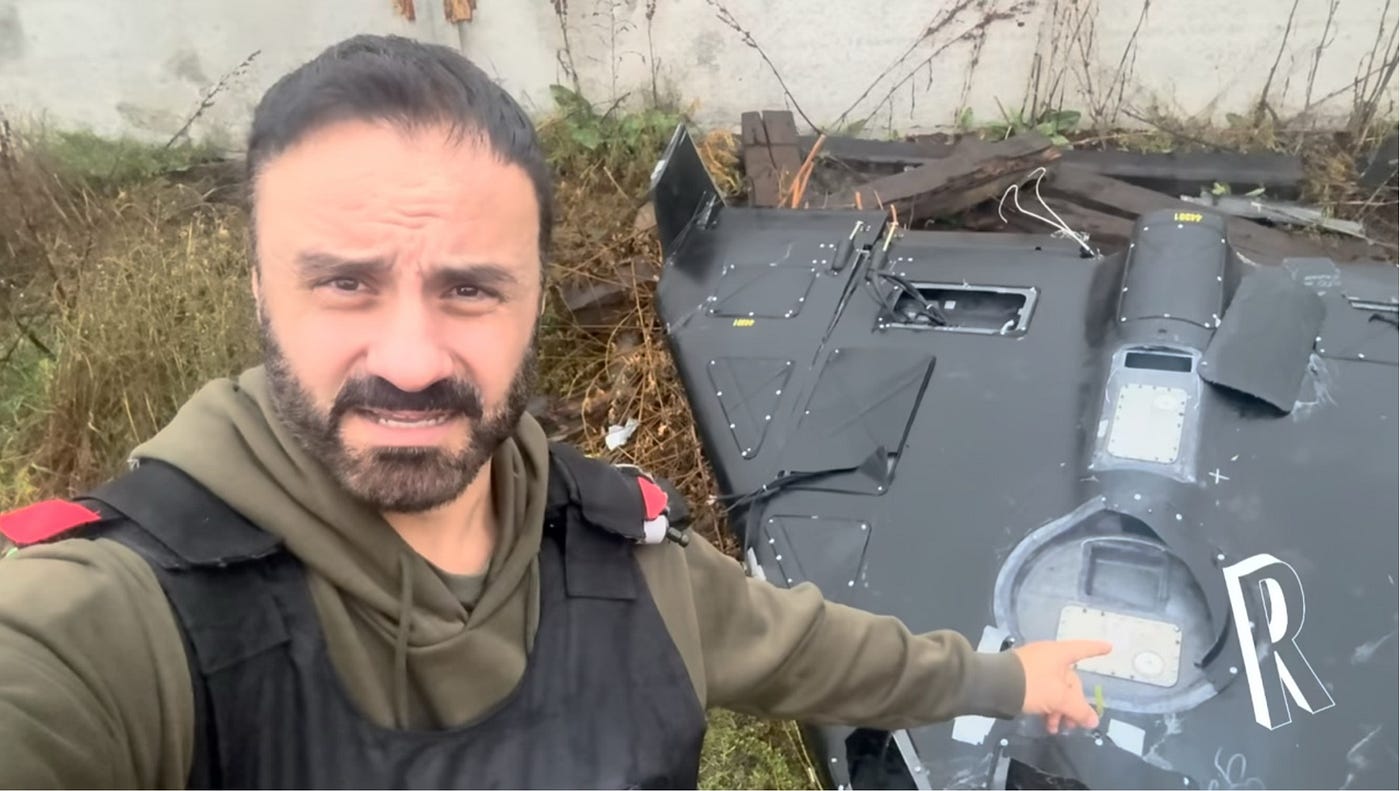
(图:我指着一枚俄罗斯格兰无人机,该无人机含有中国和西方的“军民两用”组件——版权所有,Giorgio Provinciali)
因此,技术一体化乌克兰军队将增强欧洲防务。
欧洲欠缺的不是资源,而是同步的紧迫感。
需要一种意识流——统一的战略反射。
能源独立。
产业一体化。
导弹共制。
信息韧性。
欧洲犹豫之处,正是俄罗斯宣传进展之处。
乌克兰已证明俄罗斯的实力被夸大。
现在欧洲必须证明其自身的实力并非如此。
(图:我在赫尔松,写下这篇演讲稿前的片刻——版权所有,Giorgio Provinciali)
***
持续的停电严重损坏了我们在乌克兰西部的家中的供暖系统,而我们当时就在顿巴斯。
没有电,点着的炉火无法通过水泵循环热水。结果,系统起火,整个房子面临着烧毁的风险。幸而未被烧毁,但整个系统需要更换,房子也需要修复。管道都是歪的,墙壁被烟雾熏黑,供暖系统无法正常工作,需要彻底更换。
我们正在尽最大努力,因为Alla的父母住在那里,但这里还有许多工作要做,周围的人处境也好不到哪儿去。
我们正在重启筹款活动,感谢每一位支持我们修复被俄罗斯摧毁一切的朋友。即使是小额捐款也有帮助。我们会及时更新进展。
感谢大家,朋友们。
如果你相信我们的工作,请支持我们
在过去的三年里,我们一直在乌克兰战争的各个前线进行报道……
https://www.paypal.com/pools/c/9mFvpzKUrU
