
无人机战争:世界仍不知如何应对,除了乌克兰
The War of Drones the World Still Doesn’t Know How to Fight. Except Ukraine.
By: Giorgio Provinciali
Live from Ukraine
Lozova — The Russian air force has once again overwhelmed this city of the Kharkiv Oblast’ with 14 highly-explosive, long-range drones. Using them with an operational logic similar to that of cruise missiles, they once again targeted the train station (already heavily damaged) and local energy infrastructure, leaving the city in darkness and cold.
As the Commander-in-Chief of the Armed Forces of Ukraine, Oleksandr Syrskyj, observed, Russia flies these drones at very low altitudes (50–100 meters) to hide their radar signatures by using serpentine routes and terrain curvature.
Since 2024, the Russians have used these tactics to flood Ukrainian defenses, making the use of interceptor drones crucial; so much so that they neutralized over 70% of Russian air threats in February alone.
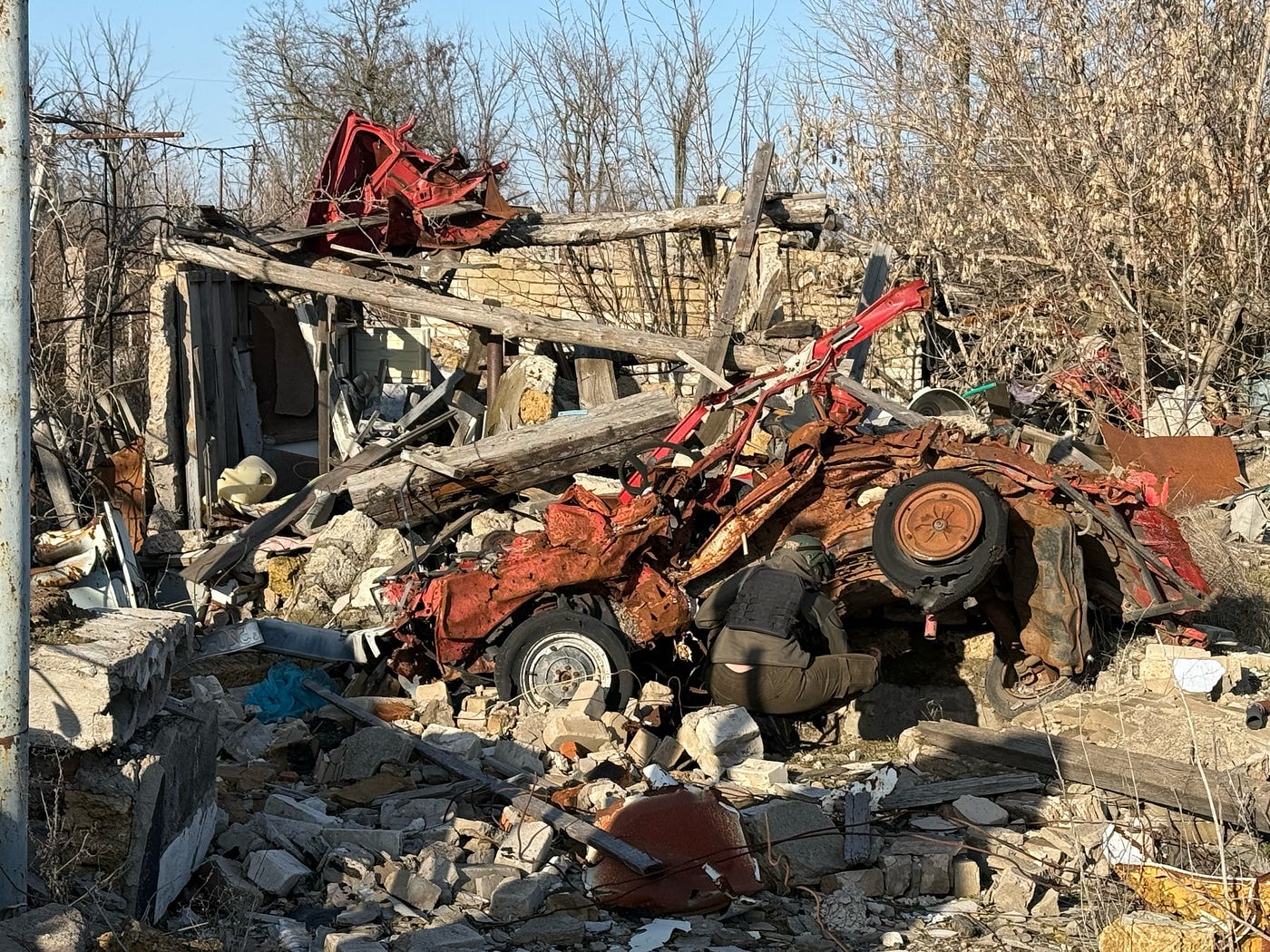
Precisely because cities like Lozova have become a true laboratory for drone warfare – dominated by Iranian-designed systems like the Shahed – several of Ukraine’s partners have sought President Volodymyr Zelensky’s insights on how the experience gained there can help prevent similar attacks elsewhere, especially those carried out by Iran. This is particularly true since – as some journalistic reports confirm – fragments marked with the Russian label “Герань-2” (Geran’-2) were found among drone debris intercepted in Dubai: that designation is used by Moscow for its version of those Iranian Shaheds, against which – according to CNN – Pentagon sources have secretly admitted even the United States would struggle to defend itself.
So far, Patriot interceptors are available, but wasting millions of dollars on them to shoot down drones worth just a few thousand is simply not practical. As President Zelensky pointed out, Middle Eastern countries launched 800 PAC-3 missiles in three days, while Ukraine has never had so many in the entire war.
This approach is unsustainable even for the US.
Additionally, Russia often uses Geran drones not only to attack but also to map Ukrainian radar defenses before launching Iskander or Kh-101 missiles.
No Ukrainian partner is ready to respond to attacks like those that recently hit Lozova and Dubai, which are clearly not just bombings but part of a broader operational strategy in Russian warfare.
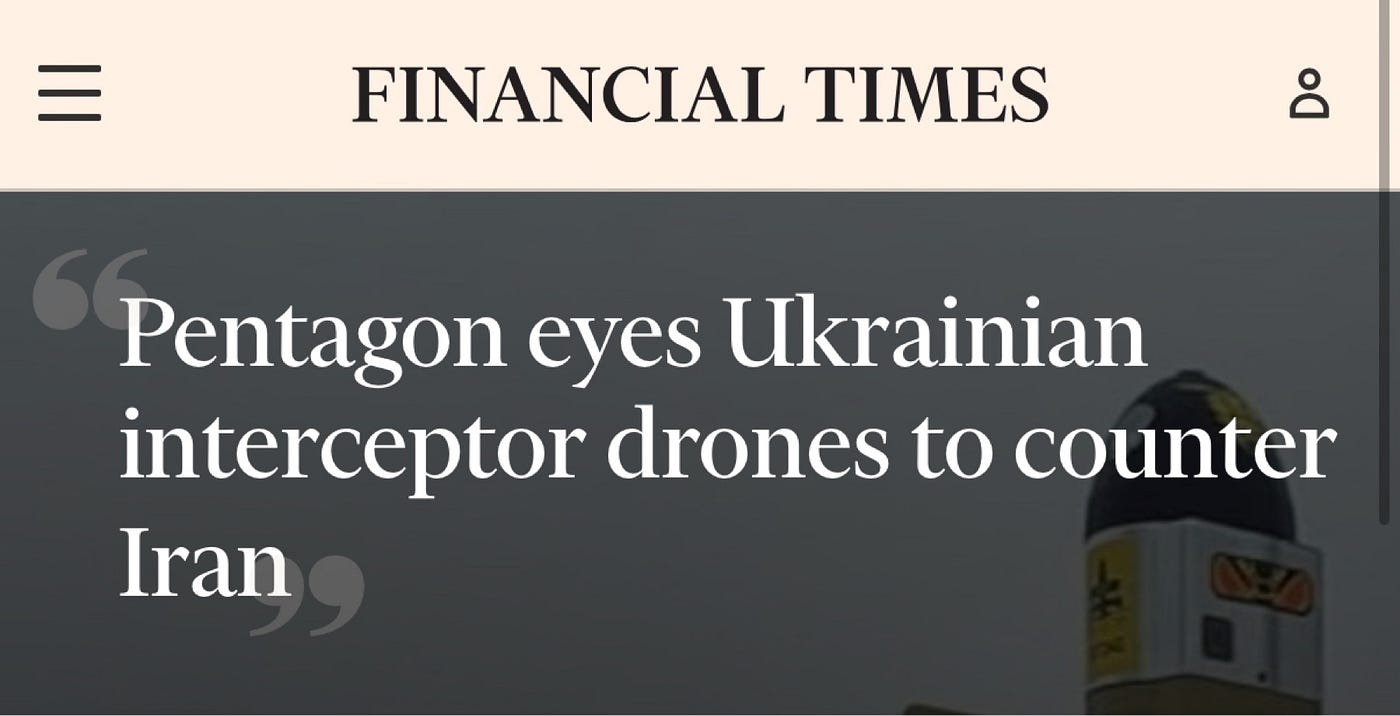
There is therefore some credibility to the rumor spread by the “Financial Times” that the US and at least one Persian Gulf country are negotiating to buy the valuable interceptor drones made in Ukraine.
For comparison: a Shahed/Geran’ drone costs around $30,000, while each PAC-3 missile for the Patriot system costs about $5 million to the US and twice that for export. A Ukrainian-made interceptor costs just a few thousand euros.
After over four years of full-scale war, Ukraine has become the world’s leading laboratory for drone warfare.
Dedicated interceptor drones and distributed detection systems have been developed here, amd are now already perfectly integrated into traditional air defense. Countering one drone with another drone is much cheaper and more versatile than using traditional anti-aircraft systems. These are multi-rotor devices, usually quadcopters or hexacopters, capable of accelerating from 0 to over 150 km/h in less than 2 seconds, with a range of about 20 kilometers and at altitudes of up to 2,000 meters. Ukrainian defenders primarily use them in three ways: as kamikazes, by directly impacting and hitting Shahed/Geran’ from the front or side, flying at roughly 180 km/h; as loitering proximity explosive charges, remotely triggering directional detonations capable of overwhelming Russian drones with fragments; and as net or rotating cable vectors, ejected to block the target’s propeller. The interception begins with localization, achieved through a combination of factors: radar, acoustic sensors placed at elevated positions such as buildings and pylons, and both human and electro-optical visual observers. Once the course and altitude are identified, the closest interceptor drones reach the threat, guided either manually via FPV or autonomously.

Interceptor drones represent a revolution in air defense because they allow swarms of inexpensive launchers to be countered with even cheaper systems, breaking an economic asymmetry that favored the attacker.
In this regard, cities like Lozova serve not only as targets but also as laboratories for 21st-century air warfare.
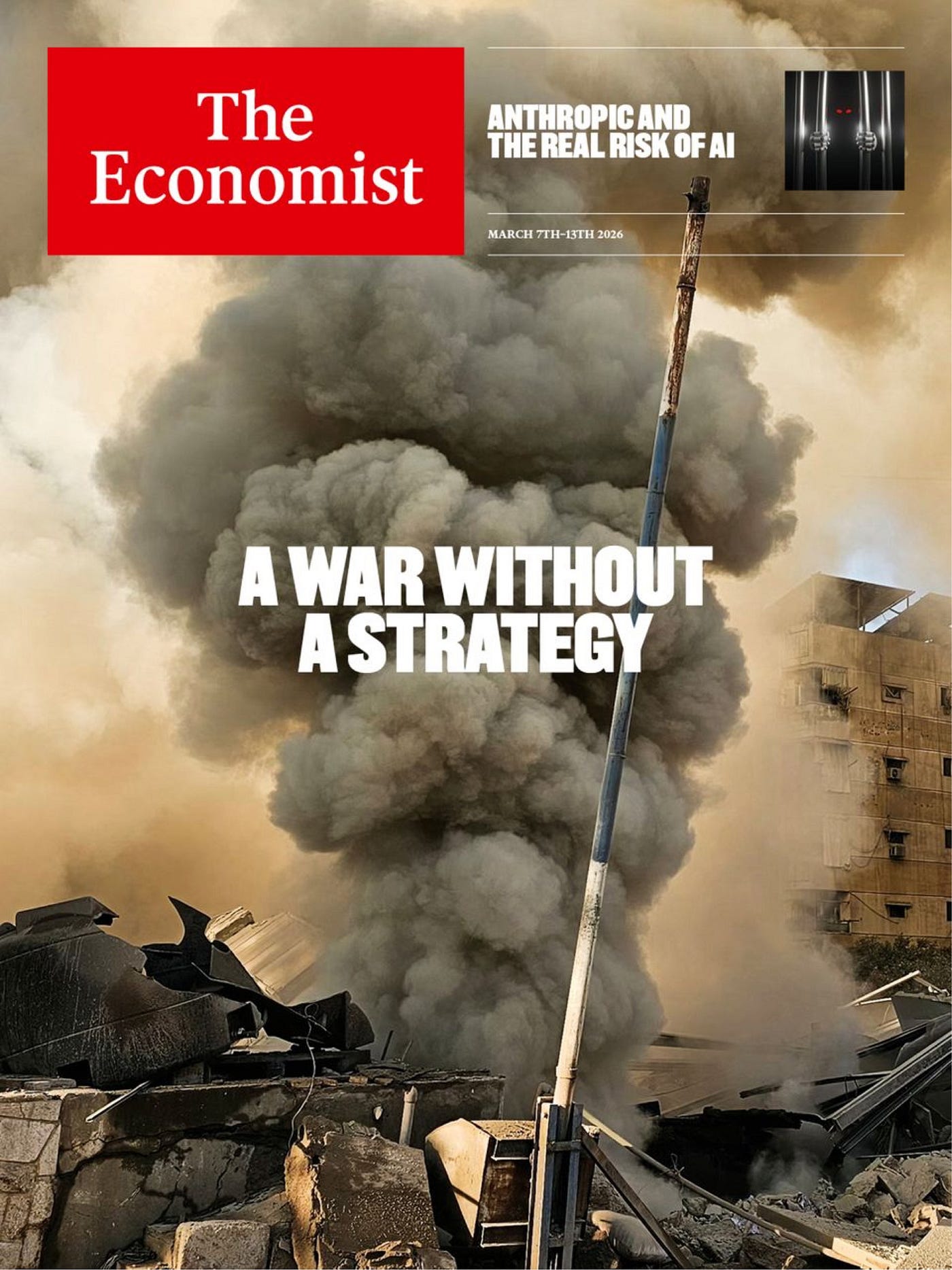
It’s somewhat surprising (to a degree) how superficially the United States and Israel have launched a war that our colleagues at “The Economist” rightly describe as «without a strategy»
After abusing the word “peace” by claiming to have ended eight wars – noneof which actually existed – and seeking a Nobel Prize that Europeans who he believes are hostile denied him, Donald Trump has actually triggered a real conflict that could spiral into chaos. He has neither the understanding nor the tools to resolve it long-term, especially when it comes to subtle threats like those Iran has in abundance.
So much so that in Ukraine, there’s already a joke that in the end it will be Kyiv to defend Washington.

The ongoing blackouts severely damaged our house’s heating system in Western Ukraine while we were in the Donbas.
Without electricity, the pump couldn’t circulate the liquid while the fire was lit. As a result, the system caught fire, and the whole house was at risk of burning. Fortunately, it did not, but the whole system needs to be changed, and the house needs to be restored. Tubes are all bent, walls are blackened by haze, and the heating system doesn’t work, requiring an entirely new system.
We are doing our best since Alla’s parents live there, but there’s still a lot to work on here, too, as the people around us are in no better situation.
We’re renewing our fundraising campaign and thanking everyone who joins us in helping us restore what Russia is destroying. Even a small donation helps. We’ll keep you updated on developments.
Thank you all, dear friends
无人机战争:世界仍不知如何应对,除了乌克兰
作者:Giorgio Provinciali
翻译:旺财球球
乌克兰前线报道
洛佐瓦 —— 俄罗斯空军再次用14枚高爆远程无人机对哈尔科夫州的这座城市实施了压倒性袭击。它们以类似巡航导弹的作战逻辑被使用,再次瞄准了已被严重破坏的火车站和当地能源基础设施,使城市陷入黑暗与寒冷。
正如乌克兰武装部队總司令奥列克桑德尔·西尔斯基所指出,俄罗斯以极低高度(50–100米)飞行这些无人机,通过曲折航线和地形起伏来隐藏雷达特征。
自2024年以来,俄方利用这些战术压垮乌克兰防御,使拦截型无人机的使用变得至关重要;仅在二月,它们就拦截了超过70%的俄方空中威胁。
(图:Alla在一处杀伤区匍匐报道,头顶天空有无人机滋扰 —— 版权所有,Giorgio Provinciali)
正因为像洛佐瓦这样的城市已成为无人机战争的真实实验室——以伊朗设计的“沙赫德”系列为主——乌克兰若干伙伴向总统弗拉基米尔·泽连斯基征询,想了解那里的经验能如何帮助防止在别处发生的类似袭击,尤其是由伊朗发起的袭击。尤其值得注意的是,正如若干新闻报道证实的那样,在迪拜被拦截的无人机残骸中发现了标有俄方标签“Герань-2”(Geran’-2)的碎片:莫斯科用该标识指代其改装版的伊朗沙赫德,而据CNN援引五角大楼消息源称,即便是美国在防御这些武器上也曾私下承认会很吃力。
目前,虽然可以用爱国者拦截导弹,但用价值数百万美元的爱国者导弹去击落造价仅数千美元的无人机并不现实。正如泽连斯基总统所指出,中东国家在三天内发射了800枚PAC-3弹,而乌克兰在整个战争期间也从未拥有过如此多。
这种做法即便对美国来说也是难以为继的。
此外,俄罗斯除了经常用“格兰/ Geran’”无人机实施攻击,还在发射伊斯坎德尔(Iskander)或Kh-101导弹之前用其绘制乌克兰雷达防御图谱。
没有哪个乌克兰的伙伴准备好应对最近袭击洛佐瓦和迪拜那样的攻击——这些显然不仅是轰炸,而是俄罗斯战法中更广泛作战策略的一部分。
因此,《金融时报》散布的谣闻有一定可信度,即美国与至少一个波斯湾国家正商谈购买乌克兰制造的宝贵拦截无人机。
比较一下:一架沙赫德/格兰无人机造价约3万美元,而美国每枚爱国者系统的PAC-3导弹造价约500万美元,出口价格甚至高达两倍。乌克兰制造的拦截器成本仅为数千欧元。
(截图来自《金融时报》网站)
经过四年多的全面战争,乌克兰已成为世界领先的无人机战争试验场。
这里已开发出专用拦截无人机与分布式探测系统,并已完美融入传统防空体系。用一架无人机拦截另一架无人机,在成本和灵活性上都远比使用传统防空系统更具优势。这些拦截器为多旋翼平台,通常为四旋翼或六旋翼,能在不到2秒内从静止加速到150公里/小时以上,射程约20公里,最高作战高度可达2000米。乌克兰抵抗者们主要以三种方式使用它们:作为自杀式撞击器,从正面或侧面以约180公里/小时撞击沙赫德/格兰;作为滞空近炸装置,遥控引爆定向炸裂,用弹片压制俄制无人机;以及作为网或旋转缆索载体,发射后缠住目标螺旋桨使其失效。拦截始于定位,靠雷达、高处(如建筑与电塔)布设的声学传感器、以及人工与光电目视观测相结合。一旦判定航向与高度,最近的拦截机可由FPV人工遥控或自主引导赶赴威胁位置。
(图:Alla在被俄制无人机袭击的洛佐瓦火车站现场报道 —— 版权所有,Giorgio Provinciali)
拦截无人机代表了防空领域的一场革命,因为它们使得可以用更便宜的系统对抗成群的廉价发射器,打破了有利于攻击方的经济不对称。在这方面,像洛佐瓦这样的城市不仅是目标,也是21世纪空战的实验室。
令人多少感到惊讶的是,美国和以色列在这场战争中所采取的行动是多么鲁莽——正如我们《经济学人》的同事们恰当地描述为“没有战略”的战争。
(图片来源:《经济学人》)
在滥用“和平”一词、声称结束了八场战争(实际上这些战争根本就不存在)并寻求一个他认为因欧洲对他怀有敌意而拒绝颁发的诺贝尔奖之后,唐纳德·川普实际上引发了一场可能失控的真实冲突。他既没有长期解决问题的理解,也缺乏相应工具,尤其在应对伊朗大量持有的那类微妙威胁时更是如此。
以至于在乌克兰,已经有人开玩笑说最终可能是基辅在保卫华盛顿。
(图:一个国家的领导人抵抗着一场他从未想要的战争;一个教派的头目宣称结束了八场不存在的战争,却发动了一场没有战略、正走向失控的战争)
***
持续的停电严重损坏了我们在乌克兰西部的家中的供暖系统,而我们当时就在顿巴斯。
没有电,点着的炉火无法通过水泵循环热水。结果,系统起火,整个房子面临着烧毁的风险。幸而未被烧毁,但整个系统需要更换,房子也需要修复。管道都是歪的,墙壁被烟雾熏黑,供暖系统无法正常工作,需要彻底更换。
我们正在尽最大努力,因为Alla的父母住在那里,但这里还有许多工作要做,周围的人处境也好不到哪儿去。
我们正在重启筹款活动,感谢每一位支持我们修复被俄罗斯摧毁一切的朋友。即使是小额捐款也有帮助。我们会及时更新进展。
感谢大家,朋友们。
如果你相信我们的工作,请支持我们
在过去的三年里,我们一直在乌克兰战争的各个前线进行报道……
https://www.paypal.com/pools/c/9mFvpzKUrU
WENXUECITY.COM does not represent or guarantee the truthfulness, accuracy, or reliability of any of communications posted by other users.
Copyright ©1998-2026 wenxuecity.com All rights reserved. Privacy Statement & Terms of Use & User Privacy Protection Policy
