A Diplomatic Illusion
By: Giorgio Provinciali
Live from Ukraine
Ukrainske, Dnipropetrovsk – On February 14, 2022, the Kremlin announcedvia the TASS news agency that Moscow was ready to withdraw some of the troops massed there for months from its western border with Ukraine. Its Foreign Minister, Sergei Lavrov, dismissed the Russian threat to invade Ukraine as «Western media terrorism». Although the ‘special military operation’ had actually been planned for months, if not years, Lavrov maintained the opposite, adding that the demobilization of Russian forces was «a planned practice that does not depend on the hysteria of Western powers». In a statement, his spokesman doubled down, asserting that military training was about to end and that units from the Southern and Western military districts had already begun loading personnel and equipment onto rail and road transport, ready to head to their military bases that same day.
Shared by Russian disinformation outlets abroad, primarily in Italy, those statements ultimately fueled a picture of reality that was the opposite of the dramatic one that prompted us to return to Ukraine when an exodus was already underway. The then-NATO Secretary General, Jens Stoltenberg, welcomed «the signals from Moscow that diplomacy must continue», callingthem «a reason for cautious optimism».
In full violation of the Minsk agreements, the Russian State Duma meanwhile appealed to dictator Vladimir Putin to recognize the independence of the self-proclaimed “republics” of Luhansk and Donetsk.

Exactly four years later, with the full-scale invasion of Ukraine underway, Kremlin-loyal news agencies and bloggers are spreading the false narrative on their channels that a Ukrainian counteroffensive, benefiting from the communications blackout caused by the Starlink satellite network being blocked on devices not registered on the Ukrainian whitelist, is bringing dozens of villages back under Kyiv’s control, previously falsely declared as «conquered» by the Russian General Staff.
As in 2022, reality is very far from the narrative, since these areas were mostly gray zones or fully under Ukrainian control, Russian presence in those settlements was minimal or absent.
The pressure exerted by the Russian regime’s Washington arm, Donald Trump, has instead produced catastrophic results on the war’s most critical fronts: after being contained for over two years, Russian troops have in recent hours managed to advance towards the western outskirts of Chasiv Yar, gaining a strategic advantage from those heights over other martyred cities of Donetsk, such as Kostiantynivka, Druzhkivka, Kramatorsk, and Sloviansk. Further southwest, the official announcement of the fall of Pokrovsk is now only a matter of hours. The rubble of Myrnohrad is enclosed in a virtually dead-end kill zone that completely engulfs Rivne and Rodynske. Huliajpole, in Zaporizhzhia Oblast’, is almost entirely occupied.
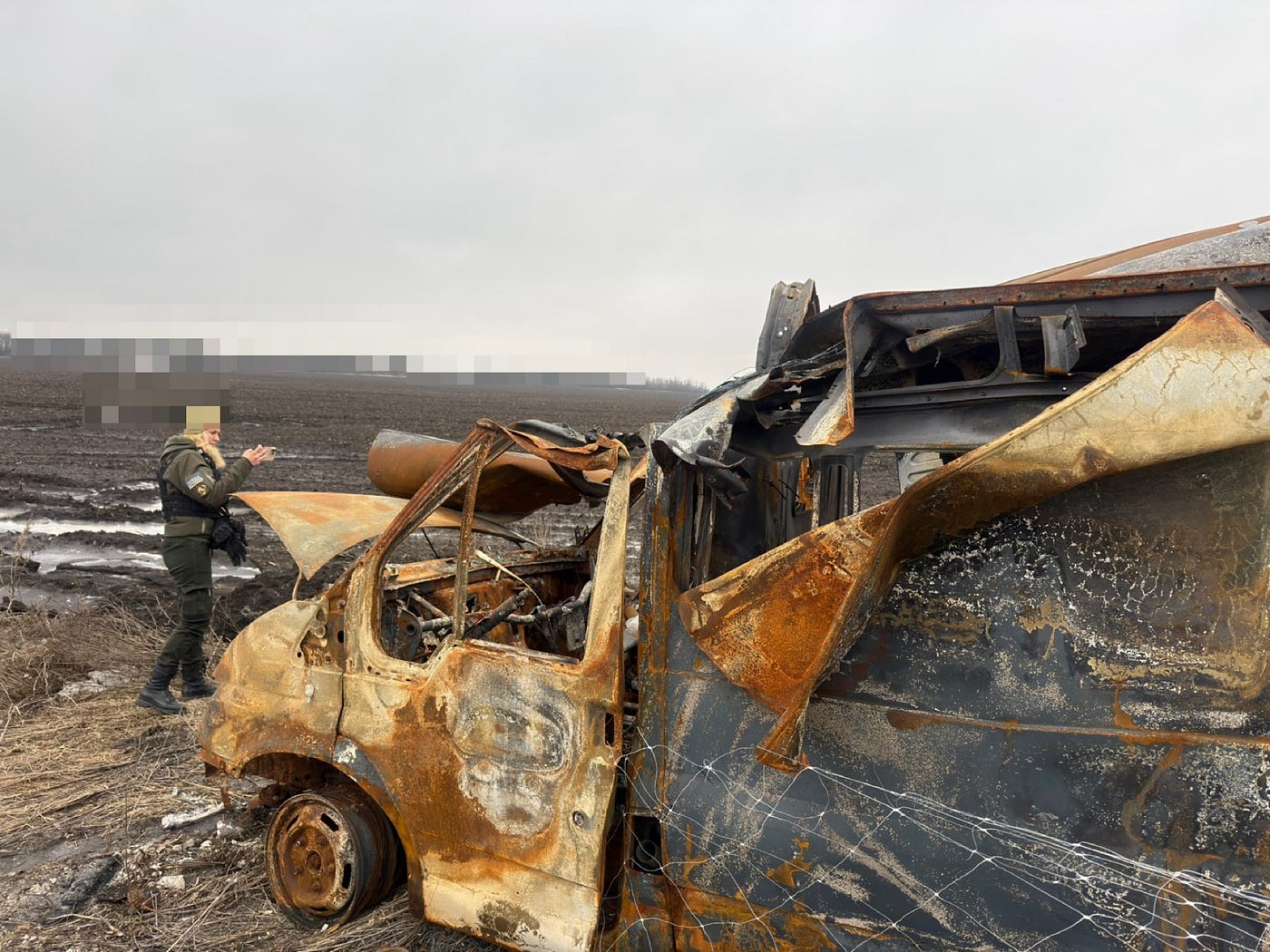
We pushed ourselves to the edge of areas beyond which life is impossible to understand how far Western blindness has allowed a cancer to advance, a cancer that cannot be measured merely in square kilometers of Ukrainian land.
The scenario described does not depict a sudden collapse of the front but a methodical attrition in which what truly advances is not the Russian infantry but technology. To advance fifty kilometers in Donetsk toward Pokrovsk and a dozen kilometers toward Toretsk, Moscow took almost 12 years and two million men, leaving more than half of them on the field. A slow, bloody, and costly advance, far from unstoppable, yet Russian soldiers remain outside the fortress belt of Donbas, which Ukrainians continue to defend with their blood.
This is because while Kyiv was fighting a high-intensity war of attrition, many European capitals were still thinking in terms of crisis management. The lack of a long-term industrial vision, the fragmentation of defense production, the slowness in integrating Ukraine into European technology and industrial chains, and the application of half-hearted sanctions that have always avoided hitting a core Russian business that Europe has actually fueled first – and will continue to do so for at least two years – have allowed Moscow to advance technologically much more than on the ground.
So much so that today there is no longer a clear line between Russian and Ukrainian control: there are gradients of risk, shades of gray that extend well beyond the line of contact. The distinction between rear and front lines has become porous. As we have been repeating for years now, the “gray zone” is no longer a defined geographical space but a dynamic, variable condition that changes from hour to hour based on ISR coverage, jammer availability, and the presence of FPV operators. In this context, talking about ‘liberated’ or ‘conquered’ villages risks being misleading. Control is often intermittent, partial, and contested.
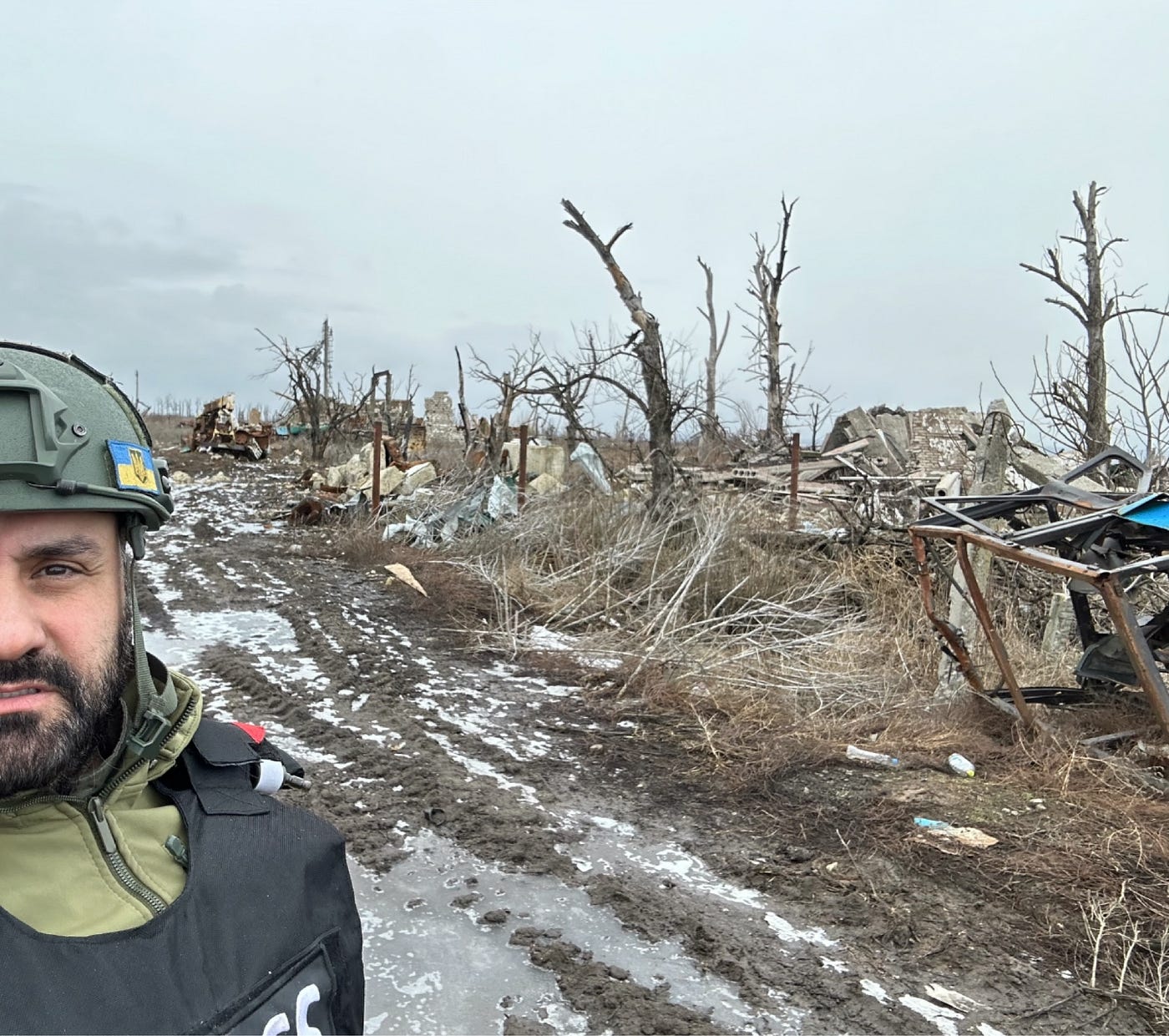
Four years ago, the Munich Security Conference was marked by ambiguity. The Russian delegation canceled its participation at the last minute, while many Western leaders spoke of deterrence and dialogue. A few days later, Russian tanks crossed the border into Europe. The same meeting now discusses global disorder, still in terms of deterrence and dialogue. Continuing to fail to recognize that if the world is shattered, Ukraine is now its most exposed fault line. Ignoring the cracks won’t make them disappear: it will only deepen them.
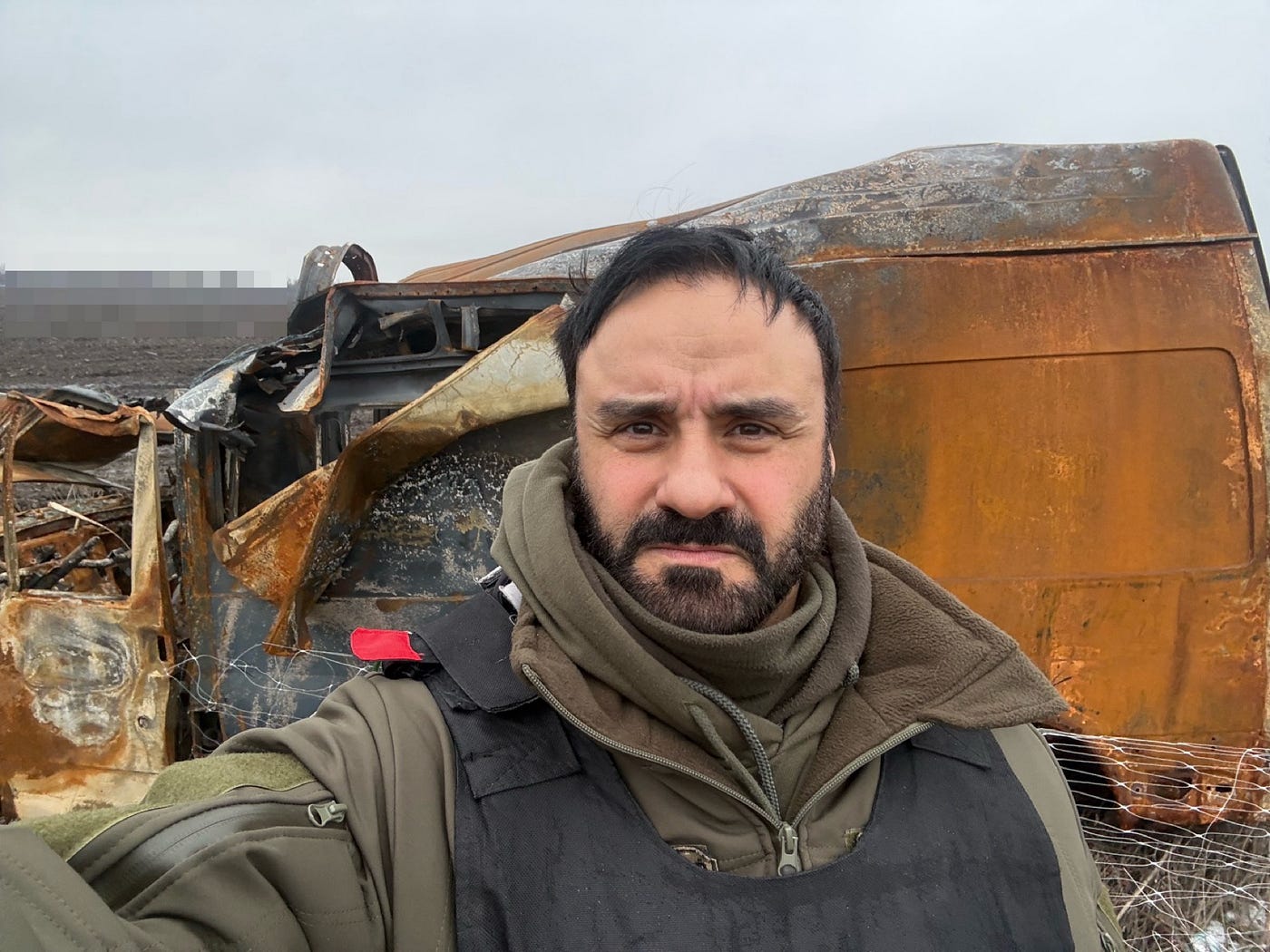
The ongoing blackouts severely damaged our house’s heating system in Western Ukraine while we were in the Donbas.
Without electricity, the pump couldn’t circulate the liquid while the fire was lit. As a result, the system caught fire, and the whole house was at risk of burning. Fortunately, it did not, but the whole system needs to be changed, and the house needs to be restored. Tubes are all bent, walls are blackened by haze, and the heating system doesn’t work, requiring an entirely new system.
We are doing our best since Alla’s parents live there, but there’s still a lot to work on here, too, as the people around us are in no better situation.
We’re renewing our fundraising campaign and thanking everyone who joins us in helping us restore what Russia is destroying. Even a small donation helps. We’ll keep you updated on developments.
Thank you all, dear friends
外交幻象
作者:Giorgio Provinciali
翻译:旺财球球
乌克兰前线报道
乌克兰,第聂伯罗彼得罗夫斯克—— 2022年2月14日,克里姆林宫通过塔斯通讯社宣布,莫斯科准备从其与乌克兰接壤的西部边境撤回在那儿集结数月的部分部队。俄外长谢尔盖·拉夫罗夫将俄方入侵乌克兰的威胁斥为“西方媒体的恐怖主义”。尽管这场“特别军事行动”事实上已筹划数月乃至数年之久,拉夫罗夫仍坚持相反说法,并补充称俄军的撤编是“一项既定做法,不取决于西方列强的歇斯底里”。其发言人在一份声明中重申,军演即将结束,南部和西部军区的部队已开始将人员和装备装上铁路与公路运输工具,当天就准备返回其军营。
这些言论被境外,主要是在意大利的俄方虚假信息渠道广泛传播,最终助长了一种与当时戏剧性现实相反的舆论画面。正是在那种现实下,当时大批人已开始外逃,我们重返乌克兰。时任北约秘书长延斯·斯托尔滕贝格对“莫斯科发出的外交必须继续的信号”表示欢迎,并称其“令人谨慎乐观”。
与此同时,俄罗 斯国家杜马公然违反明斯克协议,呼吁独裁者弗拉基米尔·普京承认自称的“卢甘斯克和顿涅茨克人民共和国”的独立。
(图片来源:Il Fatto Quotidiano)
整整四年后,随着对乌克兰的全面入侵展开,亲克里姆林宫的通讯社与博主在其渠道上散布虚假叙事,称一场乌克兰反攻在进行,借助因未在乌克兰白名单注册的设备被封锁使用Starlink 卫星网络而导致通信中断,数十个先前被俄方总参队虚报为“已被占领”的村庄正重回基辅控制。
与2022年一样,现实与叙事相去甚远:这些地区大多为灰色地带或本就处于乌克兰控制之下,俄方在这些地点的存在甚少或根本不存在。
而由俄政权在华盛顿的代理人唐纳德·川普施加的压力,则在战争最关键的战线上产生了灾难性后果:在被遏制了两年多之后,俄军近日已设法向查西夫雅尔西郊推进,从该高地上获得了对顿涅茨克其他受难城市(如科斯蒂安蒂尼夫卡、德鲁日科夫卡、克拉马托尔斯克与斯洛维扬斯克)的战略优势。再往西南,波克罗夫斯克沦陷的官方宣布如今已只是时间问题。米尔诺赫拉德的废墟被包围在几乎无路可出的杀伤区内,完全吞没了里夫内和羅丁斯克。扎波罗热州的胡里亚波尔几乎已被全部占领。
(图:我在提交本文前数刻,在波克羅夫斯克后方不远处为Alla拍下这张照片。杀伤区就在前方——版权所有,Giorgio Provinciali)
我们把自己逼到了生活不可维系的边缘,以搞明白西方的盲目纵容使这场癌症蔓延到了何等程度——这场癌症不能仅以乌克兰土地的平方公里来衡量。
所描绘的情形并非前线的突然崩溃,而是一场有序的消耗战,真正推进的不是俄军步兵,而是技术。为在顿涅茨克向波克罗夫斯克推进约五十公里、向托列茨克推进十几公里,莫斯科几乎耗费了近12年和两百万人力,且超过一半葬身战场。这是一场缓慢、血腥且代价高昂的推进,远非不可阻挡,然而俄军仍停留在顿巴斯的堡垒圈外,而乌克兰人仍以鲜血守卫着它。
这是因为在基辅进行高强度消耗战时,许多欧洲首都仍以危机管理的思维行事。缺乏长期产业远见、防务生产分散、将乌克兰纳入欧洲技术与产业链的整合迟缓,以及总是避重就轻的制裁,始终回避打击那些欧洲曾先行助长、并将在至少两年内继续助长的俄罗斯核心商业利益,都使得莫斯科在技术层面的进展远超过了地面推进。
以至于今天已无明确的俄乌控制分界线:只有风险的梯度、延伸至接触线以外的灰色地带。后方与前线的区别变得不清晰。正如我们多年来反复所说,“灰色地带”不再是一个既定的地理空间,而是一个动态、可变的状态,随侦察监视情报覆盖、干扰器可用性以及第一人称视角无人机(FPV)操作者的存在而按小时变化。在这种情形下,谈论“解放”或“征服”的村庄容易产生误导。控制往往是间歇的、局部的且充满争议。
(图:四年前我在乌克兰顿巴斯拍的照片,那时灰色地带仍主要由炮火划定的地理空间——版权所有,Giorgio Provinciali)
四年前,慕尼黑安全会议充满模糊。俄罗斯代表团在最后一刻取消出席,而许多西方领导人仍谈论威慑与对话。数日之后,俄坦克跨越边界进入欧洲。如今,同一会议仍在以威慑与对话的框架讨论全球失序。却依然未能认识到:如果世界已支离破碎,乌克兰如今是其最暴露的断层。无视裂缝不会使其消失,只会令其加深。
(图:在提交这篇文章前不久,我在波克罗夫斯克周围的杀伤区外几百米处报道时拍摄的照片。现在,主要的危险不再是不精确的火炮的弹片,而是FPV无人机的选择性精度。而且,在大多数情况下,戴头盔或佩戴重型设备并不能拯救你——版权所有,Giorgio Provinciali)
***
持续的停电严重损坏了我们在乌克兰西部的家中的供暖系统,而我们当时就在顿巴斯。
没有电,点着的炉火无法通过水泵循环热水。结果,系统起火,整个房子面临着烧毁的风险。幸而未被烧毁,但整个系统需要更换,房子也需要修复。管道都是歪的,墙壁被烟雾熏黑,供暖系统无法正常工作,需要彻底更换。
我们正在尽最大努力,因为Alla的父母住在那里,但这里还有许多工作要做,周围的人处境也好不到哪儿去。
我们正在重启筹款活动,感谢每一位支持我们修复被俄罗斯摧毁一切的朋友。即使是小额捐款也有帮助。我们会及时更新进展。
感谢大家,朋友们。
如果你相信我们的工作,请支持我们
在过去的三年里,我们一直在乌克兰战争的各个前线进行报道……
https://www.paypal.com/pools/c/9lP2mIk7Nk