
飞驰穿越死亡走廊,奔向烈焰中的斯洛维扬斯克
Darting Through The Corridors of Death Towards a Flaming Sloviansk
By: Giorgio Provinciali
Live from Ukraine
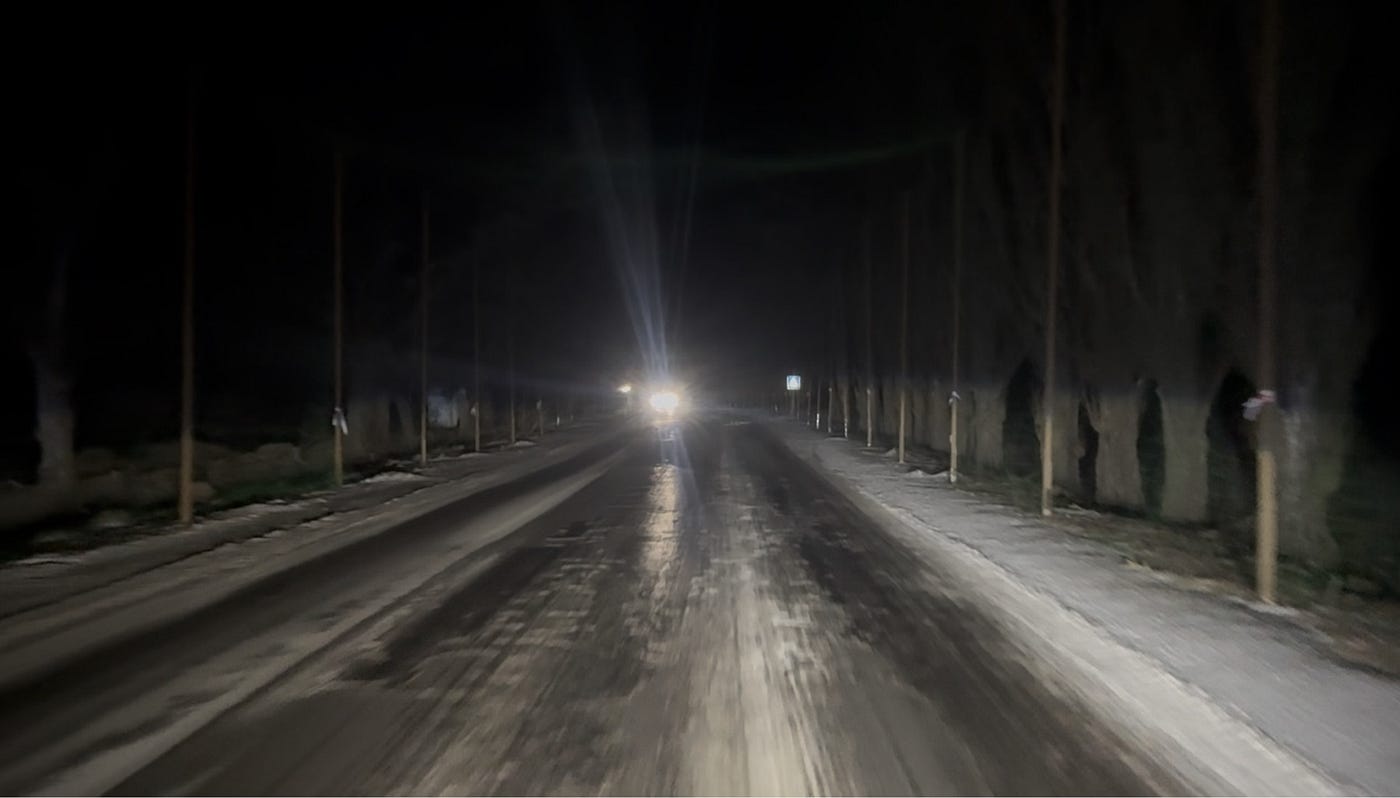
Sloviansk, Donetsk – The impact of heavy rain on the asphalt has made crossing the anti-drone corridors even more lethal, creating a dark, glassy layer similar to glass that looks like a wet road but hides the dangers of black ice. Driving on that extremely slippery surface, which is difficult to stand on, is practically impossible even in normal conditions. Speeding across it while keeping an eye out for Russian aerial drones is an unequal battle with fate, especially when the crystalline ice that has formed on those now-frayed fences reveals cracks as wide as the entire roadway.
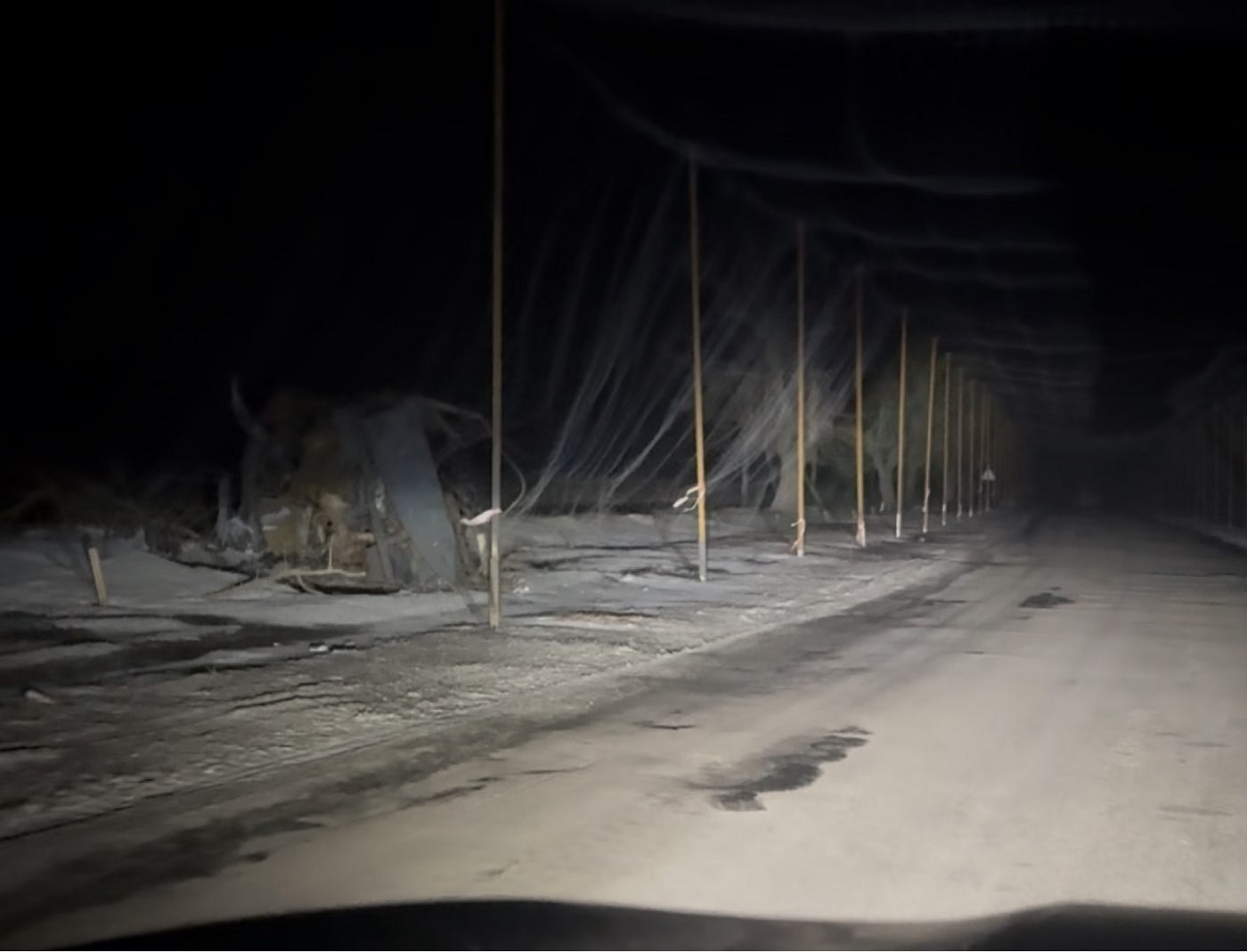
The wreckage of the last car – a civilian vehicle – was still warm when we crossed the Maiachka Bridge. A Russian drone operator had detonated it at dawn on the same stretch of road we had traveled less than 12 hours earlier to compile our latest report from Kramatorsk. Amid dozens of similar debris, Ukrainian workers are trying to patch up the tears in the fence as best they can, through which enemy kamikaze quadcopters sneak in search of human prey.
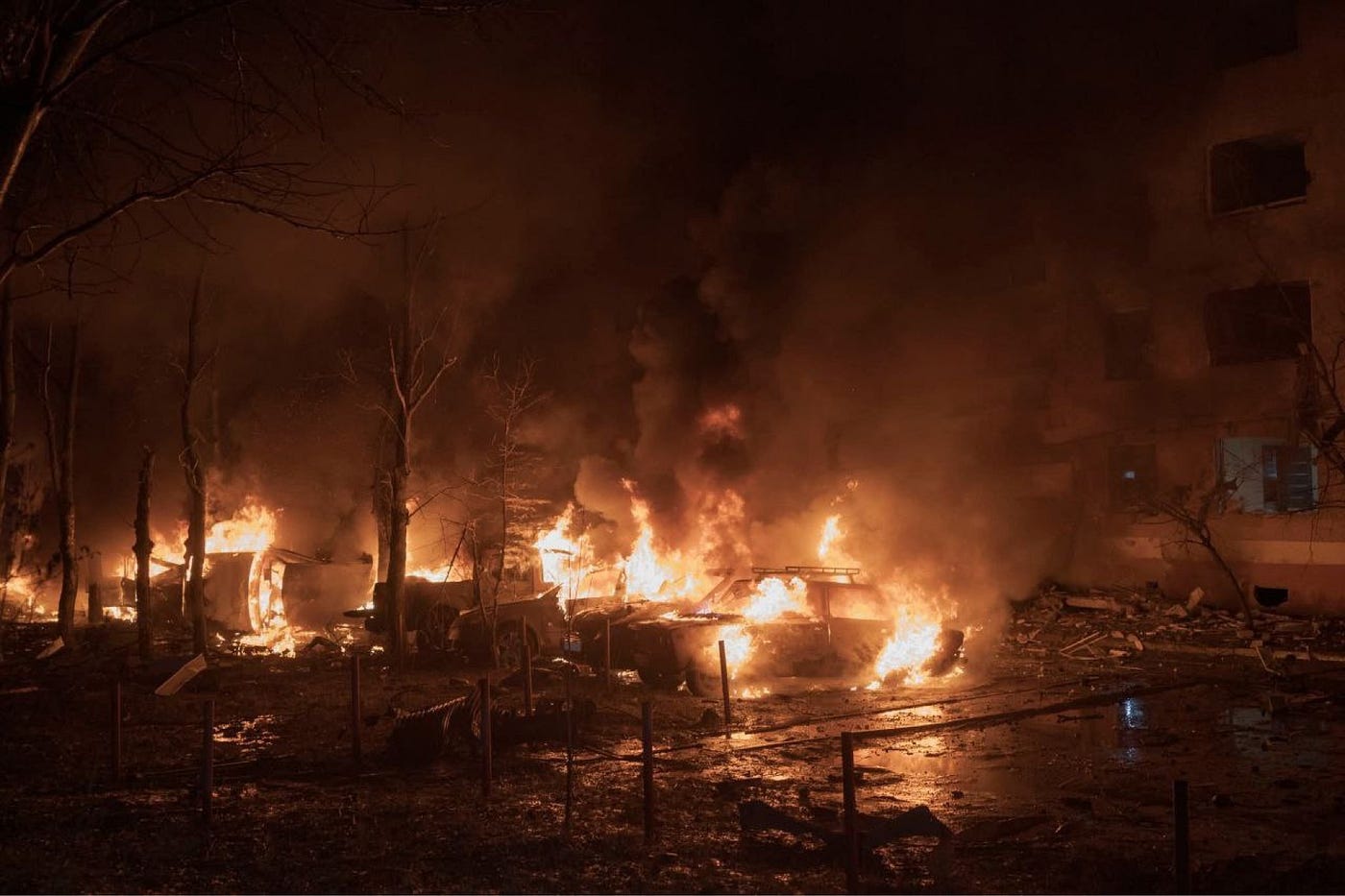
The reality that unfolds before the eyes of those who pass through that tunnel of death unscathed is hellish: Sloviansk is in flames nearly 24/7. The last 10 KAB glide bombs were dropped by the Russian Air Force the night before we wrote this article, causing devastation. A mother and her 11-year-old daughter were killed, and 14 other people – all civilians – were injured. Around 10:00 the following morning, the Russian Armed Forces again bombarded the city with a hail of glide bombs, destroying or severely damaging residential and administrative buildings. As rescuers struggled to extract an unspecified number of civilians from the rubble – including a 7-year-old girl – the city was again attacked by a swarm of FPV drones, likely released from a larger mother drone, such as the Shahed/Geran’, which was used toward evening to strike one of the local thermal power plants, destroying it.
Against nearby Druzhkivka, now so devastated that even evacuees were targeted in a macabre safari, the Russians dropped cluster bombs on the central market and then two large incendiary devices. Seven people were killed and fifteen were injured, according to estimates released by the Donetsk regional administration in the hours that followed. All were civilians between the ages of 43 and 81. Earlier, Russian troops had dropped another aerial bomb on a private home housing an entire family, killing two people and wounding three others.
Since the first bombs fell on Ukraine on February 24, four years ago, little has changed, if anything, for the worse. The thick columns of black smoke now rising across the horizon, visible from Sloviansk, are reminiscent of those seen in Mariupol’. Another martyr city of this heroic Donbas region, which the russkyj mir has not yet managed to engulf despite having bitten it by the throat eight years earlier, in 2014. The so-called ‘free world’ that Ukraine has defended with its blood ever since perhaps needs it more than the other way around. Despite having the economic, political, and material means to stop the Russian war machine, the leaders of Western democracies continue to fuel it, hypocritically claiming to be «on the side» of those here.
On February 13, 2022, German Chancellor Scholz flew to Kyiv «to extract important concessions to present to Putin». The stated objective was to implement the Minsk II agreements. Civilian aircraft have not flown over Ukraine for four years, many leaders have changed, but the aim remains the same: convince the attacked to give up something by drawing red lines with their own blood in exchange for just enough to avoid collapse, promises peppered with inane operational caveats, partial sanctions, loans, and staggered supplies.
A mistake not only military but architectural.
For twelve years, a cancer cell has been allowed to proliferate until it metastasized. By repeating that mistake – one that ignores history – a number of EU countries continue to do business with the aggressor, claiming that «avoiding escalation» will reduce the war, but the rhetoric doesn’t stop bombs. Nor does it solve the problem. It merely shifts it a little further, to the borders of a region of Europe that has resisted bombs and indolence for 12 years.
No, gentlemen, international law did not die with the arrival of a squalid figure in the White House. Nor is Donbas merely a disputed region. It’s the test of Western credibility. For all these years that Ukraine has lived under bombs, the West has been under scrutiny.
It, too, has ended up accelerating into a narrow corridor where ice seems like water but is actually a trap, without knowing whether the next explosion will be ahead or behind.
The ongoing blackouts severely damaged our house’s heating system in Western Ukraine while we were in the Donbas.
Without electricity, the pump couldn’t circulate the liquid while the fire was lit. As a result, the system caught fire, and the whole house was at risk of burning. Fortunately, it did not, but the whole system needs to be changed, and the house needs to be restored. Tubes are all bent, walls are blackened by haze, and the heating system doesn’t work, requiring an entirely new system.
We are doing our best since Alla’s parents live there, but there’s still a lot to work on here, too, as the people around us are in no better situation.
We’re renewing our fundraising campaign and thanking everyone who joins us in helping us restore what Russia is destroying. Even a small donation helps. We’ll keep you updated on developments.
Thank you all, dear friends
飞驰穿越死亡走廊,奔向烈焰中的斯洛维扬斯克
作者:Giorgio Provinciali
翻译:旺财球球
乌克兰前线报道
则是与命运进行的不对等搏斗,尤其当已磨损的防护栅栏上结成的晶莹冰面露出与整条车道同宽的裂缝时。
斯洛维扬斯克,顿涅茨克——大雨打在柏油路面上,使穿越反无人机走廊变得更加致命,路面形成了一层暗黑、光滑如玻璃的薄层,看起来像是湿路,实则隐藏着致命的黑冰。在那种极其光滑、连站立都困难的路面上行驶,哪怕在正常情况下也几乎不可能。而在注意躲避俄方空中无人机的同时超速疾行,则更是与命运的不对等较量;尤其当这些如今已破败的护栏上结成的晶莹冰层显露出宽若整条车道的裂缝时,危险更为明显。
(图:我们在驶向斯洛文斯克的“死亡走廊”途中拍下这张照片,就在撰写本文前不久。我们为了拍照开了灯,因为通常保持灯关着更安全。对向驶来的另一辆车立刻打开了车灯以示异常——版权所有,Giorgio Provinciali)
当我们穿过迈亚奇卡桥时,最后一辆车(民用车辆)的残骸还带着余温。清晨,一名俄罗斯无人机操作者在我们不到12小时前行经的同一段路上引爆了那辆车,而我们彼时正从克拉马托尔斯克赶来采写最新报道。成堆的类似残骸中,乌克兰工人正尽其所能修补被撕开的栅栏,敌方的自杀式四旋翼无人机正从这些破口潜入,搜寻猎物。
(图:本文所述死亡走廊路边遗留的汽车残骸——版权所有,Giorgio Provinciali)
从那条死亡隧道全身而过的人眼前展现的现实如地狱一般:斯洛文斯克几乎全天候在烈焰中燃烧。我们撰文前一夜,俄空军投下了最后10枚KAB滑翔炸弹,造成毁灭性破坏。一名母亲和她11岁的女儿被炸死,另有14名平民受伤。次日约10时,俄军再次以一阵滑翔炸弹袭击该市,摧毁或严重损坏了居民楼和行政建筑。在救援人员努力从废墟中救出若干平民(包括一名7岁女孩)之际,城市又遭到一群FPV无人机的袭击,这些无人机很可能由更大的“母机”释放,例如沙赫德/格兰,傍晚时分其已用于打击并摧毁当地一座热电厂。
(图:俄罗斯是一个恐怖主义国家)
在附近的德鲁日科夫卡,破坏惨重,甚至撤离者在那儿也被当作猎物般袭击。俄军向中央市场投下集束炸弹,随后又投下两枚大型燃烧弹。顿涅茨克地区行政当局在数小时后发布的估计称,袭击造成7人死亡、15人受伤,均为43至81岁的平民。早些时候,俄军还向一处住有整家人的民宅投下一枚空中炸弹,造成2人死亡、3人受伤。
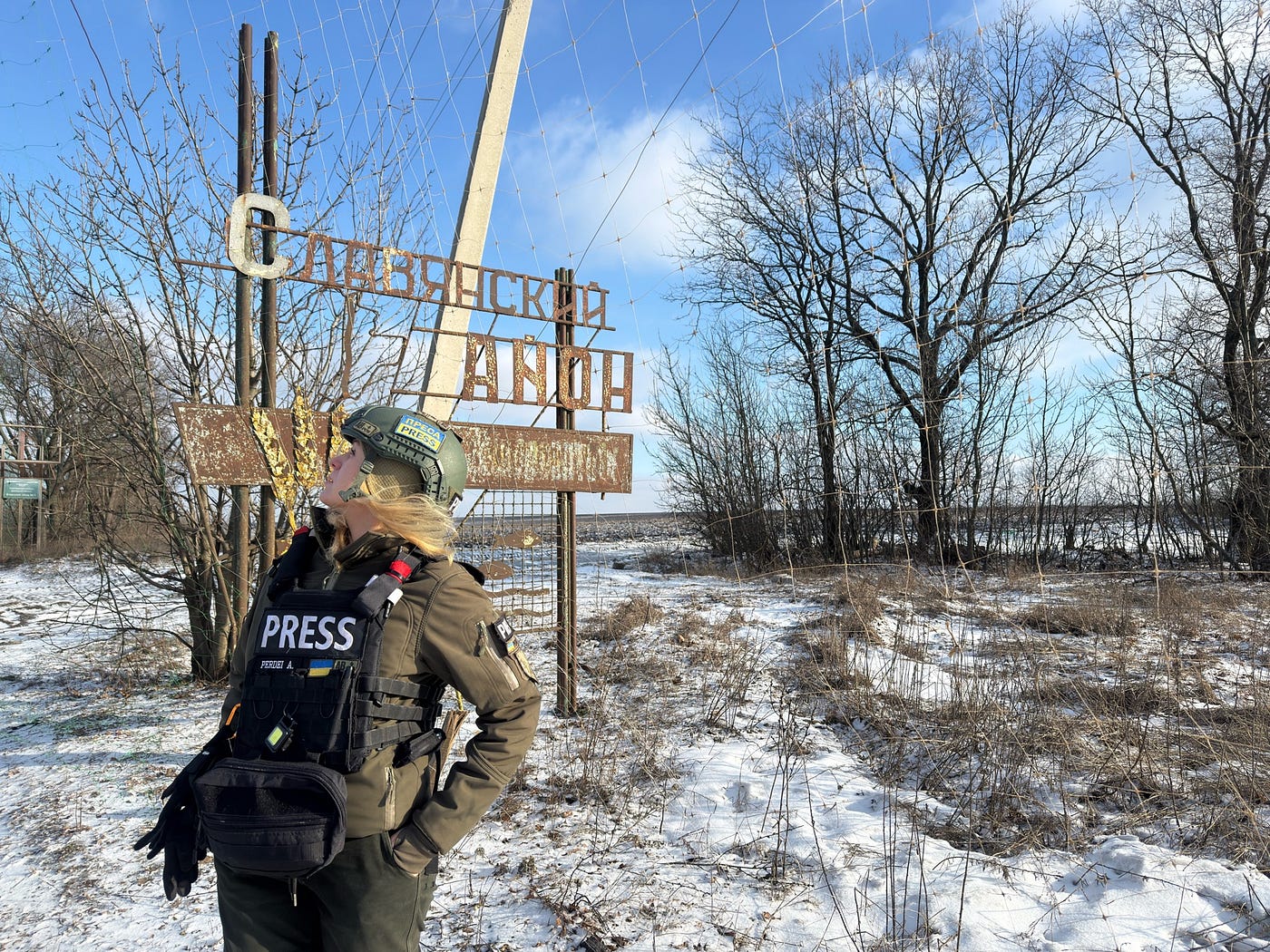
(图:Alla在斯洛文斯克区为本文报道时,观察天空。晴朗的天空有利于FPV无人机发动攻击。前景为反无人机网——版权所有,Giorgio Provinciali)
自四年前的2月24日首批炸弹落在乌克兰以来,情况几乎没有好转,若有,也是更糟。如今从斯洛文斯克地平线上升起的浓黑烟柱令人回想起马里乌波尔的景象——英勇的顿巴斯另一座殉难之城,曾在2014年被俄势力扼住喉咙,尽管如此,俄式世界仍未能将其完全吞没。自那时起,乌克兰用鲜血守护的所谓“自由世界”需要乌克兰,远超过反之。尽管西方民主国家拥有遏止俄国战争机器的经济、政治与物质手段,但其领导人仍在助长战争,虚伪地宣称“站在这里一方”。
2022年2月13日,德国总理朔尔茨飞往基辅,“争取向普京呈递的重要让步”。名义目标是落实《明斯克二协议》。民航飞机已四年未曾飞越乌克兰,多位领导人更迭,但目标始终如一:以他们的鲜血划下红线,迫使受袭一方放弃某些东西,以换取仅能勉强避免崩溃的承诺,那些承诺夹杂着荒谬的操作性附加条款、片面的制裁、贷款与分批供应。
这不仅是军事上的错误,还是构架上的错误。
十二年来,一个癌细胞被任其增殖,直到发生转移。重蹈这一无视历史的错误,一些欧盟国家仍与侵略者做生意,声称“避免升级”会减少战争,但空话止不住炸弹,也解决不了问题。它仅仅把问题往外推移,推到抵抗炸弹与怠惰已长达12年的欧洲地区边缘。
不,诸位,国际法并未随一个可鄙人物入驻白宫而死去。顿巴斯也不仅仅是一个争议地区。它是西方信誉的试金石。在乌克兰多年生活在炸弹阴影下的这些年里,西方一直在接受审视。
西方也最终加速行驶进一条狭窄的走廊,那里的冰看似水,实为陷阱,却不知下一次爆炸会在前方还是身后。
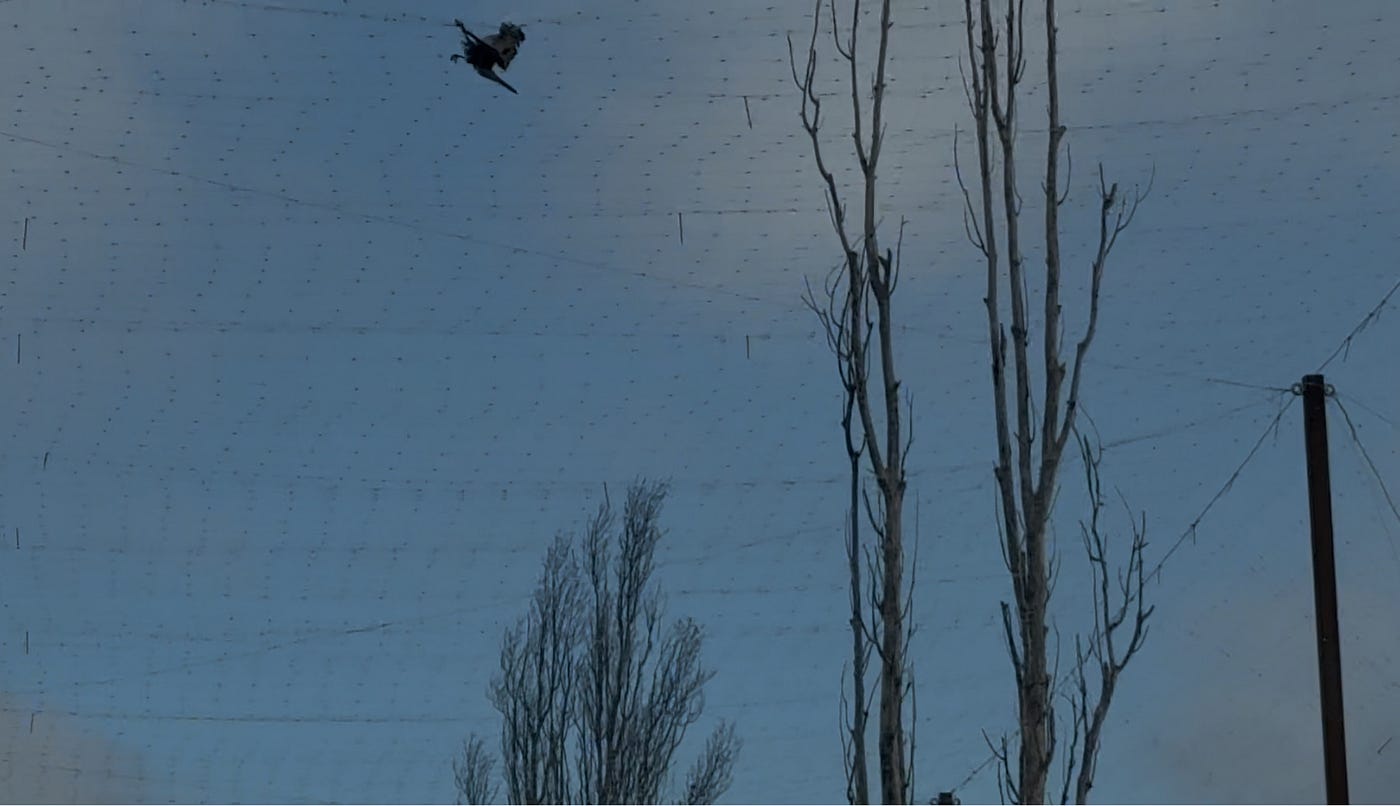
(图:一架俄制无人机被困在我们头顶上方防网中——版权所有,Giorgio Provinciali)
***
持续的停电严重损坏了我们在乌克兰西部的家中的供暖系统,而我们当时就在顿巴斯。
没有电,点着的炉火无法通过水泵循环热水。结果,系统起火,整个房子面临着烧毁的风险。幸而未被烧毁,但整个系统需要更换,房子也需要修复。管道都是歪的,墙壁被烟雾熏黑,供暖系统无法正常工作,需要彻底更换。
我们正在尽最大努力,因为Alla的父母住在那里,但这里还有许多工作要做,周围的人处境也好不到哪儿去。
我们正在重启筹款活动,感谢每一位支持我们修复被俄罗斯摧毁一切的朋友。即使是小额捐款也有帮助。我们会及时更新进展。
感谢大家,朋友们。
如果你相信我们的工作,请支持我们
在过去的三年里,我们一直在乌克兰战争的各个前线进行报道……
https://www.paypal.com/pools/c/9lP2mIk7Nk