原文链接:https://medium.com/@giorgioprovinciali/an-alternative-to-purl-is-needed-for-ukraines-and-europe-s-sake-0011be7db2ed?sk=ef1ad0afb8baa9251140593e889356ce
An Alternative To PURL Is Needed, For Ukraine’s And Europe’s Sake
By: Giorgio Provinciali
Live from Ukraine
Lozova – In the past few hours, the Russian Federation has launched a massive attack on the city I’m writing from, overwhelming it with 14 Geran-2 and Geran-3 drones. The targets were the heavy artillery emplacements that Ukraine uses to defend the remains of Pokrovsk from the rear, and the soldiers who, from here, rotate into that hell. As often happens, several residential buildings were severely damaged, and numerous civilians were among the victims.
Spending yet another sleepless night alongside the ‘shahed killers’ of anti-aircraft artillery (ППО), I compared the assessments gathered on other sides of the front with theirs, finding them convergent on one point in particular: supplies arriving from the US via the Prioritized Ukraine Requirements List (PURL) are delayed, compromising Ukrainian defenses.
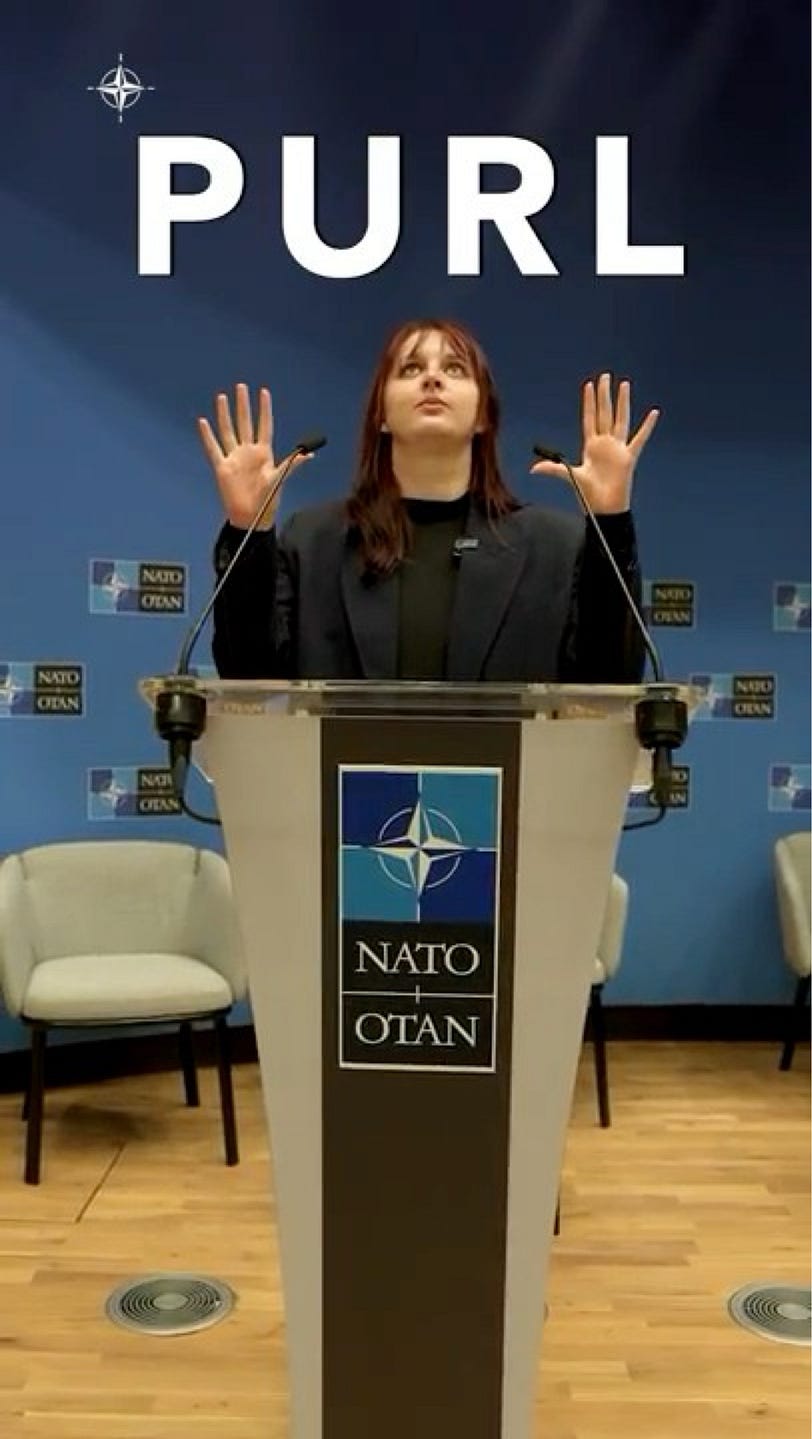
Presented with the virtuous goal of rapidly financing US arms purchases by following a list of Ukrainian needs agreed upon in the NATO-US format to expedite delivery, this architecture is in fact shifting the center of power toward Washington, producing the opposite effect. The PURL creates dependence on the US precisely now that it is the Alliance’s least reliable partner, allowing the US to leverage prices and schedules.
I am not accusing the US of price gouging; I just note how it’s hard to ignore that the unit cost of several American products intended for export differs significantly from that of domestic procurement. Rising and opaque fees, along with supply chain bottlenecks, obscure perceptions of how much we’re paying for what. A concrete example addressed with the ППО concerns interceptors for Patriot systems: the cost difference between those intended for the US domestic market and those for export is, in some cases, over double. Global demand has exploded, and although Lockheed Martin has announced plans to triple production, PAC-3 deliveries remain tied to Washington’s priorities.
Beyond exorbitant financial demands, Washington uses the blackmail of scarcity to turn the limits of possibility into a negotiating lever to impose the russkij mir (Russian peace) on Kyiv.
Given that the Kiel Institute for the World Economy has also noted that military aid to Ukraine has sharply declined since the introduction of the PURL, it’s legitimate to ask whether alternatives exist.
The answer is yes, and it looks to Europe.

Among President Volodymyr Zelensky’s most far-sighted choices, considering European integration as a strategic asset has proven so effective that it has put Moscow and Washington in crisis. It is worth remembering that while Article 5 of NATO establishes an indeterminate obligation left to state discretion («such actions as it seems necessary») in the event of aggression against a partner, Article 42.7 of the Lisbon Treaty imposes a specific and maximum obligation on EU member states («aid and assistance with all the means in their power»).
Even in terms of military supplies, the European solution for circumventing the problems of the PURL allows for shortening the decision-making, production, and delivery chains, thus containing costs.
The European Peace Facility (EPF) has already been used to reimburse member states for donating munitions and to support joint procurement. The Act in Support of Ammunition Production (ASAP) is the EU’s industrial response. In the «three-track plan» agreed in 2023, the EPF and ASAP have mobilized billions for Ukrainian artillery. Initiatives like the Czech one have demonstrated that, by purchasing on the global market, the American bottleneck can be overcome if the direction is European.

Prices and schedules must be negotiated in Brussels, not Washington.
The point is that European industry is not investing enough despite being highly competitive: just remember how Rheinmetall is spending billions to meet the demand for 155mm rounds. To return to the practical example of the ППО, the European alternative to the Patriot exists and is called Samp/T.
Both share the same conceptual architecture: a multifunction phased-array radar, a command-and-control center, launchers, and hit-to-kill interception. The difference lies in the interceptors and the software. Before Ukrainian engineers adapted the parameters for target discrimination, trajectory prediction, and the interception time window, the Patriot’s engagement software had only theoretical effectiveness against threats improperly labeled as ‘hypersonic’. After reverse-engineering from the real theater in Kyiv, validation became empirical, so much so that Raytheon recognized the leap in capability and offered to supply additional components to support those modifications. The same goes for Samp/T. MBDA and Thales producearound 300 Aster 30 interceptors a year, while on nights like the one just passed, Ukraine burns dozens of them.
The answer to the PURL is therefore to finance European industry to produce what it already knows how to create: IRIS-T, CAMM, Scalp/Storm Shadow, Taurus, Aster, and so on.
Without delivery clauses with binding timelines and penalties, the PURL is nothing more than a moral scourge. A toxic architecture that strengthens Washington’s position by creating further dependence.
By virtue of its status and industrial capabilities, the EU has all the tools to address its own security with Ukraine without delegating it to Washington. It just needs to believe in it.

为了乌克兰和欧洲的利益,需要一种替代PURL的方案
作者:Giorgio Provinciali
翻译:旺财球球
乌克兰前线报道
洛佐瓦——在过去的几个小时里,俄罗斯联邦对我所在的城市进行了大规模攻击,动用了14架Geran-2和Geran-3无人机,对城市进行了猛烈轰炸。攻击的目标是乌克兰用来从后方防御波克罗夫斯克非占领区的重型炮兵阵地,以及从这里轮换进入那个地狱的士兵。正如往常常发生的一样,几栋居民住宅楼受到严重破坏,许多平民成为受害者。
在与“沙赫德杀手” 防空火炮(ППО)共同度过的又一个不眠之夜,我将两侧前线收集的评估与他们的进行了比较,发现唯达成了一致的一个特别点在于:通过乌克兰优先需求清单(PURL)运输的来自美国的物资,削弱了乌克兰的防御能力。
(图:照片来源和版权:@NATO on YouTube)
PURL的崇高初衷是遵循北约-美国达成的乌克兰需求清单,迅速为美国武器采购提供资金,以加快交付,但这一架构实际上正在将权力中心转向华盛顿,产生了相反的效果。PURL使乌克兰此时对美国产生依赖,正是在美国成为联盟中最不可靠的盟友之际,从而让美国在价格和交付时间上进行操控。
即使有人想避免讨论价格恶性上涨,但很难忽视多种美国出口产品的单位成本与国内采购之间显著的差异。不断上涨且不透明的费用,加上供应链瓶颈,使我们到底为什么、付出多少感到困惑。一个具体的例子是关于对爱国者系统的拦截器的防空火炮(ППО):针对美国国内市场和出口市场的拦截器之间的价格差异在某些情况下超过了100%。全球需求激增,尽管洛克希德·马丁已宣布计划将生产量增加三倍,但PAC-3的交付仍然与华盛顿的优先事项挂钩。
除了天价的财政要求外,华盛顿利用稀缺(资源)的威胁将可能性的限制转变为谈判杠杆,将俄罗斯和平(russkij mir)强加给基辅。鉴于基尔世界经济研究所也指出,自乌克兰优先需求清单(PURL)实施以来,向乌克兰的军事援助急剧下降,因此,提出是否存在其他选择是合理的。
答案是肯定的,替代方案在欧洲。
(图:在采访期间,Alla与乌克兰士兵交谈 ——版权所有,Giorgio Provinciali)
在乌克兰总统弗拉基米尔·泽连斯基最具远见的选择中,在战略上考虑欧洲一体化已证明极为有效,以至于让莫斯科和华盛顿陷入危机。值得一提的是,虽然北约第五条款规定在对伙伴国的侵略事件中,盟约国可以自行决定是否采取“必要的行动”,但《里斯本条约》第42.7条则对欧盟成员国施加了具体且最高的义务(“通过其掌握的所有手段提供援助和支持”)。
即使在军事供应方面,欧洲的解决方案绕过PURL问题,能够缩短决策、生产和交付链,从而控制成本。
欧洲和平基金(EPF)已经被用来报销成员国捐赠弹药的费用,并支持联合采购。弹药生产支持法案(ASAP)是欧盟的工业响应。在2023年达成的“三轨计划”中,EPF和ASAP已为乌克兰的炮弹动员了数十亿资金。像捷克这样的倡议表明,通过在全球市场上采购,如果方向是欧洲,那么可以克服美国的瓶颈。
(图:照片来源:我接受Euronews采访 —— 照片由Euronews提供)
价格和时间表必须在布鲁塞尔谈判,而不是在华盛顿。
关键是,尽管欧洲工业具有很强的竞争力,但投资仍然不足:只需回想一下莱茵金属公司为满足155毫米炮弹需求而花费数十亿的情况。回到防空火炮(ППО)的实际例子,欧洲针对爱国者系统的替代方案是萨姆/T(Samp/T)。
两者具有相同的概念架构:多功能相控阵雷达、指挥控制中心、发射器和命中拦截。区别在于拦截器和软件。在乌克兰工程师调整了目标识别、轨迹预测和拦截时间窗口的参数之前,爱国者系统的作战软件对于被错误标记为“高超音速”的威胁仅具有理论上的有效性。在基辅的实际战场上经过逆向工程后,验证变得经验丰富,以至于雷神公司承认其能力得到了飞跃,并主动提供额外组件以支持这些修改。萨姆/T也是如此。MBDA和泰雷兹每年生产约300枚阿斯特30拦截器,而在刚刚过去的夜晚,乌克兰就消耗了数十枚。
因此,解决PURL问题的办法是为欧洲工业提供资金,生产它已经能够制造的武器:IRIS-T、CAMM、Scalp/Storm Shadow、Taurus、Aster等。
如果没有约束性时间限制和惩罚条款的交付条款,PURL无非是一个道德祸根。这一有毒的架构通过制造进一步的依赖来加强华盛顿的地位。
凭借其地位和工业能力,欧盟完全有能力在不将安全问题外包给华盛顿的情况下,解决自身与乌克兰的安全问题。关键在于,它只需要对此有信心。
(图:我在俄国对平民基础设施进行攻击后的特尔诺皮尔 ——版权所有,Giorgio Provinciali)
????请支持我们
致所有相信我们工作并愿意支持它的人
在过去三年里,作为自由撰稿人,我们一直在乌克兰战争的所有前线进行报道,自从大规模……
https://www.paypal.com/pools/c/9kY6JJqKxy
