The Impossible Challenge For Ukrainian Engineers. Who Struggle To Make It Possible.
By:Giorgio Provinciali
Live from Ukraine
Kyiv – At this delicate moment in the war, limited and inefficient Western military support, along with the choices made – or rather, imposed – regarding rebuilding its strategic deterrence, require Ukraine to invest in new technologies that increase the explosive potential of the weapons it already possesses, thereby leveraging conventional deterrence. For Kyiv, it has become imperative to understand which technological lines increase the overall military effectiveness of drones and other missiles before the West imposes new operational caveats and, with its constant flow of money to Moscow, continues to finance the Russian war machine.

The analysis of Ukraine’s new Defense Minister, Mykhailo Fedorov, is merciless: in terms of speed (600 km/h), range (1,000 km), aerodynamic profile (6 meters long with a 5.5-meter wingspan), and payload (90 kg of warhead for a total weight of 850 kg), the new Russian Geran-5 drones are cruise missiles through and through. They can be launched from Su-25 aircraft and use jet propulsion powered by Chinese Telefly engines, with satellite guidance enhanced by 4G/LTE connectivity.
The drone reported in the skies over Dnipropetrovsk on Monday by severalwarfare institutes – a BM-35 – is by no means the first Russian drone equipped with Starlink technology: we’ve been reporting on it for at least a year, noting medium-range capabilities that even worry Ukraine’s neighbors.
Fiber optics, microchips, and Chinese engines allow Russian Garpija drones to be launched en masse to saturate Ukrainian defenses, forcing Kyiv and its allies to expend disproportionate resources on interceptions and countermeasures.
The new class of Russian technologies – developed with Chinese industrial input – is rapidly evolving and combines advanced electronic warfare capabilities, artificial intelligence to automate counterattacks, real-time targeting and analysis, and the integration of inertial sensors with large-scale digital systems.
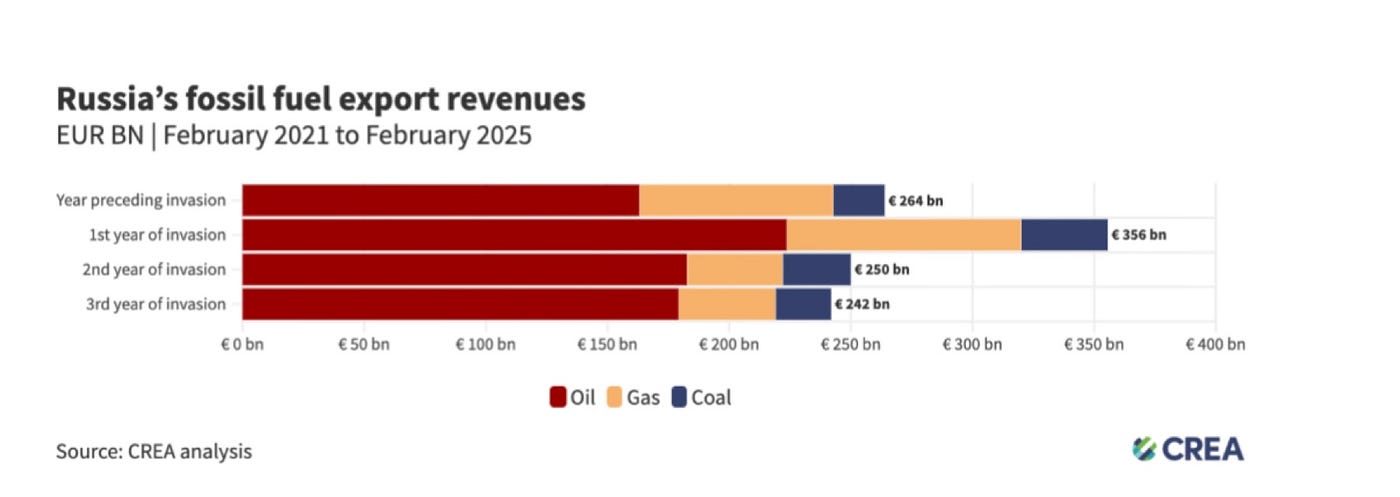
The news is no longer that, despite declaring neutrality, Beijing is a key supplier of critical components for the Russian military. Unfortunately, it also isn’t that the European Union itself largely finances the Russian war machine more than Ukrainian defense, with record hydrocarbon purchases that will continue until the end of 2027, the dawn of the 14th year since Russia began invading Ukraine. The problem is that, with the little it receives compared to what is given to Moscow (50% less economically and through much less direct methods than the monthly transfer to Russia), Kyiv faces difficult technological challenges in a very short timeframe and with extremely limited resources.
The Ukrainian Defense Forces have struck a series of critical enemy targets on Russian soil, but the damage has been limited and often quickly repairable.
Just the night before last, the Ukrainian General Staff confirmed successful strikes against: a Russian drone hub near Velyka Novosilka; enemy forces concentrated in Shakhovo and Hrihorivka; the “Khocholskaya” oil base in the Voronezh region; a Russian ammunition depot in the Nizhnia Duvanka area (Luhansk); enemy troops gathered in Huliaypole (Zaporizhzhia) and Kolotilovka (Belgorod); and the battalion checkpoint in Berezovo (Dnipropetrovsk).
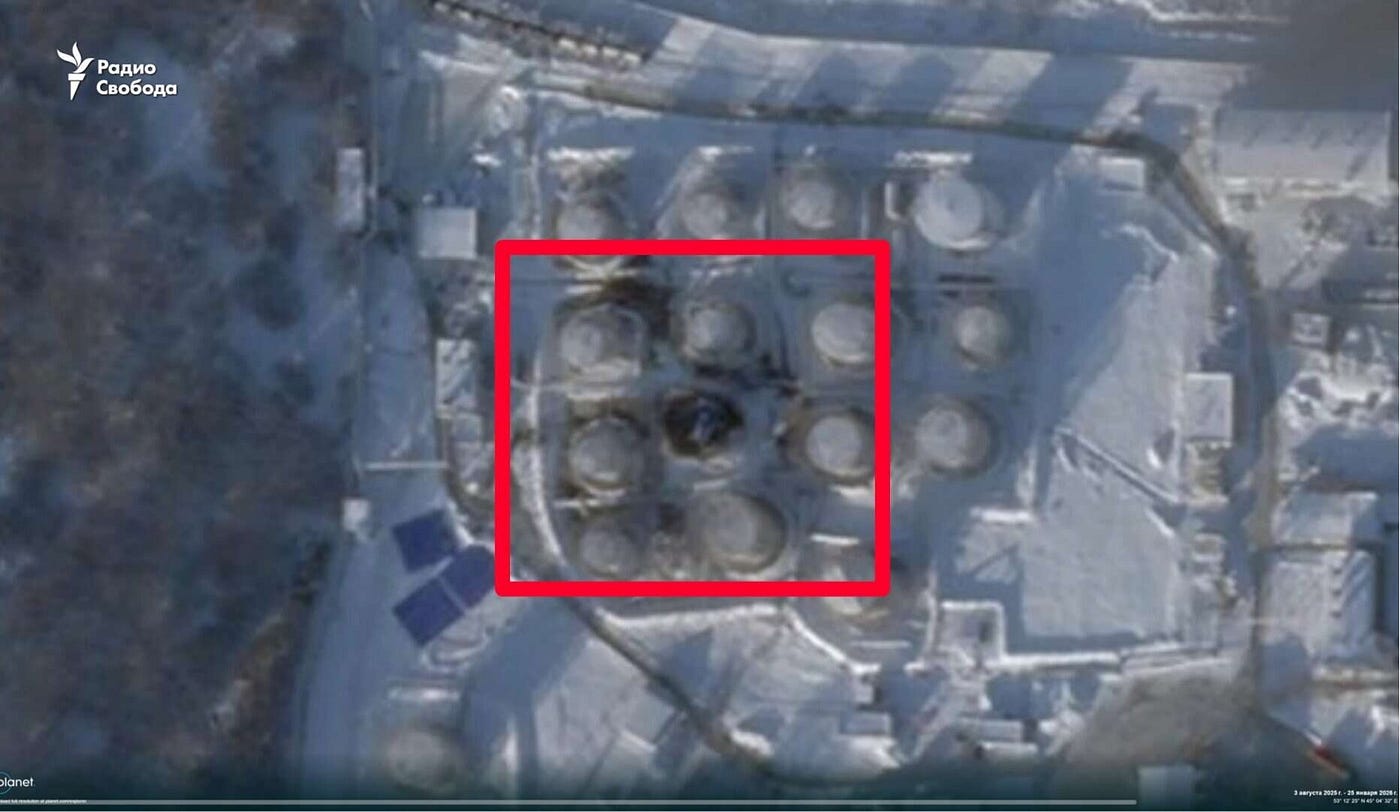
If Ukraine had more effective weapons, these attacks and those targeting hydrocarbon extraction, refining, and storage infrastructure would have far more severe effects, similar to those Ukraine is currently experiencing.
To overcome this disproportion, Ukrainian engineers must work on factors that can be summarized in a basic equation: P ≈ m * Q * η, where P represents the launch vehicle’s potential upon impact, the symbol ≈ indicates approximation, m is the payload mass, Q is the specific energy (MJ/kg), and η (Greek letter eta) represents the launch vehicle’s efficiency (shape, drag, resistance, range, etc.).
The goal of the Ukrainian engineers is to increase m and Q while reducing total weight. To do this, the work consists in testing standardized munitions scalable to drones, nanoalloys, high-yield nitroamines, high-velocity, high-melting-point military explosives (HMX) or even CL-20 (hexanitrohexazosyl-wurtzitane, one of the most powerful explosives known) in 3D-printed polymer matrices (PBX), reactive structural materials (RMS), intermetallic compounds, enriched metal and nanothermite warheads, co-crystallization techniques, and hybrid technologies with nanoparticles for amplified blasts. These technologies increase the reaction surface, prolong the shock wave pulse, enhance overpressure, and maximize kinetic energy without resorting to the thermobaric compounds Russia uses, which have a much lower cost per joule and are easier to source.
This has led to an increase in Q and, more generally, a significant technological leap, as FPV drones have evolved from being equipped with mortar rounds to carrying shells made of carbon fiber and graphene composites or missiles like the Long Neptune and Flamingo, which can carry AI-guided warheads with double the m and Q of those of the much Western missiles but at infinitely lower costs.
Technological advances have reduced the acoustic and visual signatures of the launchers, improved their resilience to electronic warfare, and enhanced target discrimination in difficult atmospheric conditions like the current ones. Heterogeneous swarms, including decoys, and optimized production chains have allowed them to increase their offensive capability more than the Russians have adapted their defensive capability.
However, this is not enough.
Despite working on routing algorithms, geometries, radar-absorbent materials, thermal management, structural lightening (every single bolt has an impact), propulsive efficiency, and range autonomy to improve η, the challenge remains extremely difficult because – despite having a GDP equal to Italy’s – Moscow benefits from larger budgets (indirectly financed by the EU), has reliable partners, and operates without the restrictions imposed on Ukraine.
It is within this imbalance that the real game of the coming months will be played out. For Kyiv, conventional deterrence is not a choice but an existential necessity: doing more with less, faster than the enemy, and before new political constraints further erode its margin of action. Every externally imposed technological delay translates into an operational advantage for Moscow, even as those who claim to support Ukraine finance it. Without a profound revision of this paradox, Ukraine’s survival will continue to depend not on the amount of aid received but on the ability of its engineers to bend physics, industry, and time to favor a deterrence that the West continues to promise but not to guarantee.
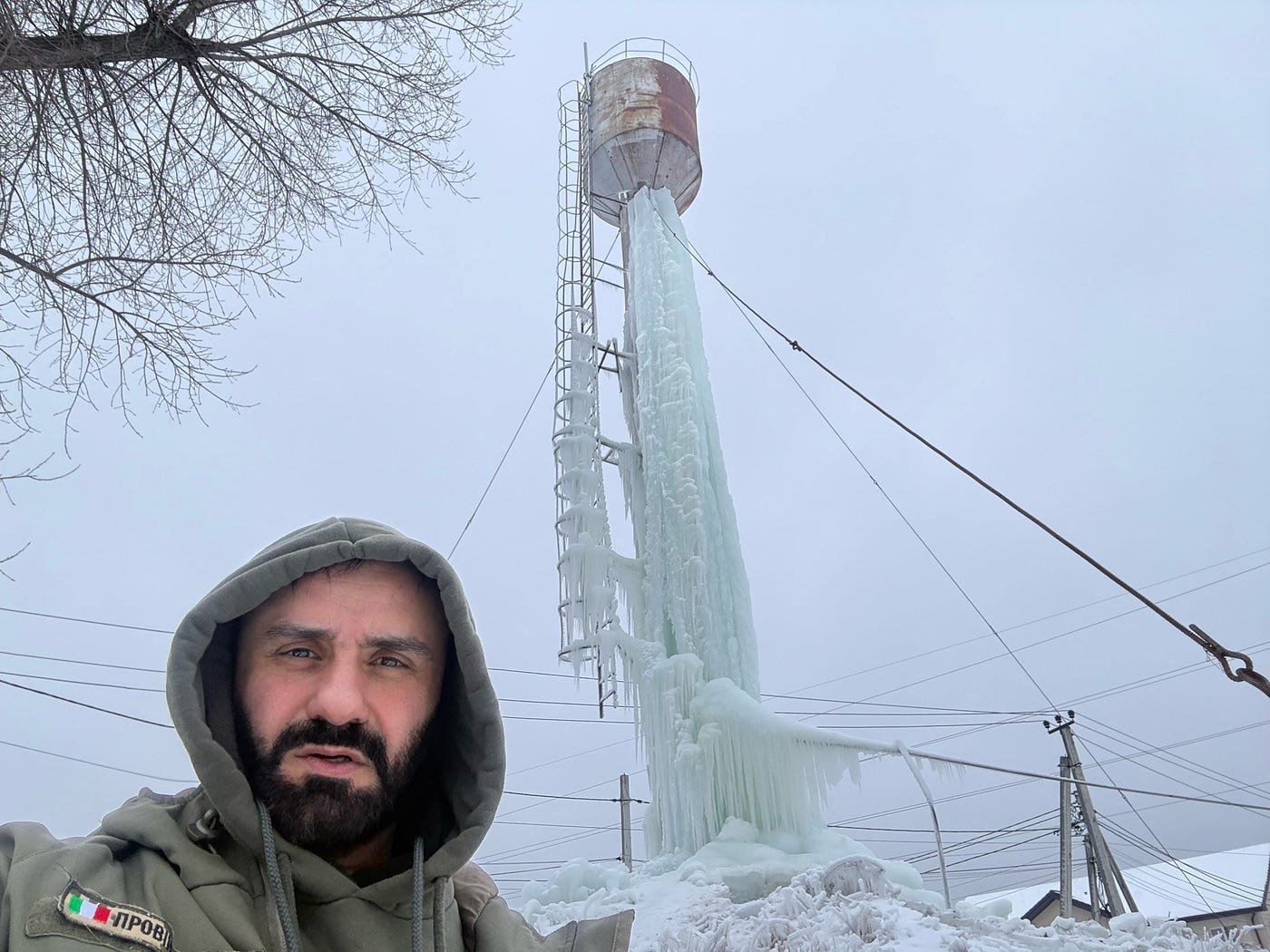
The continuous blackouts severely damaged the heating system of our house in Western Ukraine while we were in Donbas.
Without electricity, the pump couldn’t circulate the liquid while the fire was lit. As a result, the system caught fire, and the whole house was at risk of burning. Fortunately, it did not, but the whole system needs to be changed, and the house needs to be restored. Tubes are all bent, walls are blackened by haze, and the heating system doesn’t work, requiring an entirely new system.
We are doing our best since Alla’s parents live there, but there’s still a lot to work on here, too, as the people around us are in no better situation.
We’re renewing our fundraising campaign and thanking everyone who joins to help us restore what Russia is destroying. Even a small donation helps. We’ll keep you updated on developments.
Thank you all, friends
乌克兰工程师面临的不可能挑战:他们竭力将不可能变为可能
作者:Giorgio Provinciali
翻译:旺财球球
乌克兰前线报道
基辅——在战争的这一敏感时刻,有限且低效的西方军事支援,以及关于重建其战略威慑所做的选择——或更确切地说,是被迫接受的选择——要求乌克兰投资于能够提升现有武器爆炸潜能的新技术,从而增强常规威慑。对基辅而言,迫切需要弄清楚哪些技术路线能在西方施加新的作战限制之前提高无人机及其他导弹的整体作战效能;否则,在西方向莫斯科不断输送资金并持续为俄罗斯军火机器“输血”的背景下,战局将更为不利。
(图:我在乌克兰战区—版权所有,Giorgio Provinciali)
乌克兰新任国防部长米哈伊洛·费多罗夫的分析丝毫不留情面:就速度(600 公里/小时)、射程(1000 公里)、空气动力学特征(机身长约 6 米、翼展约 5.5 米)以及有效载荷(弹头90 公斤,总重约 850 公斤)而言,新型俄罗斯“格兰?5”(Geran?5)无人机完全就是巡航导弹。它们可由苏?25 发射,采用中国 Telefly 的喷气发动机推进,并通过卫星制导辅以 4G/LTE 连接增强制导能力。
周一由多个战争研究机构报告的在第聂伯罗彼得罗夫斯克上空出现的被称为 BM?35 的无人机,绝非首例装备Starlink 技术的俄罗斯无人机:我们至少已跟踪报道了一年,指出其具有中程能力,甚至令乌克兰的邻国感到担忧。
光纤、微芯片与中国产发动机使得俄罗斯的“加尔皮亚”(Garpija)无人机能够批量发射让乌克兰防御疲于应付,迫使基辅及其盟友在拦截与对抗措施上消耗不成比例的资源。
这一新型俄罗斯技术在中方工业参与下正快速演进,集成了先进的电子战能力、用于自动化反制的人工智能、实时目标定位与分析,以及惯性传感器与大规模数字系统的融合。
令人惊讶的不再是北京在宣称中立的同时,仍为俄军提供关键零部件;更令人无奈的是,欧盟本身对俄罗斯战争机器的资金支持(通过创纪录的化石燃料采购)在总体上已超过对乌克兰防务的支持,这种采购将持续到2027 年末——也就是俄罗斯入侵乌克兰的第 14 个年头之际。问题在于,基辅所获支持与流向莫斯科的资源相比严重不足(在经济量上少 50%,且方式远不如对俄的月度转账直接),这使得乌克兰必须在极为有限的资源与极短的时间内,面对艰巨的技术挑战。
(图表来源:CREA)
乌克兰国防力量虽对俄境内一系列关键目标实施了打击,但破坏往往有限且可快速修复。
就在前晚,乌克兰总参谋部确认成功打击目标包括:位于大诺沃西利卡(Velyka Novosilka)附近的俄罗斯无人机枢纽;在沙霍沃(Shakhovo)和格里霍里夫卡(Hrihorivka)集结的敌军;沃罗涅日州的“Khocholskaya”石油基地;卢甘斯克尼日尼亚·杜万卡(Nizhnia Duvanka)地区的俄罗斯弹药库;扎波罗热的胡利艾波勒(Huliaypole)与别尔哥罗德的科洛蒂洛夫卡(Kolotilovka)集结的敌军;以及第聂伯罗彼得罗夫斯克贝列佐沃(Berezovo)的一处营级检查站。
若乌克兰拥有更具效力的武器,这些打击——以及针对碳氢化合物开采、炼制与储存基础设施的攻击——将产生更为严重的后果,与乌克兰当前所承受的类似。
(图:彭萨一处油库被毁的燃料罐,2026/01/25,图片来源:自由欧洲电台)
为克服这种不均衡,乌克兰工程师必须针对可以归纳为基本方程式的因素开展工作:P ≈ m * Q * η,其中 P 代表发射体在冲击时的潜能,符号 ≈ 表示近似,m 为有效荷载质量,Q 为比能(MJ/kg),η(希腊字母 eta)代表发射体效率(形状、阻力、抗性、射程等)。
乌克兰工程师的目标是在减轻总体重量的同时提高 m 与 Q。为此,他们正在测试可扩展到无人机的平台化标准弹药、纳米合金、高能硝胺类、具有高速度与高熔点的军事炸药(如 HMX)甚至 CL?20(六硝基六氮杂环-瓦氏烷,已知最强炸药之一)在 3D 打印聚合物基体(PBX)中的应用,反应性结构材料(RMS)、金属间化合物、富金属与纳米铝热剂弹头、共结晶技术以及含纳米颗粒的混合技术以放大爆炸效应。这些技术能增大反应表面、延长冲击波脉冲、增强超压并在不使用俄罗斯所用的热压混合物(其每焦耳成本更低且更易获得)的前提下最大化动能。
这导致Q值上升,并带来更普遍的技术飞跃:FPV 无人机已从携带迫击弹发展为搭载碳纤维与石墨烯复合材料弹体的弹药,或如“长海王”(Long Neptune)与“火烈鸟”(Flamingo)之类的导弹,这些武器能够携带由人工智能制导、在 m 与 Q 上均为许多西方导弹两倍的弹头,但成本却低得多。
技术进步降低了发射器的声学与视觉特征,提高了其对电子战的抗干扰能力,并增强了在当前这类恶劣大气条件下的目标判识能力。包含诱饵在内的异构蜂群与优化的生产链,使得其进攻能力提升速度超过了俄方防护能力的适应速度。
然而,这仍不够。
尽管乌克兰工程师在路径规划算法、几何形状、雷达吸波材料、热管理、结构轻量化(每一颗螺栓都至关重要)、推进效率与航程自主性等方面不断改进以提升 η,但挑战依然极为艰巨——因莫斯科虽与意大利拥有相当的 GDP 却享有更大的预算(欧盟间接资助)、有可靠的伙伴,并且行事不受施加于乌克兰的种种限制。
正是在这种不均衡中,未来数月真正博弈将展开。对基辅而言,常规威慑不是一种选择,而是生存的必要:以更少的资源、更快于敌人的速度、并在新的政治限制进一步蚕食其行动空间之前取得优势。任何外部强加的技术拖延都会转化为莫斯科的战术优势,即便那些声称支持乌克兰的力量也在以实际行动资助俄罗斯。在不对这一悖论进行深刻修正的前提下,乌克兰的生存将继续取决于其工程师将物理、工业与时间扭曲为有利于威慑的能力,而不是所获援助的数量——这是西方不断承诺却未能保障的东西。
(图:在写本文前数分钟,我在基辅霍斯托梅利现场报道 —版权所有,Giorgio Provinciali)
***
持续的停电严重损坏了我们在乌克兰西部的家中的供暖系统,而我们当时就在顿巴斯。
没有电,点着的炉火无法通过水泵循环热水。结果,系统起火,整个房子面临着烧毁的风险。幸而未被烧毁,但整个系统需要更换,房子也需要修复。管道都是歪的,墙壁被烟雾熏黑,供暖系统无法正常工作,需要彻底更换。
我们正在尽最大努力,因为Alla的父母住在那里,但这里还有许多工作要做,周围的人处境也好不到哪儿去。
我们正在重启筹款活动,感谢每一位支持我们修复被俄罗斯摧毁一切的朋友。即使是小额捐款也有帮助。我们会及时更新进展。
感谢大家,朋友们。
如果你相信我们的工作,请支持我们
在过去的三年里,我们一直在乌克兰战争的各个前线进行报道……
https://www.paypal.com/pools/c/9lP2mIk7Nk
